Plant Overview
Often called "Sea Lavender" or "Statice," Limonium is the coastal magician of the plant world. It thrives where most plants wither—in salty winds, sandy dunes, and harsh sun. Loved by florists for its "everlasting" quality, it brings a delicate, misty haze of purple, pink, or white to both wild salt marshes and home rock gardens.
🔍 How to Identify
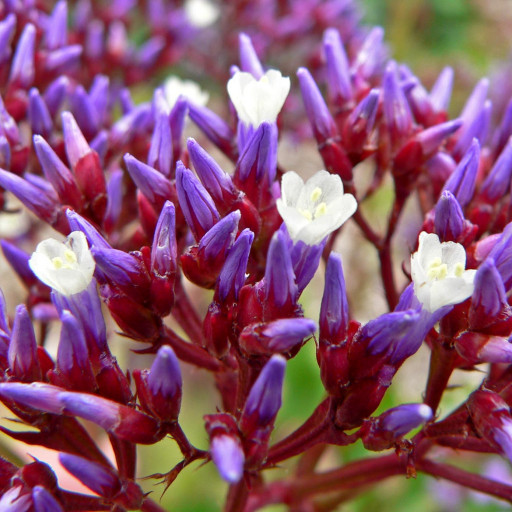
- 🌸 The "Everlasting" Bloom: What look like tiny petals are actually papery, funnel-shaped calyxes. These "flowers" feel like dry tissue paper even when the plant is still growing.
- 🌿 Basal Rosette: Most species keep their foliage low to the ground in a tough, leathery circle of leaves, sending up tall, leafless flower stalks that can reach up to 3 feet.
- 🕸️ Airy Architecture: The flowering stems are highly branched and wiry, creating a cloud-like or "misty" appearance that fills the gaps between heavier garden plants.
🏡 In Your Garden
- 🌊 Coastal Warrior: Because it evolved in salt marshes, it is incredibly salt-tolerant. If you live near the ocean or have a garden exposed to sea spray, this is one of the few ornamentals that will truly thrive.
- 🏜️ Drainage is King: The most common mistake is overwatering or planting in heavy clay. Limonium possesses a deep taproot that hates "wet feet" and dislikes being moved; pick a sunny, sandy spot and leave it to establish itself.
- 🦋 Pollinator Hub: Despite its dry appearance, it is a nectar-rich species. It acts as a magnet for honeybees and butterflies during the late summer when other flowers might be fading.
⚠️ Safety & Toxicity
- ✅ Generally Non-Toxic: Limonium is not known to be poisonous to humans, dogs, or cats, making it a safe choice for family gardens.
- 🖐️ Mechanical Irritation: While not chemically toxic, the dried stems and papery bracts can be quite sharp. Wear gloves when pruning or harvesting for dried arrangements to avoid "paper cuts" or skin scrapes.
✨ Fun Fact
- 🎨 Dried Perfection: Limonium is a staple in the "everlasting flower" trade. Because the colorful sepals don’t wilt or lose their pigment when the plant dies, a bouquet of Statice can look perfectly fresh in a vase for years without a single drop of water!

Detailed Care Instructions
To grow Limonium plants, follow these steps:
- Choose a suitable location: Limonium plants prefer full sun or partial shade. Ensure the selected spot has well-draining soil.
- Prepare the soil: Limonium plants prefer sandy or loamy soil. If the soil is heavy clay, improve drainage by adding compost or sand.
- Propagation: Limonium plants can be propagated from seeds, cuttings, or by division.
- Seeds: Sow the Limonium seeds directly into the soil in early spring or late fall, covering them lightly with soil. Keep the soil consistently moist until germination occurs, usually within 1-2 weeks.
- Cuttings: Take stem cuttings from a mature Limonium plant in spring or early summer. Dip the cut end in rooting hormone and plant it in a pot filled with a well-draining potting mix. Keep the soil lightly moist and place the pot in bright but indirect sunlight. Roots should form within a few weeks.
- Division: Divide a mature Limonium plant in early spring. Dig up the plant and gently separate the sections, ensuring each division has roots attached. Replant the divisions in well-prepared soil.
- Watering: Limonium plants prefer moderate watering. Ensure the soil is consistently moist, but not waterlogged. Reduce watering during colder months.
- Fertilization: Apply a balanced fertilizer, such as a 10-10-10 NPK (nitrogen-phosphorus-potassium) fertilizer, every two to four weeks during the growing season.
- Pruning: Trim back any dead or withered flowers to encourage continuous blooming. Prune the plant in early spring to remove any damaged or overgrown stems.
- Mulching: Apply a layer of organic mulch around the base of the plant to help retain moisture and suppress weeds.
- Pests and diseases: Limonium plants are generally resistant to pests and diseases. However, watch for aphids, slugs, or snails. Use appropriate organic pest control methods if necessary.
By following these steps, you can successfully grow Limonium plants and enjoy their lovely flowers.

Place in a bright room that is sun drenched almost all day. Or directly in a south-facing window.

Limonium plants are perennials that require proper watering to keep them healthy and blooming. To water Limonium plants, follow these tips:
1. Check the soil: Before watering, check if the topsoil is dry by inserting your finger about an inch deep into the soil. If it feels dry, it's time for watering.
2. Water thoroughly: When watering, water the plant thoroughly. You can use a watering can or a hose with a gentle stream. Make sure the water reaches deep into the soil to encourage deep root growth.
3. Avoid overwatering: Overwatering can lead to root rot, which can damage the plant. Water only when necessary and avoid allowing water to sit in the soil for too long.
4. Water in the morning: Watering in the morning allows the plant to absorb the water throughout the day. It also gives the leaves enough time to dry, which can prevent fungal problems.
5. Monitor the weather: During hot weather, check the plant more frequently as it may need more water. On cloudy days or during cooler weather, the plant may require less frequent watering.
By following these watering tips, your Limonium plant will grow healthy and produce beautiful flowers.
To fertilize this perennial plant, use a balanced, water-soluble fertilizer that is high in phosphorus. Apply the fertilizer once every two weeks during the growing season. Make sure to water the plant well before applying the fertilizer, and avoid getting the fertilizer on the leaves or stem. Dilute the fertilizer to half strength and apply it to the soil around the base of the plant. Additionally, ensure that the soil is well-draining and moist.
For optimal growth of Limonium plant, it is recommended to use a well-draining soil that is slightly alkaline. The ideal pH range for this plant is between 6.0 to 7.5. It is important to ensure that the soil is not too heavy or compact as this can impede the growth of the plant. To improve drainage, the addition of sand or perlite to the soil mix is recommended. Additionally, incorporating organic matter such as compost or peat moss can help to improve the fertility and water holding capacity of the soil. When planting Limonium, it is important to ensure that the soil is moist but not waterlogged, as this can lead to root rot.
One way to propagate this plant is by using stem cuttings. To do this, select a healthy stem from the parent plant and make a clean cut near the base using a sharp, sterilized knife. Remove any leaves from the bottom third of the stem. Dip the cut end of the stem in rooting hormone powder to encourage root growth. Plant the stem in a pot filled with well-draining, moist potting soil and keep it in a bright, humid location out of direct sunlight. Mist the cutting frequently to keep it moist and watch for new growth to appear. Once the cutting has established roots and developed new growth, it can be transplanted into a larger pot or planted directly into the ground.







