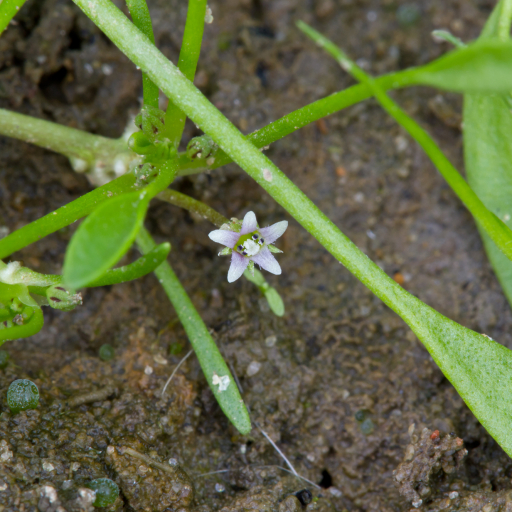
Plant Overview
Known affectionately as "Mudwort," this tiny botanical specialist is a master of the shoreline. It often hides in plain sight until water levels recede, revealing a lush carpet of delicate, spoon-like leaves. In many regions, the appearance of Mudwort is a poetic sign of a healthy, fluctuating wetland ecosystem.
🔍 How to Identify
- 🍃 Leaf Shape: Small, slightly succulent, spoon-shaped (spatulate) leaves that grow in a tight cluster or rosette directly from the base.
- 🌸 Tiny Blooms: Miniature bell-shaped flowers that are white to pale lavender. They are incredibly small—often less than 2mm wide—and tucked away near the base of the leaves.
- 🌱 Growth Habit: It spreads via thin "runners" (stolons), allowing it to quickly colonize bare, wet mud before taller plants move in to claim the space.
🌊 Habitat & Care Context
- 💧 The Drawdown Zone: This plant thrives in the "drawdown zone"—the muddy area left behind when a pond or lake level drops during summer. It requires constant moisture and will wither quickly if the soil cracks from drought.
- ☀️ Competition Strategy: Because it is so small, Mudwort is easily shaded out by taller reeds or grasses. It is a "pioneer species," meaning it relies on open, sunny spaces where the ground has been recently disturbed or cleared by receding water.
⚠️ Safety & Toxicity
- ✅ Safe Status: Limosella aquatica is not known to be toxic to humans, dogs, or cats. It is a gentle member of the Scrophulariaceae family.
- 🧪 Environmental Caution: Because it grows in stagnant mud and runoff areas, be cautious of the water quality where it resides. The plant itself isn't toxic, but it can be a host for bacteria or pollutants found in contaminated pond water.
✨ Fun Fact
- ⏳ The Time Traveler: Mudwort seeds are incredibly resilient; they can remain dormant in the silt for several years, waiting patiently for the perfect "low water" year to finally sprout and complete their entire life cycle in just a few short weeks.

Detailed Care Instructions
To grow Limosella Aquatica plant, follow these steps:
- Choose a suitable location: Limosella Aquatica prefers full sun or partial shade. It thrives in moist soil and is often found growing in wetlands or near bodies of water. Choose a location with good drainage.
- Prepare the soil: Amend the soil with organic matter to improve moisture retention. Limosella Aquatica prefers slightly acidic to neutral soil.
- Sow the seeds or plant cuttings: Seeds can be sown in the spring or early summer, after the last frost. You can start the seeds indoors and then transplant them outdoors or sow them directly in the garden. Alternatively, you can propagate the plant through stem cuttings. Dip the cut end of the stem in rooting hormone before planting it in a pot or directly in the soil.
- Plant the seeds or cuttings: If sowing seeds, scatter them lightly on the prepared soil and cover them with a thin layer of soil. If planting cuttings, dig holes that are deep enough to hold the stems and press the soil firmly around them.
- Water regularly: Keep the soil consistently moist, but avoid waterlogging. Water the plant regularly to ensure the soil remains damp. If growing in a container, make sure it has good drainage.
- Mulch: Apply a layer of organic mulch around the plant to help retain moisture and suppress weeds. This will also help keep the plant's roots cool.
- Fertilize lightly: Limosella Aquatica does not typically require heavy feeding. Use a balanced, slow-release fertilizer or apply a diluted liquid fertilizer every few weeks during the growing season.
- Prune as needed: Trim back any dead or damaged foliage to encourage new growth and maintain the plant's overall shape.
- Protect from frost: If you live in a colder climate, provide protection from frost during the winter months. Apply a layer of mulch around the base of the plant to insulate the roots.
- Monitor for pests and diseases: Limosella Aquatica is relatively pest and disease resistant. However, keep an eye out for common garden pests such as aphids or snails. Treat any infestations promptly to prevent damage to the plant.
With proper care and maintenance, your Limosella Aquatica plant should thrive and grow well in suitable growing conditions.

Place in a bright room that is sun drenched almost all day. Or directly in a south-facing window.

To water this plant, ensure that the soil is always kept moist but not waterlogged. It is important to monitor the soil closely as the plant can quickly become dehydrated. Depending on the climate, the plant may require more frequent watering or may have built up a tolerance to drought. When watering, be sure to avoid getting water directly onto the foliage, as this can cause damage to the leaves. Instead, water at the base of the plant and allow the water to soak in slowly. It is also important to ensure that there is adequate drainage to prevent water from pooling around the roots. Overall, consistent watering and careful monitoring of the soil's moisture levels should help keep this plant healthy and thriving.
To fertilize this aquatic plant, you should use a balanced fertilizer specifically designed for aquatic plants. Mix the fertilizer with water according to the product instructions, and then apply it directly to the water around the plant's roots. Be careful not to over-fertilize, as this can harm the plant and cause excessive algae growth. It is recommended to fertilize this plant every 4-6 weeks during the growing season.
The soil that is suitable for this plant should be rich in nutrients, well-draining and water-retentive at the same time. The ideal pH range would be slightly acidic to neutral. It can tolerate slightly sandy soils but will thrive better in loamy soil. The soil should be kept moist but not waterlogged. It is recommended to add organic matter such as compost or peat moss when planting to increase the soil's fertility and water-holding capacity. It is also important to avoid using heavy clay soils as they can cause waterlogging and root rot. Regular fertilization and soil amendments may be necessary to maintain the plant's health and growth.
To propagate this plant, cut a stem that is healthy and green. Remove the excess foliage from the stem, and ensure that at least two leaves remain. Place the stem in a container filled with water or a mixture of soil and sand. Keep the container in a location with bright, indirect light and ensure that the soil remains moist. The stem should form roots within two to three weeks. Once the roots have developed, the new plant can be transplanted into its permanent home.








