Plant Overview
Known affectionately as the "Fairy Bouquet" or "Baby Snapdragon," the Moroccan Toadflax is a vibrant annual that brings a touch of wild magic to any space. Native to the rocky slopes of Morocco, this dainty plant creates a carpet of color that looks like a miniature wildflower meadow. Its delicate appearance belies a surprising toughness, making it a favorite for gardeners who want high visual impact with low maintenance.
🔍 How to Identify
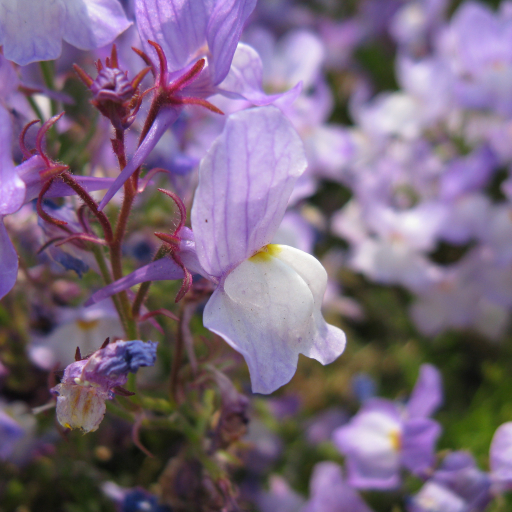
- 🌸 The Blooms: Tiny, two-lipped flowers that resemble miniature snapdragons, often featuring a distinct "spur" at the back. They come in a kaleidoscope of colors including violet, pink, yellow, and white, often with a contrasting "yellow eye" on the lower lip.
- 🌿 The Foliage: Slender, needle-like leaves that are narrow and grayish-green. They grow in a whorled pattern at the base and become alternate further up the stem.
- 📏 The Growth: A delicate, upright habit, usually reaching about 12 to 18 inches in height. The stems are fine and wiry, swaying gracefully in the breeze.
🏡 In Your Garden
- 🌱 The Taproot Rule: This plant develops a slender taproot and delicate stems, which means it "hates" being moved. For the best results, sow seeds directly into the garden rather than trying to transplant seedlings.
- 🐝 Pollinator Magnet: Despite their tiny size, these flowers are a major draw for honeybees and small butterflies. They provide a vital nectar source during the peak of spring and early summer.
- ☀️ Sun & Soil: It thrives in full sun but prefers "cool" feet. In hotter climates, it may tire out by mid-summer, but it often leaves behind a bounty of seeds that will sprout again when the weather cools.
⚠️ Safety & Toxicity
- 🐾 Low Risk: Moroccan Toadflax is generally considered non-toxic to humans and common household pets like cats and dogs.
- 🐄 Livestock Caution: While safe for the backyard, some members of the Linaria family contain compounds that can be slightly irritating to livestock if consumed in massive quantities. As with any garden plant, it is best kept as a decorative piece rather than a snack.
✨ Fun Fact
The name "Toadflax" was originally given to this family of plants because the wide, gaping mouth of the flower was thought to resemble the mouth of a toad. In the language of flowers, they often symbolize "notice my devotion."

Detailed Care Instructions
| Humidity | Normal |
| Lighting | Full Sun |
| Difficulty | Medium |
| Hibernation | Cold Period |
| Temperature | 18°C - 21°C |
| Hardiness Zones | 2 - 11 |
To grow Linaria Maroccana (also known as Moroccan toadflax), you can follow these steps:
- Choose the right location: Moroccan toadflax prefers full sun to partial shade. Make sure the soil is well-draining and fertile.
- Planting: Sow the seeds directly in the garden or containers in the early spring. Lightly press the seeds into the soil and cover them with a thin layer of soil. Space the seeds around 10-12 inches apart.
- Watering: Keep the soil consistently moist until the seeds germinate. After that, water the plants regularly, providing around 1 inch of water per week.
- Fertilizer: Apply a balanced, all-purpose fertilizer to the soil before planting the seeds. Avoid over-fertilizing as it can lead to excessive foliage growth instead of flowers.
- Mulching: Apply a layer of organic mulch around the plants to keep the soil moist, regulate temperature, and prevent weed growth.
- Pruning: Pinch back the tips of the plants when they reach around 6 inches in height. This promotes bushier growth and more flowers.
- Deadheading: Remove faded flowers regularly to encourage continuous blooming and prevent the plant from self-seeding excessively.
- Pests and diseases: Linaria Maroccana is generally resistant to pests and diseases. However, keep an eye out for aphids, slugs, and snails. Remove them manually or use organic pest control methods if necessary.
- Winter care: Moroccan toadflax is an annual plant and will die off with the first frost. If you want to save the seeds for future planting, allow some flowers to go to seed and collect the seeds once the pods dry out.
By following these steps, you can successfully grow and enjoy your Linaria Maroccana plant.

Place in a bright room that is sun drenched almost all day. Or directly in a south-facing window.

To water this plant, ensure the soil is dry to the touch before watering it. Water the plant at the base, making sure to avoid the leaves and flowers. Do not overwater the plant as this can lead to root rot. A good watering schedule is to water it once a week or when the soil becomes dry.
For optimal growth and blooming, provide a balanced fertilizer with equal amounts of nitrogen, phosphorus, and potassium applied every two weeks during the growing season. Alternatively, you can use a slow-release granular fertilizer applied at the beginning of the growing season. Make sure to follow the instructions on the fertilizer packaging for the recommended amount and application method. Avoid fertilizing in late summer or early fall to prevent stimulating new growth that may be killed by frost.
For optimal growth and health, it is recommended to use a well-draining soil with good fertility for the Linaria Maroccana plant. The soil should be loose and sandy, with a pH level between 6 and 7. The plant prefers soil that is not too dry, but also not too wet, as excessive moisture can result in root rot. It is also important to ensure that the soil is free of any debris or rocks that may obstruct root growth. Regular fertilization with a balanced fertilizer can also help maintain the plant's health and promote blooming.
Linaria maroccana can be propagated through the division of its roots or through seeds. When propagating through division, the plant should be dug up and carefully separated into smaller sections with roots attached. These smaller sections can then be planted individually.
To propagate through seeds, the plant should be allowed to produce seed pods. These pods will eventually dry up and split open, revealing small black seeds inside. These seeds can be collected and planted in pots or directly in the soil once the weather warms up in the spring.
When planting the seeds, they should be placed in well-draining soil and watered regularly. They should be kept in a warm, sunny location until they begin to sprout. Once they have sprouted, they can be transplanted into larger containers or outside in the ground.
It is important to note that Linaria maroccana is an annual plant, meaning it only lives for one growing season. Therefore, it will need to be replanted or allowed to self-seed in order to continue growing in subsequent years.








