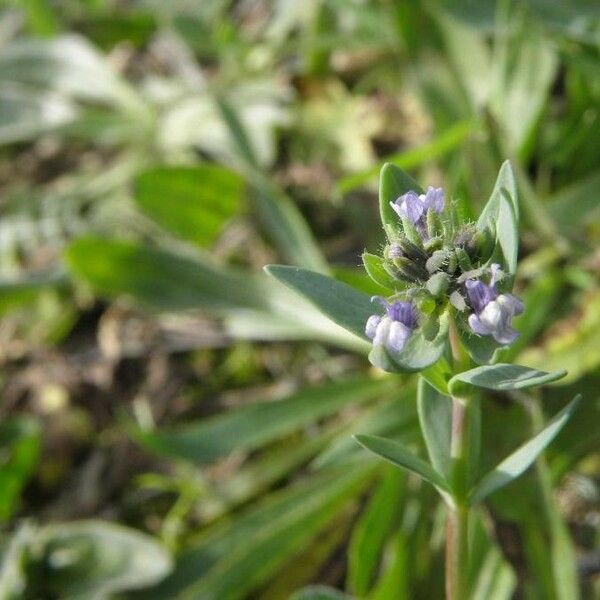
Plant Overview
Often overlooked because of its modest size, Linaria micrantha is a delicate Mediterranean traveler. Known as the Small-flowered Toadflax, it looks like a miniature garden snapdragon that has wandered off into the wild. In folklore, toadflaxes were once thought to provide a shady resting spot for toads, giving this dainty wildflower its quirky common name.
🔍 How to Identify
- 🌿 Narrow Foliage: The leaves are slender, gray-green, and "linear," which means they look remarkably like the leaves of a flax plant before the flowers appear.
- 🎭 Miniature Masks: The tiny flowers (usually under 10mm) are pale blue or violet with a distinct yellow or white "bulge" at the throat, looking like a tiny face.
- 🗡️ The Nectar Spur: If you look closely at the back of the flower, you will see a short, pointed "tail" or spur, which holds the nectar for specialized pollinators.
🏡 In Your Garden
- 🏜️ The Ultimate Minimalist: This plant is a "pioneer species," meaning it actually prefers poor, sandy, or rocky soil. It is a great choice for gravel gardens or rockeries where more pampered plants might wither.
- 🌱 A Traveling Annual: Since it completes its life cycle in a single year, it relies on "self-sowing." It will gently drop seeds in the late summer, often popping up in unexpected pavement cracks or wall crevices the following spring.
⚠️ Safety & Toxicity
- 🐾 Low Risk: Linaria micrantha is generally considered non-toxic to humans and common household pets like dogs and cats.
- 🐄 Livestock Caution: While safe for your backyard, some members of the toadflax family contain glycosides that can be slightly toxic to grazing livestock if eaten in very large quantities.
- 🖐️ Gentle Touch: Unlike some wild weeds, this plant does not have stinging hairs or sap that causes skin irritation, making it safe for children to explore.
✨ Fun Fact
📜 The Great Pretender: The genus name Linaria comes from the Latin word linum, which means "flax." This is because, until the very moment the flowers bloom, the plant is a master of disguise, looking almost identical to the plant used to make linen!

Detailed Care Instructions
To grow Linaria Micrantha, also known as dwarf toadflax, you can follow these steps:
- Obtain seeds: Purchase Linaria Micrantha seeds from a reputable seed supplier or collect them from existing plants if available.
- Choose a location: Select a sunny spot in your garden or outdoor area with well-draining soil. Linaria Micrantha prefers full sun but can tolerate partial shade.
- Prepare the soil: Ensure the soil is loose, friable, and well-draining. Remove any weeds or grass from the area where you plan to sow the seeds.
- Sow the seeds: Scatter the seeds directly on the soil surface. Do not cover the seeds with soil as they require light for germination.
- Watering: Water the seeds immediately after sowing to settle them into the soil. Keep the soil consistently moist but avoid overwatering, as it can lead to root rot.
- Germination: Linaria Micrantha typically germinates within 10-14 days. However, it may take longer in some cases. Be patient and provide regular moisture during this period.
- Thinning: Once the seedlings have grown to a few inches tall, you may need to thin them out to provide enough space for each plant to grow. Space the plants around 6-8 inches apart.
- Maintenance: Water the plants regularly to keep the soil moist but not soggy. Ensure they receive at least 1 inch of water per week, either through rainfall or supplemental watering. Weed around the plants to minimize competition.
- Fertilization: Linaria Micrantha generally does not require heavy fertilization. However, you can use a balanced, slow-release fertilizer once or twice during the growing season to promote healthy growth.
- Pinching back: To encourage bushier growth and prolong blooming, you can pinch back the tips of the plant once it reaches about 6 inches in height.
- Pests and diseases: Linaria Micrantha is relatively resistant to pests and diseases. However, keep an eye out for common garden pests like aphids or snails, and take appropriate measures if necessary.
- Blooming and deadheading: Linaria Micrantha produces clusters of small yellow flowers that attract butterflies and other pollinators. Deadhead the faded flowers regularly to promote continuous blooming.
With proper care and attention, Linaria Micrantha should thrive in your garden and provide beautiful blooms throughout the growing season.
Linaria Micrantha plant requires regular watering, but caution should be exercised not to overwater it. The soil should be moist and well-drained, but it should not remain waterlogged. Watering should be done at the base of the plant, preferably in the morning, to reduce the risk of fungal diseases. The frequency of watering should depend on various factors, including the climate, soil type, and plant size. During hot and dry weather, the plant may require more frequent watering. On the other hand, during cold and wet weather, watering should be reduced to prevent root rot. It is also important to avoid wetting the foliage during watering, as this can increase the risk of disease.
To fertilize this plant, apply a slow-release fertilizer in early spring before new growth appears. Use a balanced fertilizer with equal amounts of nitrogen, phosphorus, and potassium. Spread the fertilizer evenly around the plant, avoiding direct contact with the leaves or stems. Water the plant after fertilizing to help the nutrients penetrate the soil. Repeat the process every 4-6 weeks during the growing season. Avoid fertilizing in late summer or fall to avoid stimulating new growth that may not have time to harden off before winter.
Linaria Micrantha is a type of flowering plant that requires a well-draining soil mix for optimal growth. The ideal soil mixture for this plant should have a pH range of 6.0 to 7.5. The soil should be loose and well-aerated, allowing for proper water and nutrient absorption.
A good soil mix for Linaria Micrantha should consist of equal parts of garden soil, perlite or vermiculite, and peat moss. The perlite or vermiculite will help improve drainage and prevent waterlogging, while the peat moss will aid in water retention and provide organic matter for the plant.
It is important to note that this plant is sensitive to overwatering, so it is recommended to allow the soil to dry out between watering. Additionally, Linaria Micrantha prefers full sun to partial shade and requires regular fertilizing during the growing season to promote healthy growth and blooming.
Linaria Micrantha can be propagated through various methods such as division, cuttings, and seed propagation. When propagating through division, it is recommended to divide mature plants in the spring by carefully separating the root ball and replanting smaller sections.
For cuttings, it is best to take cuttings in the spring or early summer when the plant is actively growing. Cuttings should be 4-6 inches long and taken from healthy, disease-free plants. Dip the cuttings in rooting hormone and plant in a well-draining soil mix. Keep the soil consistently moist and place in a warm, bright location out of direct sunlight. The cuttings should root within a few weeks to a month.
Seeds can also be harvested from the plant in the fall and sow directly into the soil where they will grow. It is important to plant the seeds in a location with full sun and well-draining soil. Water the seeds regularly until they establish and begin to grow. Alternatively, seeds can also be started indoors in seed trays with a well-draining soil mix and placed under grow lights until they are large enough to be transplanted outside.








