Plant Overview
Often called the Common Spicebush or Evergreen Spicebush, Lindera communis is a versatile evergreen that brings a touch of glossy elegance to any landscape. Native to the lush, mountainous forests of East Asia, it has been cherished for centuries not just for its shimmering foliage, but for the aromatic oils hidden within its seeds and leaves. It is a resilient survivor that acts as a bridge between a sturdy garden shrub and a graceful, multi-stemmed small tree.
🔍 How to Identify
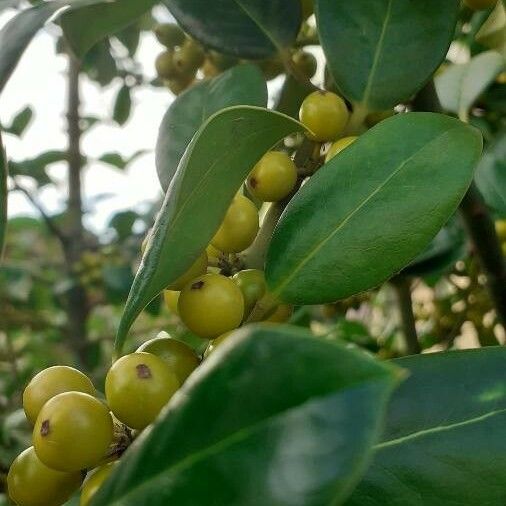
- 🍃 Lustrous Leaves: The foliage is leathery and lance-shaped, boasting a deep green, polished shine that looks almost like patent leather. When crushed, the leaves release a pleasant, spicy fragrance.
- 🌼 Sun-Kissed Blooms: In early spring, the plant produces clusters of tiny, star-like yellow flowers. These "umbels" lack petals but provide a soft, golden haze against the dark green branches.
- 🍒 Jewel-Like Fruit: Following the flowers, small oval berries (drupes) appear. They transition from a vibrant, glossy red to a deep, dark purple or black as they reach full maturity.
🏡 In Your Garden
- 🌳 The Perfect Screen: Because it retains its thick foliage year-round, this plant is an excellent choice for natural privacy screens or as a backdrop for smaller, colorful perennials. It provides a consistent visual "anchor" even in the dead of winter.
- 💧 Moisture and Texture: While it is surprisingly adaptable, it thrives best in well-draining, slightly acidic soil. It prefers consistent moisture; if the soil stays dry for too long, those signature shiny leaves may lose their luster and begin to droop.
⚠️ Safety & Toxicity
- ✅ General Safety: Lindera communis is generally considered non-toxic to humans. In fact, its aromatic oils are frequently used in the production of traditional soaps and cosmetics.
- 🐾 Pet Watch: While not listed as a major hazard, the concentrated essential oils found in the berries and leaves can cause mild digestive upset (nausea or lethargy) if ingested in large quantities by curious dogs or cats. It is best to keep it as a "look, don't eat" resident of the garden.
✨ Fun Fact
The seeds of the Common Spicebush are incredibly "greasy"—containing up to 60% natural oil! Historically, this oil was so abundant and high-quality that it was harvested to create candles, lubricants, and even traditional lighting fuel in rural East Asian villages.

Detailed Care Instructions
To grow Lindera communis, also known as the spicebush or shanghai spice, follow these steps:
- Climate: Lindera communis is native to East Asia and thrives in temperate regions. It prefers a climate with warm summers and cool winters. Make sure your climate matches these conditions before planting.
- Soil: Lindera communis prefers moist, well-draining soil. It can tolerate a wide range of soil types but performs best in fertile, loamy soil. If your soil is clayey or sandy, amend it with organic matter to improve its structure and fertility.
- Sunlight: Lindera communis can tolerate both full sun and partial shade. However, it tends to perform better with some shade during hot afternoons, especially in areas with intense sun.
- Planting: Start by obtaining seeds or young plants from a reputable nursery or garden center. Lindera communis is dioecious, which means it has separate male and female plants. Therefore, it's advisable to have both sexes within close proximity to ensure pollination and fruit production.
- Dig a hole that is slightly wider and deeper than the plant's root ball. Place the plant in the hole, making sure the top of the root ball is level with or slightly above the soil surface.
- Backfill the hole with soil, gently firming it around the root ball to eliminate air pockets. Water thoroughly after planting to settle the soil.
- Watering: Water regularly to keep the soil consistently moist, especially during the plant's establishment period. Avoid overwatering, as it may lead to root rot.
- Mulching: Apply a layer of organic mulch around the base of the plant to conserve moisture, regulate soil temperature, and suppress weed growth. Keep the mulch a few inches away from the stem to prevent stem rot.
- Fertilizing: Lindera communis usually doesn't require much fertilization. However, you can apply a balanced, slow-release fertilizer in early spring to provide essential nutrients. Follow the manufacturer's instructions for dosage and application.
- Pruning: Prune your Lindera communis plant sparingly to maintain its shape, remove any dead or diseased branches, and promote overall plant health. Late winter or early spring is the best time to prune.
- Pest and disease control: Lindera communis is generally disease and pest resistant. However, keep an eye out for common garden pests like aphids, scale insects, and spider mites. Use organic or chemical pest controls as necessary.
- Harvesting: Once the plant matures, small berries will form on the female plants. These berries are edible and have a spicy, citrusy flavor. Harvest the berries when they turn dark blue or black in late summer or early fall.
By following these steps, you can successfully grow Lindera communis in your garden.

Place in a window with dappled sun or a spot in the middle of a room. Or directly in a window facing west or east.

To water this plant, one should first check the soil moisture level by touching the top layer of soil. If it feels dry, then it is time to water. Use room temperature water and avoid using water that is too cold or too hot as it can shock the plant's roots. Water the plant thoroughly, making sure the water reaches the root zone. Allow the soil to drain excess water before placing the plant back in its pot or location. It is recommended to water this plant once a week or as needed, depending on the environment and humidity levels.
To properly fertilize this plant, apply a slow-release, balanced fertilizer in the early spring before new growth appears. Use a fertilizer with a 10-10-10 or 14-14-14 analysis. Apply the fertilizer evenly around the base of the plant, being careful not to get any on the foliage. Water thoroughly after fertilizing. Avoid fertilizing in the fall, as this can encourage new growth that is susceptible to winter damage.
When planting the Lindera Communis plant, it is best to use a soil that is well-draining and has a neutral to slightly acidic pH level. The soil should also be enriched with organic matter, such as compost or manure, to provide nutrients for the plant. Avoid using heavy or compacted soils, which can limit the plant's growth and root development. The Lindera Communis plant prefers moist, well-drained soils that do not become waterlogged. When selecting soil for this plant, it is important to ensure that it is rich in nutrients and able to provide adequate drainage to support healthy growth.
Lindera Communis is a shrub that can be propagated through several methods. One way to propagate the plant is through stem cuttings. Cut a 4-6 inch stem from the plant and remove any leaves from the bottom few inches. Dip the end of the stem in rooting hormone powder, and plant it in a well-draining potting mix. Keep the soil moist and in a shaded area until roots form.
Another method of propagation is through layering. Bury a low-hanging stem of the plant in moist soil while it is still attached to the mother plant. Leave the stem buried for several months until it forms roots. Once it has rooted, cut the stem from the mother plant and transplant it to its new location.
Lastly, Lindera Communis can also be propagated through seed. Collect the seeds from the plant once they have matured and sow them in a well-draining starting mix. Place the seeds in a warm, moist environment and keep them well-watered. It may take up to a year for the seeds to germinate.








