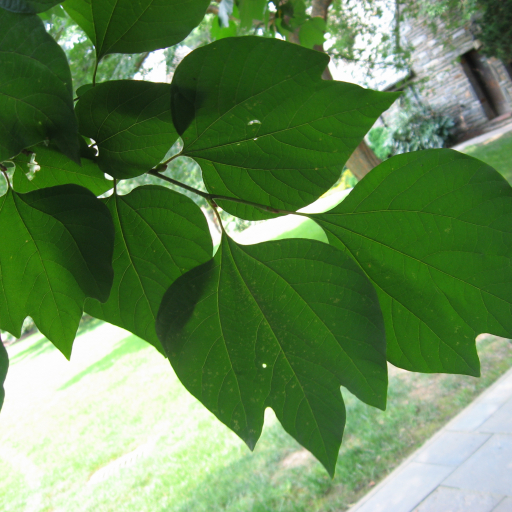
Plant Overview
Often called the Japanese Spice Bush, Lindera obtusiloba is a woodland aristocrat known for its dramatic seasonal transformations. In early spring, it mimics the famous Forsythia with a cloud of tiny yellow blossoms on bare branches, but it truly steals the show in autumn when its unique foliage turns a luminous, butter-yellow. In many Asian cultures, it is celebrated as a "herald of spring," signaling the end of winter long before other trees begin to bud.
🔍 How to Identify
- 🍃 The Foliage: The leaves are large, broad, and most famously feature three distinct lobes at the tip, resembling a rounded duck’s foot. However, the plant is "heterophyllous," meaning it can produce both lobed and unlobed (oval) leaves on the same branch.
- 🌼 The Flowers: Before any leaves appear, the stems are smothered in small, stalkless clusters of fuzzy yellow flowers that provide an early nectar source for pollinators.
- 👃 The Scent: If you gently crush a leaf or scratch a young twig, it releases a pleasant, spicy, and slightly citrusy aroma, which gives the plant its "Spice Bush" nickname.
🏡 In Your Garden
- 🌱 Root Sensitivity: This shrub is famously grumpy about being moved. It develops a deep root system early on, so it is best to choose a permanent "forever home" for it rather than trying to transplant it later.
- 💧 Woodland Preference: It thrives in conditions that mimic a forest edge—dappled sunlight and moist, acidic, leaf-mold-rich soil. While it can handle full sun in cooler climates, it appreciates afternoon shade in hotter regions to prevent its thin leaves from scorching.
- ✂️ Low Maintenance: It has a naturally elegant, spreading habit and rarely requires heavy pruning. It grows slowly, making it an excellent choice for smaller gardens where you want height without the fear of it taking over.
⚠️ Safety & Toxicity
- ✅ Status: Non-toxic and generally safe.
- 🐾 Details: There are no documented reports of Lindera obtusiloba being poisonous to cats, dogs, or horses. While the berries and bark have been used in traditional folk medicine, they are not intended for general consumption and should be kept away from curious toddlers to avoid choking hazards.
✨ Fun Fact
In Korea and Japan, the oil extracted from the seeds of the Japanese Spice Bush was historically used as a high-quality hair oil and in the production of traditional soaps and candles due to its rich fragrance.

Detailed Care Instructions
To grow Lindera obtusiloba, also known as Japanese spicebush or sweet viburnum, you can follow these steps:
- Climate and Soil: Ensure that you are in a suitable climate zone for growing Lindera obtusiloba. It thrives in USDA hardiness zones 6 to 9. The plant prefers full sun to partial shade and well-draining soil.
- Propagation: Decide whether you want to start from seeds or obtain young plants from a nursery or garden center. If using seeds, scarify them by rubbing them between two sheets of sandpaper and then soak them in water overnight. Sow the seeds in a well-draining potting mix.
- Planting: When planting a young Lindera obtusiloba, choose a location with good sunlight exposure and dig a hole slightly larger than the root ball of the plant. Place the plant in the hole, ensuring that the top of the root ball is level with the soil surface. Backfill the hole with soil and gently firm it around the roots.
- Watering: Water the plant regularly, especially during the first year of growth. Keep the soil consistently moist but not waterlogged. Once established, the plant can tolerate drought.
- Mulching: Apply a layer of organic mulch around the base of the plant to help retain moisture, suppress weed growth, and create a favorable environment for the roots.
- Pruning: To maintain a desired shape and size, prune Lindera obtusiloba during late winter or early spring before new growth begins. Remove any dead, damaged, or diseased branches. It is a good idea to wear gloves when pruning as the plant can irritate the skin of some individuals.
- Fertilizing: Apply a balanced slow-release fertilizer in early spring. Follow the packaging instructions for proper dosage and application method.
- Pest and Disease Control: Lindera obtusiloba is generally not prone to severe pest or disease issues. However, monitor the plant for signs of aphids, scale insects, or fungal diseases. If necessary, treat with organic or chemical insecticides or fungicides.
Remember to regularly monitor the health of the plant, provide it with care, and follow local gardening guidelines to ensure its successful growth.

Place in a window with dappled sun or a spot in the middle of a room. Or directly in a window facing west or east.

Lindera Obtusiloba is a plant that requires moderate watering levels. It is important to ensure that the soil remains moist but not waterlogged. To water this plant, you can wait until the top inch of soil feels dry to the touch and then water it thoroughly. It is important to avoid watering the plant too frequently or giving it too much water at once as this can lead to root rot. Additionally, it is important to ensure that the plant is adequately drained and that excess water is able to flow out of the pot or soil. When watering, be sure to direct the water at the base of the plant and avoid getting water on the leaves, as this can lead to disease. It is also important to note that this plant may require less watering during the winter months when it is dormant.
To fertilize this plant, use a balanced fertilizer with equal amounts of nitrogen, phosphorus, and potassium. Fertilize once per month during the growing season, beginning in the spring and continuing until the fall. Avoid fertilizing during the winter months when the plant is dormant. Apply the fertilizer according to the instructions on the package, and be sure to water the plant thoroughly after fertilizing to prevent fertilizer burn.
Lindera Obtusiloba plant requires a specific type of soil to thrive. It prefers a well-draining soil that is rich in organic matter. A neutral to slightly acidic pH range of 6.0 to 7.0 is best, and the texture should be loamy or sandy. Avoid using heavy clay soils, as they hold too much moisture and can lead to root rot.
When planting, ensure the soil is loose and friable, so the roots can easily penetrate. Adding compost or well-rotted manure to the soil will improve its structure and provide nutrients for growth. When planting in containers, use a high-quality potting soil with added perlite to improve drainage.
It is essential to keep the soil consistently moist, but not saturated. Water deeply, then allow the soil to dry out slightly before watering again. In addition, consider mulching around the base of the plant to retain moisture and suppress weeds.
Overall, the soil used for Lindera Obtusiloba should be well-draining, rich in organic matter, loose, and kept consistently moist.
Lindera Obtusiloba is a plant that can be propagated through various methods such as stem cuttings, layering, and division.
To propagate Lindera Obtusiloba through stem cuttings:
- Choose a healthy mature plant and identify a stem that is between 4 to 6 inches long and has at least 2 to 3 leaves.
- Using a sharp, clean pair of scissors or pruning shears, cut the stem carefully just below a node (where the leaf meets the stem).
- Remove the leaves from the lower part of the stem.
- Dip the cut end of the stem in rooting hormone powder.
- Plant the stem cutting in a well-draining propagation medium or soil mix, leaving the top leaves exposed.
- Water the cutting lightly and cover with a plastic bag or dome to maintain humidity.
- Place the container in a warm, brightly lit area, but out of direct sunlight.
- Monitor the cutting daily for signs of growth and roots. Once roots have formed, gradually acclimate the cutting to lower humidity levels by venting the plastic bag or dome.
To propagate Lindera Obtusiloba through layering: - Identify a low-lying branch or stem that is flexible and long enough to reach the ground.
- Using a sharp knife, make a shallow cut on the underside of the stem.
- Apply rooting hormone powder to the wounded area.
- Pin the wounded area to the ground using a U-shaped wire or a rock.
- Cover the wounded area and pinned section with a layer of soil or mulch.
- Water the area regularly to keep the soil moist.
- Monitor the layered branch/stem for signs of new growth and roots. Once roots have formed, cut the new plant away from the parent plant and transplant to a new location.
To propagate Lindera Obtusiloba through division: - Identify a healthy mature plant with multiple stems or a clumping habit.
- Dig the plant up gently, taking care not to damage the roots.
- Using a sharp shovel or knife, divide the plant into sections, making sure each section has a good amount of roots and stems.
- Plant each divided section in a new location with well-draining soil and water thoroughly.
- Monitor the new plants for signs of growth and adjust watering and fertilizing as needed.








