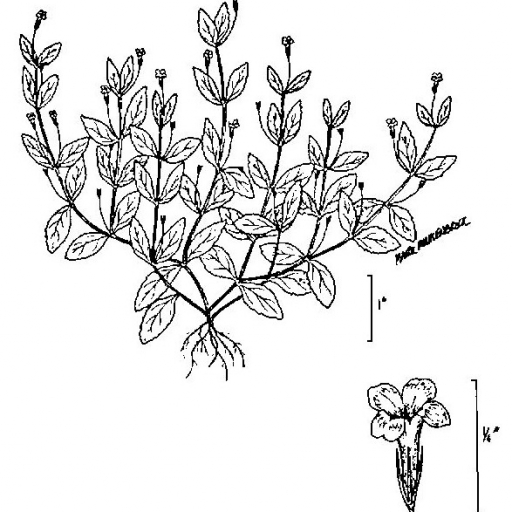
Plant Overview
Often called the Yellowseed False Pimpernel, this modest little wildflower is a master of the muddy margin. Often overlooked by casual hikers, it thrives in the soggy transition zones where water meets land. It is a resilient pioneer species, frequently popping up on riverbanks and pond edges as soon as the summer heat causes water levels to recede, revealing fresh silt.
🔍 How to Identify
- 🍃 Leaf Pattern: The leaves grow in opposite pairs along the stem; they are roughly egg-shaped (ovate) and can be either smooth-edged or have very fine, sharp teeth.
- 🌸 Delicate Blooms: The tiny, snapdragon-like flowers are pale lavender or white, often featuring delicate purple streaks on the lower lip that act as "nectar guides" for small bees.
- 🌿 Angled Stems: If you roll the stem between your fingers, you will notice it is distinctly square or four-angled rather than round, a common trait for this family.
🏡 In Your Garden
- 💧 The Mud Lover: This isn't a plant for a dry rock garden. It craves "wet feet" and is a perfect choice for the "marginal" zone of a backyard pond or a consistently boggy spot where other plants might drown.
- 🌱 Opportunistic Growth: It is a low-growing, creeping herb that spreads gently. Because it thrives in disturbed, wet soil, it acts as a natural "bandage" for eroded banks, helping to stabilize the mud with its root system.
⚠️ Safety & Toxicity
- ✅ Safe Profile: Lindernia dubia is generally considered non-toxic and is safe to have in areas frequented by children or curious pets.
- 🐾 Low Risk: There are no recorded reports of skin irritation or poisoning, though it is always wise to discourage pets from grazing on wild wetland plants which may have absorbed runoff from the surrounding environment.
✨ Fun Fact
This plant is a secret "survivalist" that practices cleistogamy. In addition to its pretty purple flowers, it can produce tiny, closed buds that self-pollinate without ever opening, ensuring it produces seeds even if there are no bees around to help!

Detailed Care Instructions
To successfully grow Lindernia dubia (also known as False Pennywort or Grass-Leaved Water Willow), follow these guidelines:
- Lighting: Place the plant in bright, but indirect sunlight. An ideal location is near a north or east-facing window where it can receive bright, filtered light for several hours each day.
- Temperature: Lindernia dubia thrives in temperatures between 70-80°F (21-27°C). Avoid exposing it to drastic fluctuations in temperature.
- Watering: Keep the soil consistently moist but not waterlogged. The plant prefers slightly damp conditions. Check the soil regularly and water whenever the top inch of soil feels dry. Make sure the pot has proper drainage to prevent overwatering.
- Soil: Use a well-draining soil mix that retains some moisture but also allows excess water to drain away. A mix of peat moss, vermiculite or perlite, and sand works well. You can also consider using an aquatic planting medium if growing the plant in a water garden.
- Fertilizer: Apply a balanced liquid fertilizer diluted to half strength once every two weeks during the growing season (spring and summer). Reduce or halt fertilization during the dormant season (fall and winter).
- Humidity: Lindernia dubia appreciates higher humidity levels. Mist the plant occasionally or place a tray filled with water near the plant to increase humidity.
- Pruning: Trim any yellow or dead leaves as they appear. Regular pruning will promote bushier growth and keep the plant looking tidy.
- Propagation: Propagate Lindernia dubia from stem cuttings. Take a 2-3 inch cutting just below a node, remove the lower leaves, and place it in water or moist soil until it develops roots. Transplant it into a suitable container once the roots are well established.
- Pests and diseases: Watch out for common houseplant pests like aphids, mealybugs, or spider mites. If infested, treat the plant with appropriate organic insecticides or insecticidal soap.
- Considerations: If you are growing Lindernia dubia in an aquarium or water garden, ensure it is well-maintained and provide appropriate lighting and filtration.
Remember to observe your plant closely and adjust care as needed. With proper attention to light, water, temperature, and humidity, your Lindernia dubia will flourish.

Place in a bright room that is sun drenched almost all day. Or directly in a south-facing window.

Lindernia Dubia is a plant that requires regular watering to ensure proper growth and health. When watering the plant, it is important to make sure that the soil is evenly moist, but not waterlogged. Overwatering can lead to root rot, which can be fatal to the plant. It is recommended to water the plant deeply, allowing the water to penetrate the soil to a depth of at least a few inches. This can be achieved by watering slowly and evenly, ensuring that the water reaches all parts of the soil. The frequency of watering will depend on a variety of factors, including the size of the plant, the type of soil it is planted in, and the temperature and humidity levels of its environment. In general, it is best to water the plant whenever the soil feels dry to the touch, but not to let it completely dry out between waterings. Overall, consistent and careful watering is essential for the health and vitality of the Lindernia Dubia plant.
To fertilize the Lindernia Dubia plant, use a balanced fertilizer with equal parts nitrogen, phosphorus, and potassium. Apply the fertilizer once a month during the growing season, which is typically in the spring and summer months. Be sure to follow the instructions on the fertilizer label for the correct application rate. Over-fertilizing can lead to excessive growth and may harm the plant. Water the plant thoroughly after fertilizing to help distribute the nutrients throughout the soil.
Lindernia dubia plant prefers moist soil that is well-draining. It is best to use a soil mix that is rich in organic matter, with a pH range of 5.5 to 7.5. The soil should be loose and not compacted to allow for proper aeration and water absorption. A mix of peat moss, sand, perlite, and vermiculite can be used to achieve the desired soil texture. Addition of composted cow manure or worm castings will provide necessary nutrients for the plant's growth. It is important to avoid using soil mixes that contain excessive amounts of fertilizer or chemicals, as this can harm the plant's roots. Regular watering is necessary to keep the soil moist, but not waterlogged.
To propagate this plant, you will need to take stem cuttings from a mature, healthy plant. Cuttings should be taken from the very top of the plant, just below a node. Make sure to use a sharp, clean pair of scissors or pruners.
Next, remove the lower leaves from the stem cutting, leaving only a few small leaves at the top. This will help the plant focus its energy on growing new roots instead of supporting leaves.
Dip the cut end of the stem cutting in rooting hormone powder, which can be purchased at most garden centers. This will help encourage the plant to grow new roots more quickly.
Plant the stem cutting in a container filled with moist planting mix, making sure to bury the cut end of the stem about one inch deep. Water the cutting thoroughly and cover it with a plastic bag or humidity dome to help retain moisture.
Place the container in a bright, indirect light location, and water as needed to keep the soil moist. After a few weeks, the cutting should begin to grow new roots and leaves. Once it has established a strong root system and is actively growing, it can be transferred to a larger container or planted outside.








