Plant Overview
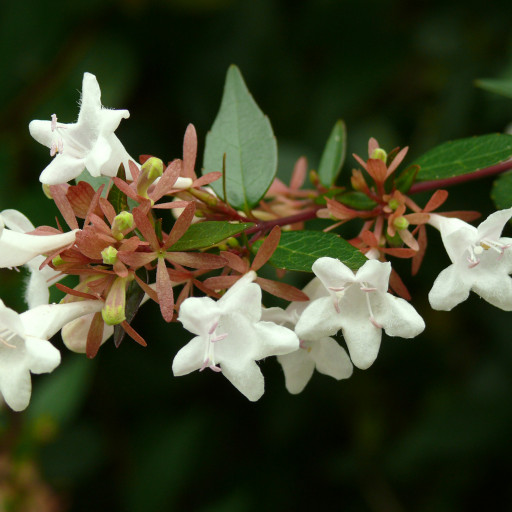
Commonly known as the Glossy Abelia, this elegant shrub is a garden favorite celebrated for its graceful, arching branches and year-round visual interest. It is a hybrid marvel that combines the best traits of its Asian parents, offering shimmering foliage and a marathon blooming season that stretches from mid-summer into the crisp days of autumn. Often called the "fountain of flowers," it brings a touch of classic cottage charm and a sweet, subtle fragrance to any landscape.
🔍 How to Identify
- 🍃 Lustrous Leaves: The foliage is small, oval, and exceptionally shiny (hence the name "Glossy"). The leaves emerge with a bronze tint, mature to a deep forest green, and often take on a regal purple hue during the winter months.
- 🔔 Bell-Shaped Blooms: It produces clusters of tiny, tubular flowers that are white with a delicate flush of shell-pink. They look like miniature bells hanging from the tips of the branches.
- 🍂 Persistent Sepals: Even after the flowers fall, the plant remains colorful because of the "sepals"—the rosy-bronze structures at the base of the flower—which stay on the stems for weeks.
🏡 In Your Garden
- ☀️ Sun Seeker: While it is tough and adaptable, the Glossy Abelia performs best in full sun. More sunlight translates directly to a denser growth habit and a much higher volume of fragrant flowers.
- 🦋 Pollinator Haven: This shrub is a vital late-season food source. Its nectar-rich blossoms are a magnet for butterflies, bumblebees, and hummingbirds during the late summer when other garden flowers may be starting to fade.
- ✂️ Pruning Nuance: Because it blooms on "new wood" (the growth produced in the current season), you can prune it heavily in late winter or early spring without sacrificing any of its summer floral display.
⚠️ Safety & Toxicity
- ✅ Pet & Child Friendly: The Linnaea × grandiflora is generally considered non-toxic to humans, dogs, cats, and horses. It is an excellent choice for family-friendly landscapes.
- 🧤 Mechanical Irritation: While not chemically toxic, the inner branches can become quite dense and woody. It is wise to wear gardening gloves when pruning to avoid minor scratches from the stiff, twiggy stems.
✨ Fun Fact
The rosy-colored sepals are so persistent that they often fool people into thinking the plant is still in full bloom well into the late autumn, long after the actual petals have withered and fallen!

Detailed Care Instructions
To grow Linnaea × Grandiflora plants, also known as Big-Flowered Twinflower, you can follow these steps:
- Choose the right location: Linnaea × Grandiflora thrives in partially shaded areas, particularly under deciduous trees. The soil should be well-draining and rich in organic matter.
- Obtain the plant: You can purchase Linnaea × Grandiflora plants from local nurseries or online retailers. Alternatively, you can try propagating the plant from seeds or cuttings.
- Planting: Dig a hole slightly larger than the root ball of the plant. Place the plant in the hole and backfill with soil. Gently firm the soil around the plant, avoiding excessive compacting.
- Watering: Keep the soil consistently moist but not soggy. Water the plant regularly, particularly during dry periods. Be careful not to overwater, as this may cause root rot.
- Mulching: Apply a layer of organic mulch around the base of the plant to conserve moisture, suppress weeds, and provide insulation. Avoid piling the mulch against the stem.
- Pruning: Linnaea × Grandiflora is a low-growing plant that forms a dense mat. Regularly trim any dead or damaged foliage to maintain a neat appearance.
- Fertilizing: Apply a balanced slow-release fertilizer in the spring and early summer to promote healthy growth. Follow the manufacturer's instructions for application rates.
- Propagation: If you want to propagate your Linnaea × Grandiflora, you can try taking softwood cuttings in late spring to early summer. Dip the cut ends in rooting hormone and insert them into a well-draining potting mix. Keep the cuttings moist and provide them with bright, indirect light until they establish roots.
- Pests and diseases: Linnaea × Grandiflora is generally resistant to pests and diseases. However, like most plants, it may be susceptible to issues such as aphids, slugs, or powdery mildew. Monitor the plant regularly and take appropriate measures if any problems arise.
Remember to research the specific needs and growing conditions of Linnaea × Grandiflora to ensure the best care for your plant.

Place in a bright room that is sun drenched almost all day. Or directly in a south-facing window.

To properly water this plant, one should ensure that the soil is moist but not waterlogged. It is recommended to water it deeply once a week, allowing the water to penetrate to the deeper roots. When watering, make sure to avoid getting water on the foliage to prevent the development of fungal diseases. Additionally, the plant should be allowed to dry out slightly between waterings to prevent root rot. Overwatering can lead to yellowing of the leaves, while underwatering can cause wilting and drying of the plant. It is important to also take into consideration the humidity levels of the plant's growing environment, and supplement with misting or a humidifier if necessary.
To fertilize the Linnaea × Grandiflora plant, follow these instructions:
- Choose a balanced, water-soluble fertilizer specifically formulated for flowering plants.
- Dilute the fertilizer according to the manufacturer's instructions. Generally, a ratio of 1 tablespoon of fertilizer per gallon of water is suitable, but read the package for plant-specific recommendations.
- Water the Linnaea × Grandiflora plant thoroughly before applying the fertilizer to prevent root burn.
- Pour the diluted fertilizer evenly around the base of the plant, avoiding foliage contact if possible.
- Use a watering can or hose with a gentle spray attachment to ensure even distribution and minimal disturbance to the plant.
- Apply the fertilizer every 4-6 weeks during the growing season, typically from spring to early fall, to support healthy growth and profuse blooming.
- Adjust the frequency and strength of fertilization based on the plant's response. If the plant shows signs of over-fertilization, such as burnt leaves or stunted growth, reduce the amount or frequency of fertilization.
- Monitor the soil moisture level and ensure the plant has adequate water, as fertilizer is most effective when the plant is well-hydrated.
- Follow good gardening practices, such as removing any weeds or dead plant material around the Linnaea × Grandiflora plant, to promote optimal nutrient absorption.
- Keep track of the fertilization schedule and consider recording the application dates to maintain consistency and avoid under- or over-fertilization.
Linnaea × Grandiflora plant prefers well-draining soil that is nutrient-rich and holds moisture well. It grows best in a soil mixture that is loamy, light, and airy, with a pH range of 5.5 to 7.5. A mixture of organic compost, peat moss, and sand can be ideal for this plant type. The soil should have good aeration, which allows the roots to breathe and absorb nutrients more efficiently. The plant thrives in a soil that is slightly acidic, so adding some acidic fertilizers occasionally can help maintain the soil pH in its optimal range. Overwatering should be avoided as it can damage the plant's roots and lead to root rot.
To propagate Linnaea × Grandiflora, follow these steps:
- Prepare the plant: Choose a healthy and mature Linnaea × Grandiflora plant with strong stems and vibrant leaves. Ensure that the plant is free from any pests or diseases.
- Select a propagation method: The most common methods to propagate Linnaea × Grandiflora include stem cuttings, division, and layering. Choose the method that suits your resources and preferences.
- Stem cuttings:
- Select a healthy stem from the Linnaea × Grandiflora plant. Choose a stem that is about 4-6 inches long and has several nodes.
- Using a clean and sharp knife or pruners, make a clean cut just below a leaf node. Remove any leaves on the lower half of the stem.
- Optional: Apply a rooting hormone to the cut end of the stem to encourage root development.
- Prepare a pot filled with well-draining potting mix or a mix of peat and sand. Make a small hole in the soil using your finger or a pencil.
- Insert the cut end of the stem into the hole, ensuring that at least two nodes are below the soil surface.
- Lightly press the soil around the cutting to provide stability.
- Place the pot in a warm and brightly lit area, away from direct sunlight.
- Keep the soil consistently moist but not waterlogged.
- After a few weeks, the cutting will develop roots. You can gently pull the stem to check for resistance, indicating successful root growth.
- Select a healthy stem from the Linnaea × Grandiflora plant. Choose a stem that is about 4-6 inches long and has several nodes.
- Division:
- Carefully dig up the Linnaea × Grandiflora plant.
- Locate natural divisions in the plant like separate clumps or bunches of stems.
- Use a clean and sharp knife or pruners to separate these divisions, ensuring that each division has roots attached.
- Plant each division in a separate pot or an appropriate location in the garden.
- Water the divisions thoroughly after planting and maintain regular watering until they establish new roots.
- Carefully dig up the Linnaea × Grandiflora plant.
- Layering:
- Choose a healthy and flexible low-growing stem from the Linnaea × Grandiflora plant.
- Bend the selected stem towards the ground without detaching it from the main plant.
- Dig a small trench in the ground where the bent stem will make contact with the soil.
- Make a small incision on the bottom side of the bent stem to encourage rooting.
- Place the incised portion of the stem into the trench and cover it with soil, leaving the growing tip exposed.
- Anchor the stem into the soil using a U-shaped wire or a small stone.
- Water the layered stem regularly to keep the soil moist.
- After a few months, the layered stem will develop roots. You can separate it from the main plant and transplant to a new location.
Remember to provide proper care and maintenance to the newly propagated Linnaea × Grandiflora plants to ensure their healthy growth.
- Choose a healthy and flexible low-growing stem from the Linnaea × Grandiflora plant.
Common pests of the glossy abelia include Spider mites, aphids. Make a habit of checking your glossy abelia frequently for pests so that any infestations can be caught and managed early.







