Plant Overview
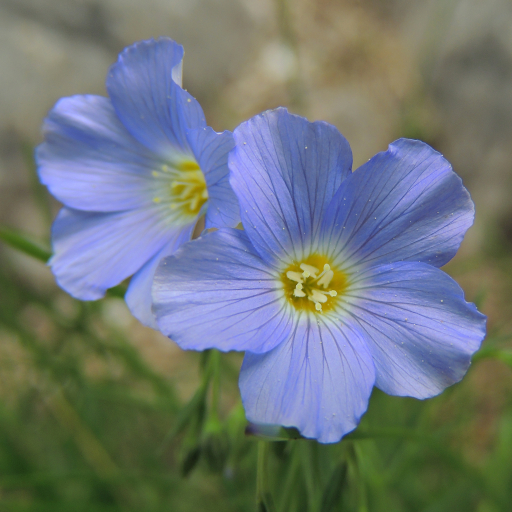
Often called the Alpine Flax, this delicate mountain dweller is like a piece of the summer sky fallen to earth. Native to the rugged high-altitude slopes of the Alps and Pyrenees, it is a resilient perennial that brings a sense of airy elegance to rock gardens. Despite its fragile appearance, it is a "mountain soul" built to withstand harsh winds and intense sunlight.
🔍 How to Identify
- 🪻 The Blooms: Features five-petaled, shimmering sky-blue to pale violet flowers that look almost translucent when caught in the sunlight.
- 🌿 The Foliage: Small, narrow, needle-like leaves that are arranged alternately along the stems, often displaying a soft grayish-green tint.
- 🌱 The Stems: Slender, graceful stems that tend to sprawl or lean (decumbent) before curving upward at the tips, creating a soft, misty mound.
🏡 In Your Garden
- ⛰️ Alpine Aspirations: Because it originates from rocky crevices, this plant demands "lean" soil. It thrives in gritty, well-drained spots and will struggle or rot if placed in heavy, wet clay.
- ⚓ The Taproot Rule: Alpine Flax develops a deep taproot to find water in mountain crags. This makes it incredibly drought-tolerant once established, but it also means it "hates being moved"—choose its permanent home wisely to avoid transplant shock.
⚠️ Safety & Toxicity
- 🟢 Status: Generally low toxicity, but use caution.
- 🐾 Details: While not considered highly dangerous, many members of the Linum genus contain small amounts of cyanogenic glycosides. It is best to keep it away from curious pets or livestock who might decide to graze heavily on the foliage, as it can cause stomach upset.
✨ Fun Fact
The flowers of the Alpine Flax are remarkably "fleeting." A single blossom usually lasts only a day, dropping its petals by the afternoon, but the plant is so prolific that it produces a fresh carpet of new blue stars every single morning throughout its blooming season!

Detailed Care Instructions
To grow Linum Alpinum, also known as Alpine Flax, you can follow the steps below:
- Climate and location: Linum Alpinum thrives in cool, temperate climates. It prefers full sun but can tolerate partial shade. Choose a well-drained soil location with good air circulation.
- Soil preparation: Prepare the soil by loosening it with a garden fork or tiller. Remove any weeds or rocks that may interfere with the plant's growth. Amend the soil with compost or well-rotted manure to improve fertility and drainage.
- Sowing seeds: Linum Alpinum can be started from seeds. Sow the seeds directly in the garden in early spring or early fall. Lightly press the seeds into the soil and cover them with a thin layer of compost or fine soil. Keep the soil evenly moist but not waterlogged.
- Watering: Water the newly planted seeds regularly to keep the soil moist. Once the plants are established, they are drought-tolerant and only need occasional watering during dry periods. Overwatering can lead to root rot.
- Mulching: Apply a thin layer of organic mulch, such as straw or shredded bark, around the base of the plants to help retain moisture, suppress weeds, and moderate soil temperature.
- Maintenance: Remove any weeds that may compete with the Linum Alpinum plants for nutrients and water. Prune back the plants after flowering to promote bushier growth. Deadhead the spent flowers to encourage continuous blooming.
- Pests and diseases: Linum Alpinum is generally not prone to many pests and diseases. However, it may attract aphids or spider mites. Use organic insecticides or insecticidal soap if necessary.
- Division and propagation: Linum Alpinum can be propagated through division. Every few years, dig up the clumps and separate them into smaller sections. Replant the divisions in well-prepared soil.
With proper care and attention, Linum Alpinum should grow and flourish, rewarding you with its delicate blue flowers and attractive foliage.

Place in a bright room that is sun drenched almost all day. Or directly in a south-facing window.

To properly water this plant, first assess the soil moisture level by testing it with your finger. If the soil feels dry to the touch, add water until it is thoroughly moistened, but not waterlogged. Avoid allowing the soil to completely dry out before watering, as this can stress the plant. Ensure that the pot has adequate drainage and water thoroughly until excess water drains out of the bottom. Watering should be done in the morning to allow the plant to absorb the moisture throughout the day. During periods of high heat or low humidity, increase the frequency of watering to prevent dehydration.
To fertilize this plant, use a balanced fertilizer with equal proportion of nitrogen, phosphorus, and potassium. Apply the fertilizer during the growing season, once a month. Be mindful not to over-fertilize as it can lead to the burning of the plant. Also, make sure to water the plant before and after fertilization to prevent stress on the roots.
Linum alpinum is a plant that requires well-draining soil, and it should not be exposed to waterlogged soil. The plant should be grown in fertile soil that is rich in organic matter. The pH of the soil should be slightly acidic to neutral. It is recommended to mix sand with the soil to increase the drainage capability and avoid soil compaction. The plant prefers to grow in full sun or partial shade and will not tolerate too much shade. It can grow in various types of soil, such as sandy loam, loamy, and clay soil, but the most important factor is the soil drainage. In general, it is best to grow Linum alpinum in a soil that does not stay too wet, ensuring that the plant has adequate drainage.
To propagate this plant, take stem cuttings in early spring or early autumn when the plant is actively growing. Cut about 4-6 inches of stem with a pair of pruners. Remove the lower leaves from the cutting, leaving only a few at the top. Dip the cut end in rooting hormone powder and plant in a pot filled with well-draining soil. Keep the soil moist and the cutting out of direct sunlight until roots have formed. Once the cutting has established roots, it can be transplanted to a permanent location in the garden.








