Plant Overview
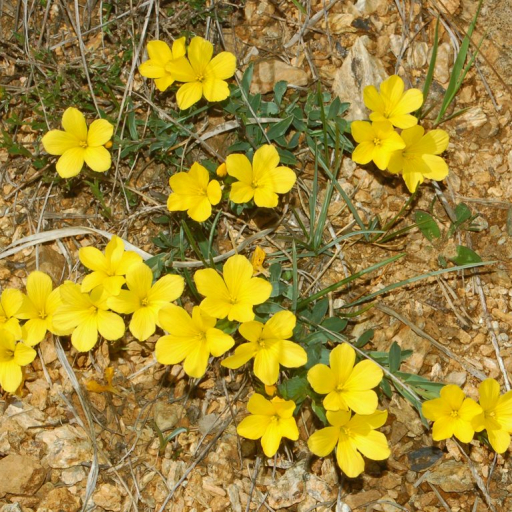
Often called the Yellow Flax or Bell-shaped Flax, this Mediterranean native is like a captured ray of sunshine for the rock garden. Unlike its common blue-flowered cousins used for linen, Linum campanulatum produces clusters of brilliant, lemon-yellow blooms that seem to glow against its silver-green foliage. It is a rugged survivor, perfectly adapted to the hot, rocky slopes of Southern Europe.
🔍 How to Identify
- 🌼 The Flowers: Large, five-petaled blooms that are distinctly cup- or bell-shaped. They usually appear in dense clusters at the tips of the stems.
- 🍃 The Leaves: Small, lance-shaped leaves with a "glaucous" (waxy, blue-green) tint. They are often arranged tightly along the lower part of the stem.
- 🌱 Growth Habit: A low-growing perennial that develops a woody base over time, forming a neat, mounded shape that rarely exceeds 12 inches in height.
🏡 In Your Garden
- ☀️ Sun Seeker: This plant is a true worshiper of light. It requires a south-facing spot or a location that mimics a dry Mediterranean hillside to prevent it from becoming "leggy."
- 🪨 Soil Nuance: It is a "calciphile," meaning it thrives in alkaline or lime-rich soils. The most common mistake is overwatering; it demands excellent drainage and will suffer from root rot if kept in heavy, damp clay.
- ✂️ Low Maintenance: Once established, it is exceptionally drought-tolerant. It’s an ideal candidate for xeriscaping or tucking into the crevices of a stone wall where other plants might wither.
⚠️ Safety & Toxicity
- 🟢 Status: Generally non-toxic to touch.
- 🐾 Details: While not considered highly poisonous, many members of the Linum family contain trace amounts of cyanogenic glycosides. It is best to keep curious pets or toddlers from grazing on the foliage to avoid mild stomach upset.
✨ Fun Fact
The genus name Linum comes from the ancient Greek word for "thread." While this yellow variety is mostly ornamental, its close relative, Linum usitatissimum, has been used by humans for over 30,000 years to create linen fabric and linseed oil!

Detailed Care Instructions
| Lighting | Full Sun |
| Toxicity | Poisonous |
| Temperature | 19°C - 21°C |
Growing Linum campanulatum (blue flax) plants requires the following steps:
- Obtain seeds: Purchase Linum campanulatum seeds from a reputable nursery or collect them from reliable sources.
- Choose a suitable location: Select a spot that receives full sunlight for at least 6-8 hours a day. Ensure that the soil is well-draining, as waterlogged soil can harm the plant.
- Prepare the soil: Loosen the soil to a depth of 6-8 inches using a shovel or garden fork. Remove any weeds or grass from the area as they can compete for nutrients and water. Add organic matter such as compost or well-rotted manure to improve soil fertility and drainage.
- Sow the seeds: Scatter the Linum campanulatum seeds evenly over the prepared soil. As they are small, there is no need to bury them; simply press them gently into the soil surface.
- Watering: Water the seeds well after sowing, ensuring the soil remains moist until germination. Avoid overwatering, as it can lead to fungal diseases. Once the plants are established, decrease watering frequency to promote deep root growth.
- Maintenance: Keep the area around the Linum campanulatum plants weed-free. Mulching can help suppress weed growth and retain soil moisture. Monitor the plants regularly for pests and diseases and take appropriate action if needed.
- Blooming and pruning: Linum campanulatum typically blooms in late spring or early summer. After blooming, deadhead the flowers to encourage further blooming and prevent self-seeding. Cut back the stems to a few inches above the ground once the flowering period is over.
- Winter care: In colder regions, Linum campanulatum may require some winter protection. Apply a layer of mulch around the base of the plants to insulate the roots from extreme cold temperatures.
By following these steps, you can successfully grow Linum campanulatum plants and enjoy their beautiful blue flowers.

Place in a bright room that is sun drenched almost all day. Or directly in a south-facing window.

Linum Campanulatum plant requires regular watering, especially during the growing season. The soil around the plant needs to be kept moist but not soggy. Overwatering should be avoided as it may cause root rot and other problems that may negatively affect the health of the plant.
When watering Linum Campanulatum plant, it is recommended to water it deeply to ensure that the entire root system is receiving sufficient moisture. This can be achieved by watering the plant slowly and allowing the water to soak deep into the soil. Additionally, it is advisable to water the plant early in the morning or late in the day when temperatures are cooler, as this reduces water loss due to evaporation and allows the plant to absorb the water better.
Finally, it is important to ensure proper drainage of the soil in which the Linum Campanulatum plant is growing. Adequate drainage will prevent water from pooling around the roots, which can lead to root rot. The use of well-draining soil and containers with drainage holes can help ensure proper drainage.
Linum campanulatum, or the plant in question, typically requires a balanced fertilizer to thrive. Here are some fertilizing instructions to follow for optimal growth:
- Choose a balanced fertilizer: Look for a balanced fertilizer with an N-P-K ratio of 10-10-10 or 20-20-20. This means it contains equal amounts of nitrogen (N), phosphorus (P), and potassium (K), providing essential nutrients for the plant.
- Time fertilization appropriately: Apply fertilizer to the Linum campanulatum plant during the growing season, which usually occurs in spring and summer. Avoid fertilizing during dormancy periods or in winter.
- Dilute the fertilizer: Follow the instructions on the fertilizer packaging to determine the appropriate amount to use. Dilute the fertilizer in water according to the recommended ratio.
- Apply the fertilizer: Pour or spray the diluted fertilizer solution around the base of the plant, ensuring it reaches the soil. Take care not to apply the fertilizer directly onto the foliage.
- Water after fertilizing: After applying the fertilizer, water the plant thoroughly to help the nutrients penetrate the root zone.
- Monitor plant response: Observe the Linum campanulatum plant for any signs of over-fertilization, such as yellowing leaves or stunted growth. If necessary, adjust the fertilizer dosage or frequency accordingly.
Remember that these instructions are general guidelines. It's always beneficial to consult specific recommendations from a horticulturist or follow any special instructions provided with the specific brand of fertilizer you choose.
Linum campanulatum is a type of plant that requires well-draining and nutrient-rich soil to thrive. The ideal soil should be sandy loam or loamy soil, which allows for adequate drainage while retaining sufficient moisture. Additionally, the pH level of the soil should be slightly acidic to neutral, with a range of 6.0 to 7.5. It is important to avoid heavy or clay soils, as these can cause root rot and other issues for this plant. To enhance the soil quality, you can add organic matter such as compost, peat moss, or manure. This will help improve soil structure, increase nutrient content, and promote healthy root growth.
Propagating the Linum campanulatum plant is possible through several methods. Here are some ways you can propagate this plant:
- Seed Propagation: Collect mature seeds from the Linum campanulatum plant. Make sure the seeds are fully developed and dry. Sow the seeds in well-draining soil or a seed-starting mix. Cover them lightly with a thin layer of soil. Place the seeds in a warm and bright location, ideally with indirect sunlight. Moisten the soil regularly without overwatering. Germination can take a few weeks to a couple of months. Once the seedlings have grown a few inches tall, you can transplant them to larger pots or directly into the garden.
- Stem Cutting Propagation: Select a healthy and non-flowering stem from the Linum campanulatum plant. Using a sharp and clean pair of pruning shears, cut a 4-6 inch stem just below a leaf node. Remove any lower leaves to prevent water loss. Dip the cut end in a rooting hormone powder or gel to encourage root development. Place the cutting in a pot filled with a well-draining potting mix or perlite. Keep the soil slightly moist and the cutting in a warm and bright area without direct sunlight. After a few weeks, roots should form, indicating successful propagation. Transfer the rooted cutting to a larger pot or garden bed.
- Division Propagation: For mature Linum campanulatum plants, the division method works well. Carefully dig out the entire plant, taking care not to damage the roots. Gently separate the clumps of the plant into smaller sections. Each section should have its own set of roots and stems. Replant these divisions into prepared soil or pots. Water thoroughly and keep them in a location with adequate light. Regular watering and care should help the divisions establish themselves and grow into separate plants.
Remember to label the propagated plants to keep track of their parentage or any specific characteristics. Additionally, it is advisable to propagate during the growing season when the plant is actively growing and can recover more easily from the stress of propagation.








