Plant Overview
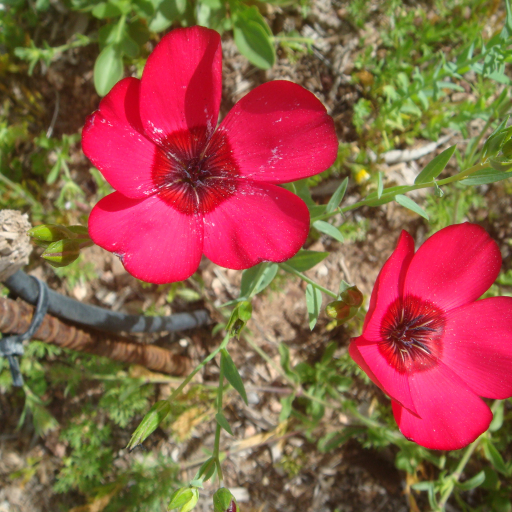
Native to the sun-drenched landscapes of North Africa, Linum grandiflorum—commonly known as Scarlet Flax or Flowering Flax—is a show-stopping annual that brings a "wildflower meadow" vibe to any space. It is famous for its shimmering, blood-red petals that look like they were cut from fine silk. Though each individual flower is a fleeting beauty, lasting only a single day, the plant is a tireless performer that produces a constant succession of blooms all summer long.
🔍 How to Identify
- 🌸 The Bloom: Five broad, rounded petals with a satiny texture, usually a deep crimson or scarlet with a darker, almost black "eye" at the center.
- 🌿 The Foliage: Slender, lance-shaped leaves with a distinct blue-green (glaucous) tint that provides a cool contrast to the fiery flowers.
- 📏 The Stature: A delicate, airy growth habit; the thin, wiry stems reach about 12 to 18 inches tall and sway gracefully in the wind.
🏡 In Your Garden
- 🌱 Taproot Sensitivity: This plant is a "homebody." It grows a long taproot very quickly, which makes it hate being transplanted. For the best results, sow the seeds directly into the garden rather than starting them in pots.
- ☀️ Sun Seekers: The flowers are highly light-sensitive. They perform a daily ritual where they pop open in the morning sun and tuck themselves away (close up) during cloudy weather or at dusk.
- 🦋 Pollinator Magnet: Despite its delicate appearance, it is a powerhouse for local ecology, attracting bees and butterflies who are drawn to its vivid color and accessible nectar.
⚠️ Safety & Toxicity
- ✅ General Status: Non-toxic to humans and generally safe to handle. It is not known to cause skin irritation.
- 🐾 Pet Caution: While not considered high-risk, the seeds of the Linum genus contain cyanogenic glycosides (similar to apple seeds). If your dog or cat decides to snack heavily on the seed pods, it could lead to an upset stomach, so it's best to keep curious chewers away.
✨ Fun Fact
The genus name Linum is the source of the word "Linen." While the Scarlet Flax is grown for its beauty, its close cousins have been used for over 30,000 years to create the durable fabric we still wear today!

Detailed Care Instructions
To grow Linum grandiflorum, also known as Scarlet Flax or Red Flax, follow these steps:
- Choose a suitable planting location: Scarlet Flax prefers full sun but can tolerate partial shade. It prefers well-draining soil, so amend heavy clay soil with organic matter to improve drainage.
- Prepare the soil: Loosen the soil and remove any obstructions like rocks or weeds. Dig in some compost or well-rotted manure to enrich the soil with nutrients.
- Sow the seeds: Scarlet Flax can be directly sown into the ground in early spring after the last frost or in the fall for a spring bloom. The seeds are tiny, so mix them with a bit of sand or vermiculite to help distribute them more evenly. Scatter the seeds over the prepared soil and lightly press them into the ground. Do not cover them with soil, as they need light to germinate.
- Watering: Water the seeds gently after sowing, keeping the soil consistently moist until germination occurs. Once the plants have established, they are moderately drought-tolerant and do not require frequent watering.
- Care and maintenance: Keep the area weed-free to prevent competition for nutrients and water. Scarlet Flax does not require fertilization and can do well in poor soils. However, you can provide a balanced, slow-release fertilizer if the soil is especially lacking in nutrients.
- Pruning: Deadhead the fading flowers regularly to promote more vigorous blooming. This also prevents the plant from self-seeding, as it can become invasive in some regions.
- Pests and diseases: Scarlet Flax is relatively pest and disease-free. However, keep an eye out for aphids, snails, and slugs. Treat any infestations using organic pest control methods if required.
- Harvesting: If you want to collect seeds, allow the flowers to dry on the plant until they turn brown. Gently shake the seeds out of the dried flower heads, and store them in a cool, dry place for future planting.
With proper care and suitable growing conditions, Scarlet Flax plants should flourish and produce vibrant red blooms throughout the growing season.

Place in a bright room that is sun drenched almost all day. Or directly in a south-facing window.

Watering this plant requires thoroughly soaking the soil until water drains out of the bottom of the pot or container. It is important to wait until the top inch of soil has dried out before watering again to prevent overwatering and root rot. The plant prefers well-draining soil and may benefit from a layer of mulch to help retain moisture. It is also important to avoid getting water on the leaves and flowers, as this can cause damage or disease. Instead, water directly at the base of the plant.
To fertilize this plant, apply a balanced fertilizer with equal amounts of nitrogen, phosphorus, and potassium. Apply the fertilizer to the soil around the base of the plant and water thoroughly after application. Fertilize once every four to six weeks during the growing season. Be careful not to over-fertilize, as this can lead to poor growth and reduced flowering.
Linum Grandiflorum plant requires a well-draining soil that is rich in nutrients. The soil should have a neutral to slightly alkaline pH level. It is recommended to use a sandy loam soil that is fluffy and moist. Organic matter can be added to the soil to improve its nutrient content and water retention. The soil should be deep enough to allow for the plant's roots to spread out and grow properly. Overly wet or poorly draining soil should be avoided as it can lead to root rot and other diseases. It is also important to ensure the soil is not compacted, as this can hinder root growth and lead to poor plant performance.
Linum Grandiflorum can be propagated through seed sowing. The seeds should be collected from mature plants and should be sown either in garden soil or peat-based soil mix. The seeds should be sown thinly and should be covered lightly with soil. The soil should be kept moist until the seeds germinate and the seedlings are established.
They can also be propagated through stem cuttings. Stem cuttings should be taken from the parent plant and should include at least 2-3 nodes. The cuttings should be planted in a mixture of sand and peat-based soil mix. The soil should be kept moist and the cuttings should be placed in a shaded area until they develop roots and new leaves.
Finally, Linum Grandiflorum can also be propagated through division. This method involves dividing the parent plant into smaller sections and replanting them in another location. This method is best done during the plant's dormant season and requires careful handling to prevent damage to the plant's roots.








