Plant Overview
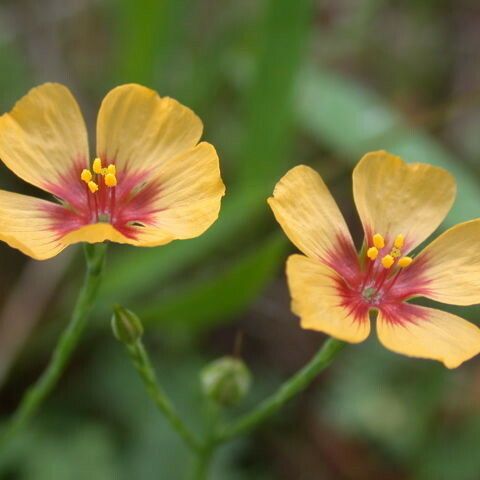
Commonly known as the Tufted Flax, this golden-flowered gem hails from the sun-drenched slopes of South Africa. Its name, imbricatum, refers to the architectural beauty of its leaves, which overlap like the shingles on a roof. While many garden flaxes are tall and wispy, this species forms a charming, compact tuft that looks like a miniature piece of high-altitude scenery.
🔍 How to Identify
- 🌼 The Blooms: Features delicate, five-petaled flowers in a bright, sunny yellow. These usually appear at the tips of the branches during the spring and summer months.
- 🌿 The Foliage: The standout feature is the tiny, scale-like leaves. They are densely packed and "imbricated" (overlapping), giving the stems a textured, braided appearance.
- 📏 Growth Habit: It remains relatively small and shrub-like, forming low, dense cushions or tufts that rarely exceed a foot in height.
🏡 In Your Garden
- ☀️ Sun Seeker: This plant thrives in "fynbos" conditions—think rocky, well-draining soil and plenty of direct sunlight. It is highly drought-tolerant once established, making it a star for rock gardens.
- 💧 Drainage is Key: Unlike common garden flax, Linum imbricatum hates "wet feet." It has adapted to survive in stony ground where water moves quickly, so avoid heavy clay soils that hold onto moisture.
- 🦋 Pollinator Magnet: Its bright yellow color and open-faced flowers are specifically designed to attract small native bees and butterflies, turning your garden into a miniature sanctuary.
⚠️ Safety & Toxicity
- 🐾 Pet Warning: Like many members of the Linum genus, this plant contains cyanogenic glycosides. If ingested in large quantities, it can be toxic to dogs, cats, and horses.
- 👶 Child Safety: While touching the plant is perfectly safe, it should not be consumed. Keep it out of reach of curious toddlers who might be tempted by the bright flowers.
- 🧤 Skin Contact: Generally non-irritating, making it a "friendly" plant to prune and maintain without gloves.
✨ Fun Fact
The term imbricatum comes from the Latin word imbrex, which refers to a curved roof tile. If you look closely at the stems, you can see how the leaves mimic the overlapping tiles used in ancient Roman architecture!

Detailed Care Instructions

Place in a bright room that is sun drenched almost all day. Or directly in a south-facing window.

Some plants require more regular watering than others, which should be done every few days. It's critical to maintain the soil moist all of the time. The water requirements of the same plant placed in pots with varying sizes will differ. Because the water in the smaller pot evaporates faster than the water in the larger pot, it will require more watering. Regardless of pot size, the surface should constantly be maintained moist.








