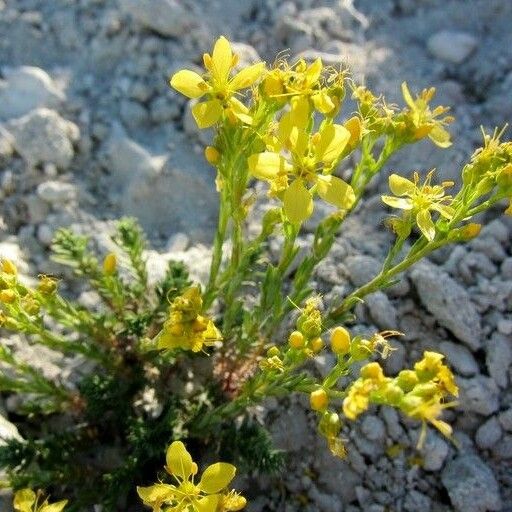
Plant Overview
Often called King’s Flax or Golden Flax, this radiant wildflower is a true survivor of the American West. Named in honor of the geologist Clarence King, it is frequently found gracing the rocky slopes of the Great Basin and the Uinta Mountains. Its sunny, butter-yellow blooms provide a cheerful contrast against the rugged, often harsh environments it calls home.
🔍 How to Identify
- 🌼 Sunny Blooms: The flowers feature five bright yellow petals that form a delicate cup shape, usually measuring about an inch across.
- 🌿 Slender Foliage: The leaves are narrow, lance-shaped, and have a subtle blue-green or grayish tint, which helps the plant conserve water in dry climates.
- 🏗️ Growth Habit: It grows in a neat, multi-stemmed clump that typically reaches 4 to 12 inches high, appearing like a miniature bouquet emerging directly from the soil.
🏡 In Your Garden
- ⛰️ Mountain Heritage: Because it hails from high elevations and rocky ridges, this plant is incredibly drought-tolerant once established. It thrives in "lean," gritty soil and hates having "wet feet," so drainage is essential.
- ☀️ Sun Seeker: To see those golden petals open wide, you must provide full, direct sunlight. In the shade, the plant will become leggy and may refuse to bloom altogether.
⚠️ Safety & Toxicity
- 🐾 Pet Safety: While not considered highly poisonous, many species in the Linum genus contain small amounts of cyanogenic glycosides. It is best to prevent pets or livestock from grazing on the foliage.
- 👶 General Caution: The plant is safe to touch and handle, making it a fine choice for rock gardens, but the seeds and stems are not for human consumption and may cause stomach upset if ingested.
✨ Fun Fact
Linum kingii is often considered a "geologic indicator." In the wild, it shows a strong preference for limestone-rich soils, often helping naturalists identify the mineral composition of the mountain or ridge they are hiking!

Detailed Care Instructions
To grow Linum Kingii plants, you can follow these steps:
- Choose a suitable location: Linum Kingii plants require full sun exposure, so select a spot in your garden that receives at least 6 hours of direct sunlight per day.
- Prepare the soil: The soil should be well-draining and fertile. Add compost or organic matter to improve the soil's nutrients and drainage.
- Sow the seeds: Linum Kingii seeds can be sown directly into the ground after the threat of frost has passed in spring. Alternatively, you can start the seeds indoors 6-8 weeks prior to the last frost date in your area. Sow the seeds at a depth of about ¼ inch and gently cover them with soil.
- Watering and care: Keep the soil moist but not waterlogged. Water regularly, especially during dry spells, to ensure that the soil never completely dries out. Water at the base of the plant to prevent wetting the foliage, as this can lead to fungal diseases.
- Provide support: Linum Kingii plants have delicate, slender stems that can benefit from support. Place small stakes or bamboo canes near the plants to help them stay upright as they grow.
- Mulch the soil: Mulching around the plants can help retain moisture, suppress weeds, and regulate soil temperature. Use organic mulch, such as wood chips or straw, and spread it around the base of the plants.
- Pruning: Linum Kingii plants tend to have a slender and sprawling growth habit. If desired, you can pinch back the top growth once the plants reach around 6 inches in height to encourage bushier growth.
- Pests and diseases: Watch for common pests like aphids or spider mites. Immediately take action if you notice any infestations, using natural pest control methods or suitable insecticides. Linum Kingii plants are generally resistant to diseases but can occasionally be affected by fungal issues in humid conditions. Ensure adequate air circulation around the plants and avoid overhead watering to prevent diseases.
- Harvesting seeds: Linum Kingii plants produce small, round seeds that can be harvested in late summer or early fall. Allow the seed pods to dry on the plant, then remove them and store the seeds in a cool, dry place for future planting.
Following these steps should help you grow healthy and vibrant Linum Kingii plants in your garden.

Place in a bright room that is sun drenched almost all day. Or directly in a south-facing window.

The watering requirements of this plant should be carefully considered to ensure optimal growth. It is important to water the plant sparingly, as it is susceptible to overwatering. The soil should be allowed to dry out between watering sessions, as the plant prefers well-draining soil. It is recommended to use a watering can or a watering wand, which can help regulate the amount of water being applied and prevent unintentional overwatering. Additionally, it is important to avoid watering the foliage, as this can lead to fungal or bacterial diseases. Finally, the plant should be kept in a location that receives bright, indirect sunlight to promote healthy growth and avoid wilting.
To fertilize the Linum Kingii plant, apply a balanced fertilizer with equal parts nitrogen, phosphorus and potassium during the growing season. Use a slow-release granular fertilizer and apply it to the soil around the base of the plant, avoiding getting it on the foliage. Water the plant after fertilizing to help distribute the nutrients. Do not over-fertilize as it can damage the plant.
The recommended soil for the plant has high levels of organic matter and is well-draining with a pH range of 5.5 to 7.0. It can be a mixture of equal parts of peat moss, perlite, and vermiculite or a potting soil that is intended for acid-loving plants. The soil should not be too heavy or compacted as it can restrict the growth of the plant's roots and prevent it from absorbing nutrients properly. Adding fertilizer to the soil in the spring and summer can help encourage healthy growth. It is also important for the soil to be kept moist, but not waterlogged, to prevent root rot.
Linum Kingii is propagated through stem cuttings and seed propagation. For stem cuttings, the gardener should select healthy, young, and leafy stems. The stems should be cut approximately 6 inches long and placed in a sterile, well-drained potting mix. The plant should be kept in a warm and bright location until roots form.
Seed propagation requires the gardener to collect the seeds from the mature plant. The seeds are planted in a propagator or a small pot filled with a well-draining soil mix. The pot should be placed in a warm, bright location, and the soil should be kept moist until germination occurs.
Once propagation is successful, the plant should be transplanted to a permanent location in the garden. The soil should be well-draining and fertile, with a pH level that is slightly acidic. The plant should be watered regularly but not over-watered, and should be given adequate sunlight exposure. With proper care, Linum Kingii can be propagated and grown successfully in any home garden.








