Plant Overview
Often called the Narrow-leaved Flax, this Mediterranean beauty looks like a delicate cloud of pale lilac mist hovering over dry, rocky soil. It is a master of minimalism, sporting stems so thin they almost disappear against the landscape, leaving only its ethereal blooms to catch the eye. It is a symbol of resilience, often found thriving in harsh, sun-drenched environments where other plants would wither.
🔍 How to Identify
- 🌸 The Bloom: Soft lavender-pink or paper-white flowers with five rounded petals, often featuring fine, darker veins that guide pollinators to the center.
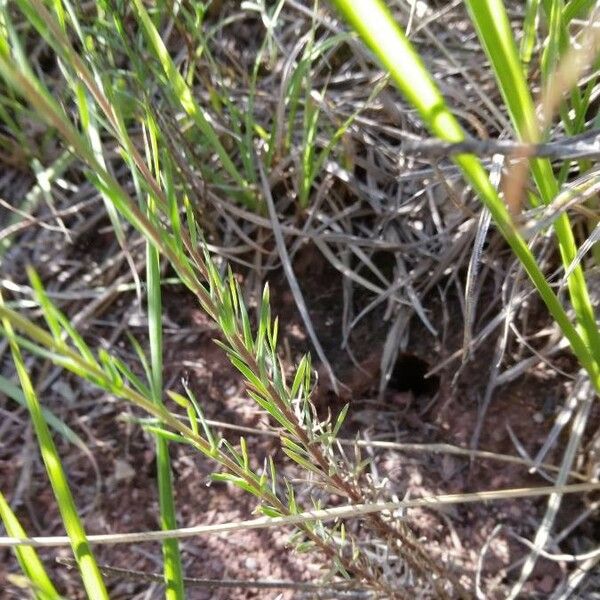
- 🍃 The Foliage: True to its name (tenuifolium means "slender leaf"), the leaves are tiny, needle-like, and grow tightly against the wiry stems.
- 🪴 The Growth Habit: It forms a "subshrub," meaning the base of the plant becomes woody and tough over time, while the top remains airy and light.
🏡 In Your Garden
- ☀️ Sun Seeker: This plant is a "heliophile," meaning it lives for the sun. In the garden, it needs the brightest spot available; if placed in the shade, it will become leggy and refuse to bloom.
- 🪨 The "Lean" Diet: It thrives in poor, chalky, or limestone-heavy soils. Avoid using heavy fertilizers or rich potting soil, as this flax actually prefers "hungry" ground with excellent drainage to prevent root rot.
- 🦋 Pollinator Landing Pad: Because it blooms profusely throughout the summer, it acts as a reliable nectar station for small blue butterflies and hoverflies.
⚠️ Safety & Toxicity
- 🐾 Low Risk: Linum tenuifolium is generally considered non-toxic to cats, dogs, and horses, making it a "worry-free" addition to garden borders.
- 🚫 Not for Ingestion: While it is a wild cousin of the common flax used for flaxseed oil, this specific variety is ornamental. It is not intended for human consumption and may cause mild stomach upset if eaten in large quantities.
✨ Fun Fact
The genus name Linum is the ancient root for the words "linen" and "line." While this specific species isn't used for fabric, its ancestors provided the very first fibers used by humans to create thread and cloth!

Detailed Care Instructions

Place in a bright room that is sun drenched almost all day. Or directly in a south-facing window.

Linum Tenuifolium plant should be watered thoroughly, but not excessively. The soil should be allowed to dry out slightly before watering again. When watering, it is important to water the soil directly at the base of the plant rather than on the leaves or flowers. This helps prevent fungal diseases and damage to the plant. Overwatering can cause root rot and kill the plant, while underwatering can cause the leaves to wilt and turn brown. It is also important to provide good drainage for the plant by using a well-draining soil mix and ensuring there are drainage holes in the pot. Finally, it is important to monitor the plant closely and adjust watering as needed based on the environment and weather conditions.
The ideal soil for this particular plant is well-draining with a pH level ranging from slightly acidic to neutral. It should be rich in organic matter and have a good balance of nutrients such as nitrogen, phosphorus, and potassium. The soil should not be too heavy or compacted as this can inhibit root growth and lead to drainage problems. It is also important to ensure that the soil is moist but not waterlogged, as the plant prefers consistent watering but is susceptible to root rot if the soil is overly wet. Ideally, a soil mix with a combination of compost, sand, and perlite would be suitable for this plant.








