Plant Overview
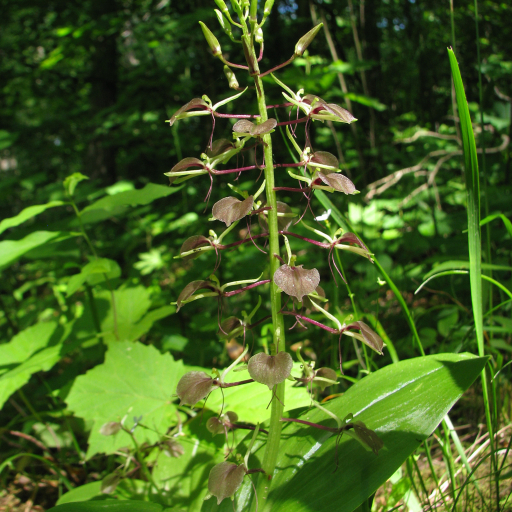
Often called the Lily-leaved Twayblade or Mauve Sleekwort, this orchid is a subtle gem of the North American forest floor. Unlike its showy tropical cousins, it possesses a ghostly, translucent beauty that blends perfectly with the dappled sunlight of a woodland canopy. It is a master of camouflage, often hiding in plain sight until its purple-brown blooms catch a stray beam of light.
🔍 How to Identify
- 🍃 The "Tway" Leaves: Look for exactly two large, shiny, oval leaves at the base of the plant. They are bright green, glossy, and sit opposite each other, giving the plant its common name "Twayblade" (two-blade).
- 🌸 Translucent Blooms: The flowers are truly unique, appearing almost like delicate glass sculptures. They feature a wide, flat "lip" (labellum) that is pale mauve or brownish-purple and nearly see-through.
- 📏 The Flower Spike: A single, leafless maroon stem rises from the center of the two leaves, carrying a loose cluster of 5 to 30 small, intricate flowers.
🏡 In Your Garden
- 🌲 Woodland Secrets: This orchid thrives in the "Goldilocks" zone—not too wet, not too dry. It loves the rich, leaf-mulch soil of deciduous forests where it can tap into underground fungal networks.
- 🍄 Fungal Friendships: Like most wild orchids, it relies on a symbiotic relationship with soil fungi to grow. Because of this, it is notoriously difficult to transplant; if you find one in the wild, leave it where it stands, as it likely won't survive a move to a standard garden bed.
- 🍂 Ephemeral Nature: It is a colonizing species, meaning it may pop up in large numbers in a patch of forest for a few years and then mysteriously vanish as the forest floor changes.
⚠️ Safety & Toxicity
- ✅ Non-Toxic: Liparis liliifolia is generally considered non-toxic to humans, dogs, and cats. It contains no known irritants or poisons.
- 🛡️ Conservation Status: While not toxic to us, we are a threat to it! In many areas, it is considered rare or endangered. It is highly sensitive to soil compaction and deer overgrazing, so treat wild sightings with great care.
✨ Fun Fact
The Lily-leaved Twayblade doesn't smell like a typical flower. It emits a faint, musky odor to attract fungus gnats and flesh flies. These tiny insects are tricked into thinking the translucent, brownish flower is a piece of fungi or organic matter, causing them to crawl inside and accidentally pick up pollen!

Detailed Care Instructions
Here are some tips on how to grow Liparis Liliifolia (lily-leaved twayblade) plant:
- Light: Liparis Liliifolia prefers bright, indirect light. Place the plant in a location where it will receive plenty of natural light, but avoid direct sunlight which can scorch the leaves.
- Temperature: Liparis Liliifolia thrives in average room temperatures between 60-75°F (15-24°C). Avoid exposing the plant to extreme temperatures, drafts, or fluctuations in temperature.
- Watering: Keep the soil evenly moist but not soggy. Water the plant when the top inch of the soil feels dry to the touch. Avoid overwatering as this can lead to root rot.
- Humidity: Liparis Liliifolia prefers high humidity levels. You can increase humidity by misting the plant regularly, placing a humidity tray nearby, or using a humidifier.
- Soil: Use a well-draining potting mix that is rich in organic matter. A mixture of peat moss, perlite, and bark chips works well for Liparis Liliifolia.
- Fertilizing: Feed Liparis Liliifolia with a balanced, diluted fertilizer once a month during the growing season (spring and summer). Avoid fertilizing during the dormant season (fall and winter).
- Repotting: Repot Liparis Liliifolia every 2-3 years to refresh the soil and provide more room for growth. Choose a slightly larger pot with good drainage holes.
- Propagation: Liparis Liliifolia can be propagated through division. Simply separate the plant into smaller sections with roots attached and repot them in separate containers.
By following these care tips, you can successfully grow Liparis Liliifolia and enjoy its beautiful foliage in your home or garden.

Place in a window with dappled sun or a spot in the middle of a room. Or directly in a window facing west or east.

To water this plant, thoroughly moisten the soil around the base of the plant, ensuring that the water reaches the roots. Allow the top layer of soil to dry out slightly between waterings to prevent over-watering. Use room temperature or lukewarm water to avoid shocking the plant's delicate roots. Avoid getting water on the leaves to prevent rotting or fungal diseases. Consider using a watering can with a narrow spout to control the flow of water and prevent splashing. Adjust the frequency and amount of water based on the plant's specific needs and environmental conditions. Watch for signs of wilting or yellowing leaves, which could indicate either under or over-watering.
To fertilize Liparis Liliifolia, use a balanced fertilizer with an NPK ratio of 10-10-10. Apply the fertilizer once every 2-3 weeks during the growing season, which typically runs from spring to early fall. Dilute the fertilizer to half-strength to avoid burning the roots. Water the plant thoroughly after fertilizing to ensure the nutrients are properly absorbed. It is important to follow the manufacturer's instructions for the specific fertilizer you are using. Additionally, avoid fertilizing during the dormant winter months.
Liparis liliifolia plants thrive in well-draining soil that is slightly acidic and rich in organic matter. A good choice for planting Liparis liliifolia is a mix of peat moss and perlite or a quality orchid potting mix. This type of soil will provide the plant with the necessary nutrients and moisture retention it needs to grow and bloom successfully. Additionally, make sure to repot the plant every 1-2 years to refresh the soil and prevent root congestion.
Liparis liliifolia can be propagated through division or by collecting and planting its seeds. Here is a detailed explanation of both methods:
- Division:
- Select a healthy mature plant with multiple stems and shoots.
- Carefully remove the plant from its pot or garden bed and gently separate the stems and shoots.
- Plant each divided section in its own pot or garden bed with well-draining soil and water thoroughly.
- Keep the newly divided plants in a warm, bright location with indirect sunlight and maintain consistent moisture levels to encourage growth.
- Seed collection and planting:
- Collect ripe seeds from the plant by gently shaking the seed pods over a clean container.
- Remove any debris or chaff from the collected seeds and allow them to dry thoroughly.
- Fill a small pot or seed tray with a well-draining potting mix and plant the seeds at a shallow depth.
- Water the planted seeds lightly and cover the container with a plastic wrap or lid to create a humid environment.
- Place the container in a warm, brightly lit location with indirect sunlight and maintain consistent moisture levels by misting the soil regularly.
- Once the seeds have germinated and established roots, transplant the seedlings into individual pots or garden beds for further growth.







