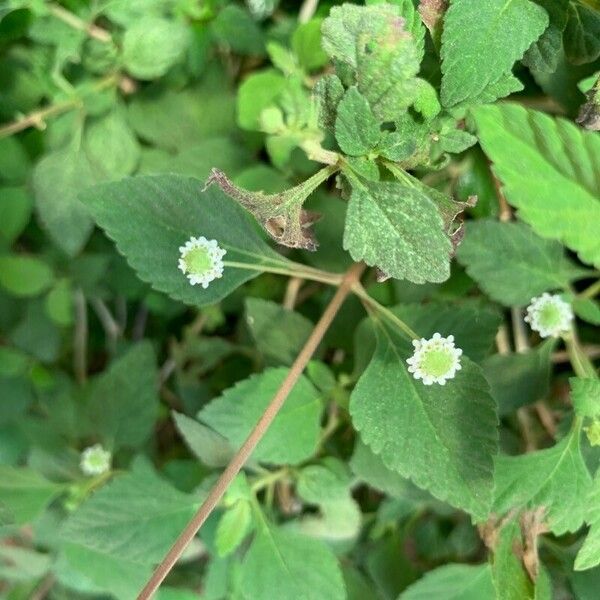
Plant Overview
Known to the Aztecs as Tzonpelic xihuitl ("sweet herb"), the Aztec Sweet Herb is nature’s secret sugar factory. While it looks like a humble groundcover, its leaves contain a natural compound that is significantly sweeter than table sugar. It is a trailing beauty that offers a fascinating historical connection to ancient Mexican medicine and botanical exploration.
🔍 How to Identify
- 🍃 Textured Foliage: The leaves are oval-shaped with deeply impressed veins and "toothed" or serrated edges. When grown in bright sun, the green leaves often take on a striking bronze or deep purple tint.
- 🌸 Button Flowers: It produces tiny, white-to-cream colored flowers that sit atop small, elongated cones. These "buttons" are subtle but appear throughout the warmer months.
- 🌱 Creeping Habit: This is a low-growing, sprawling plant. Its stems like to "walk" across the ground, frequently rooting wherever they touch moist soil to create a dense mat.
🏡 In Your Garden
- 🧶 Container Companion: Because it has a trailing habit and can be an aggressive spreader in warm climates, it is most popular in hanging baskets or tall pots where it can elegantly spill over the sides.
- ☀️ Sun and Stress: While it thrives in sun to partial shade, the "sweetness" and the aromatic oils in the leaves are often more concentrated when the plant receives plenty of light.
- ✂️ Easy Propagation: If you want more, simply snip a stem and stick it in water or moist soil. It is incredibly "prolific" and will establish new roots in just a few days.
⚠️ Safety & Toxicity
- 🛑 Camphor Content: While the leaves taste incredibly sweet, they contain high levels of camphor. Unlike Stevia, this plant is not recommended for regular culinary use or large-scale consumption.
- 🤰 Strict Warnings: It should be avoided entirely by pregnant women and small children. Ingesting large amounts can lead to camphor poisoning, which may cause vomiting or more serious neurological symptoms.
- 🐾 Pet Safety: Keep this plant out of reach of curious cats and dogs, as the camphor and volatile oils can cause digestive distress if chewed on.
✨ Fun Fact
In 1985, scientists isolated the plant's sweet compound and named it hernandulcin after Francisco Hernández, the Spanish physician who first described the plant to the Western world in the 16th century. It is estimated to be roughly 1,000 times sweeter than common sugar!

Detailed Care Instructions
To grow Lippia Dulcis, also known as Aztec sweet herb or honey herb, you can follow these steps:
- Start by obtaining Lippia Dulcis seeds or young plants from a reputable nursery or online retailer. Make sure they are fresh and healthy.
- Choose a suitable location for planting. Lippia Dulcis prefers full sun to partial shade, so select an area that receives at least 6-8 hours of direct sunlight per day.
- Prepare the soil by making it well-draining and rich in organic matter. Lippia Dulcis can tolerate a range of soil types, but it thrives in loose, loamy soil with good drainage.
- Dig a hole that is slightly larger than the root ball of the plant. Place the plant in the hole and backfill with soil, gently firming it around the roots. Leave enough space between plants to allow for their spread, as they can grow to form a dense groundcover.
- Water the newly planted Lippia Dulcis thoroughly, ensuring that the soil is evenly moist. Afterward, only water when the top inch of soil feels dry, as this plant prefers slightly drier conditions.
- Mulch around the base of the plant to help retain moisture and suppress weed growth. Organic mulch, such as wood chips or straw, works well.
- Lippia Dulcis responds well to regular pruning, which promotes fuller growth and helps maintain a compact shape. Trim back any leggy or overgrown stems to encourage bushier growth.
- Fertilize the plant once or twice a year with a balanced, slow-release fertilizer to provide essential nutrients. Follow the package instructions for application rates.
- Monitor the plant for any signs of pests or diseases, such as aphids or root rot. If necessary, treat affected plants with organic or chemical solutions recommended for those specific pests or diseases.
- Harvest the leaves as needed for culinary use or natural sweeteners. The leaves of Lippia Dulcis have a sweet taste and can be used fresh or dried in teas, desserts, or as a sugar substitute.
With proper care and maintenance, your Lippia Dulcis plant should grow well and provide you with its sweet and aromatic leaves for a long time.

Place in a bright room that is sun drenched almost all day. Or directly in a south-facing window.

To properly water the Lippia Dulcis plant, follow these guidelines:
1. Assess the soil moisture: Before watering, check the moisture level of the soil. Insert your finger about an inch into the soil and determine if it feels dry. If the soil feels moist, wait a few days before watering.
2. Watering frequency: Lippia Dulcis plants prefer consistent moisture but not excessive waterlogging. Water the plant every 7-10 days, or adjust accordingly based on the environmental conditions. It is essential to maintain a balance between providing enough water and avoiding overwatering.
3. Watering method: Choose a method that ensures even moisture distribution. Consider using a watering can with a narrow spout to deliver water directly to the soil while avoiding wetting the leaves. Alternatively, drip irrigation can be employed to provide water at a slower pace, allowing better absorption without creating pooling or runoff.
4. Quantity of water: Provide enough water to moisten the soil to a depth of about 4-6 inches. This ensures that the water is reaching the plant's root system, promoting healthy growth. Be cautious not to flood the plant or leave the soil excessively saturated.
5. Watering time: Water the Lippia Dulcis plant early in the day to allow sufficient time for the foliage to dry before evening. Damp leaves during nighttime can increase the chances of diseases and fungal growth.
6. Observe plant response: Monitor the plant's response to watering. If the leaves appear wilted or the plant is showing signs of underwatering (e.g., droopy foliage, yellowing leaves), adjust your watering routine accordingly. On the other hand, if the soil remains consistently moist or the plant exhibits signs of overwatering (such as root rot or wilting despite moist soil), reduce the frequency of watering.
By following these watering guidelines, you can provide appropriate moisture to your Lippia Dulcis plant, aiding its overall health and growth.
To fertilize the Lippia Dulcis plant, use a balanced slow-release fertilizer with an N-P-K ratio of 10-10-10 or 14-14-14. During the plant's active growing season, apply the fertilizer every four to six weeks. Dilute the fertilizer according to the package instructions and apply it evenly around the base of the plant, avoiding direct contact with the stems or leaves. Water the plant thoroughly after fertilizing to ensure the nutrients penetrate the soil. Remember to follow the recommended dosage and frequency guidelines provided by the fertilizer manufacturer.
To maintain optimum growth and health of Lippia Dulcis plant, it is recommended to use a well-draining soil blend that provides adequate moisture retention. The ideal soil should have a slightly acidic to neutral pH level, ranging from 6.0 to 7.0. This pH range enables the plant to efficiently absorb essential nutrients from the soil.
The soil should also be rich in organic matter, such as compost or well-rotted manure, which helps improve soil structure and fertility. It promotes healthy root development and enhances the overall vigor of the Lippia Dulcis plant.
Furthermore, it is crucial to ensure that the soil is not compacted, as it may hinder root growth and subsequently affect the plant's overall health. Regularly loosening the soil around the plant will help maintain proper aeration and prevent waterlogging.
It is worth noting that Lippia Dulcis prefers a consistently moist soil, but overwatering should be avoided, as it can lead to root rot and other moisture-related issues. Therefore, a well-draining soil mix with good water retention is essential for maintaining an appropriate moisture balance.
In summary, the ideal soil for Lippia Dulcis should be well-draining, slightly acidic to neutral in pH, rich in organic matter, and provide adequate moisture retention without excess waterlogging.
To propagate Lippia Dulcis, you can follow these steps:
- Select a healthy and mature Lippia Dulcis plant with strong stems and vibrant leaves for propagation.
- Prepare a well-draining potting mix by combining equal parts of garden soil, perlite, and peat moss. This will provide the ideal growing medium for the new plant.
- Take stem cuttings from the parent Lippia Dulcis plant. Choose stems that are approximately 4-6 inches long and free from any diseases or damage.
- Using a sharp, sterilized knife or pruners, cut the stems just below a node (the point where leaves emerge). Nodes are important as they contain dormant buds that will develop into roots.
- Remove any leaves from the lower 2/3 of the cutting. This will prevent excessive moisture loss and help the plant focus energy on root growth.
- Optional: You can dip the cut ends of the stems into a rooting hormone powder or gel to enhance rooting success. This step is not necessary but can promote faster and more robust root development.
- Make small holes in the potting mix using a pencil or your finger. Insert the prepared cuttings into the holes, ensuring that at least 1-2 nodes are buried in the soil.
- Gently firm the soil around the stems to secure them in place and provide stability.
- Water the cuttings thoroughly but avoid over-watering. Keep the soil consistently moist but not waterlogged to prevent rotting.
- Place the potted cuttings in a warm and bright location, preferably receiving indirect sunlight. A temperature range of 70-85°F (21-29°C) is ideal for root development.
- Monitor the cuttings regularly and mist them periodically to maintain humidity and prevent excessive moisture loss.
- After a few weeks, typically 4-6 weeks, check for signs of new root growth. Gently tug the stems, and if you feel resistance, it indicates that roots have developed.
- Once the cuttings have established roots, you can transplant them into individual pots with well-draining soil or directly into your garden.
Remember to provide proper care, including adequate sunlight, regular watering, and occasional fertilization, to ensure the healthy growth of your propagated Lippia Dulcis plant.
Common pests of the aztec sweet herb include Spider mites, aphids. Make a habit of checking your aztec sweet herb frequently for pests so that any infestations can be caught and managed early.








