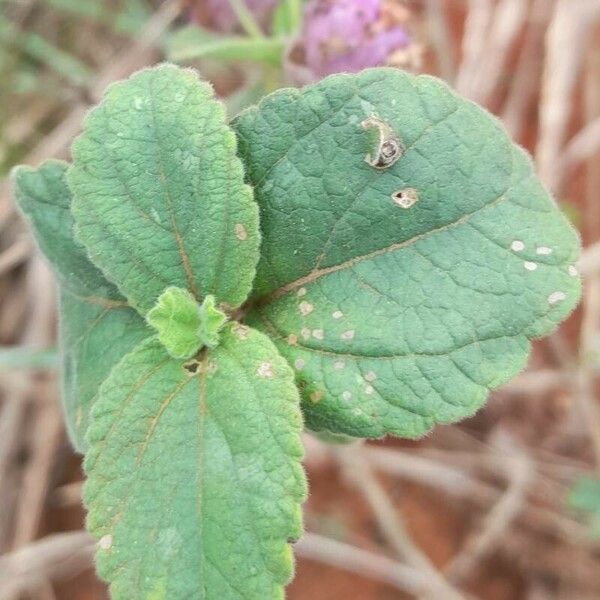
Plant Overview
Often called the "Hop Lippia," this South American native is a master of botanical disguise. Its flower heads look remarkably like the hops used in brewing beer, creating a textured, rustic look that stands out in any wild landscape. In its native savannas, it is a tough survivor that adds a touch of whimsical geometry to the grassy plains.
🔍 How to Identify
- 🌸 Flower Cones: The most striking feature is the overlapping, papery bracts that form a tight, cone-shaped spike. These "hops" protect tiny, delicate white or pale lavender flowers that peek out from the layers.
- 🍃 Textured Foliage: The leaves are typically dark green, oval, and have a noticeably wrinkled or "rugose" surface with finely toothed edges.
- 🌿 Growth Habit: It usually grows as a woody-based herb or small shrub, staying relatively low to the ground with a sprawling, bushy silhouette.
🏡 In Your Garden
- 🌞 Sun Seeker: Hailing from the open Cerrado and savannas of Brazil and Paraguay, this plant craves direct sunlight. If grown in too much shade, those iconic "hop" cones will become sparse and lose their vibrant structure.
- 🏜️ Drought Resilience: It is built for survival in rocky or sandy soils. It thrives on neglect once established, making it perfect for "dry gardening" or xeriscaping, as its deep root system handles dry spells with ease.
⚠️ Safety & Toxicity
- 🐾 General Status: Lippia lupulina is generally considered non-toxic to humans, but like many members of the Verbenaceae family, it contains aromatic essential oils.
- 🐱 Pet Caution: Large amounts of the foliage, if ingested, can cause mild digestive upset in curious cats or dogs. It’s always best to keep "nibblers" away from ornamental shrubs.
- 🧤 Skin Contact: The leaves and stems can be slightly rough or hairy, which may cause mild mechanical irritation to very sensitive skin during pruning.
✨ Fun Fact
The name lupulina literally translates to "hop-like." While it looks exactly like the plant used to flavor your favorite IPA (Humulus lupulus), they aren't related at all—this is a classic example of "convergent evolution," where two different plants evolve the same look because it's a great way to protect their seeds!

Detailed Care Instructions








