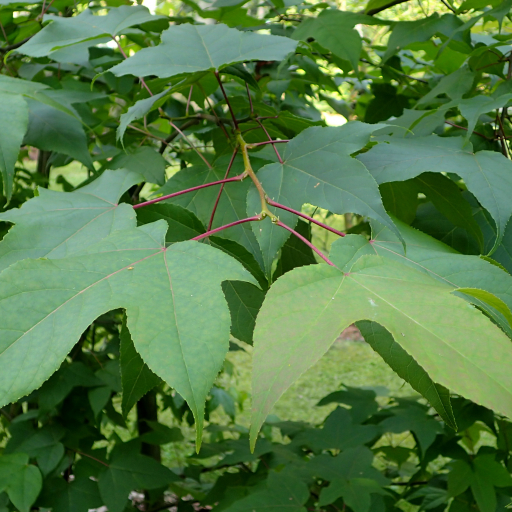
Plant Overview
Often called "Chang’s Sweetgum," this elegant tree is the refined, East Asian cousin of the common American Sweetgum. Indigenous to the mountains of China, it is celebrated by landscape enthusiasts for its sophisticated silhouette and a color palette that shifts dramatically with the seasons. While it starts the spring with bronze-tinted new growth, it finishes the year in a spectacular display of deep burgundy and violet-purple.
🔍 How to Identify
- 🍁 The Leaves: Unlike the common 5-lobed sweetgum, this species typically features three-lobed (trilobed) leaves that resemble a broad trident. They are finely toothed and feel slightly leathery.
- 🪵 The Bark: The trunk is relatively smooth compared to its American relative, lacking the heavy "corky" ridges, and matures into a clean, greyish-brown finish.
- 🟤 The Fruit: It produces "gumballs"—spherical, woody capsules covered in soft spikes—which dangle from the branches like natural ornaments after the leaves have fallen.
🏡 In Your Garden
- 🌱 The Taproot Rule: This tree develops a deep, stubborn taproot very quickly. It is best to choose its "forever home" carefully, as it hates being transplanted once established and may suffer from significant die-back if moved.
- 🍂 Acidic for Color: To get those famous deep purple autumn hues, it prefers slightly acidic soil. In alkaline (high pH) soils, the leaves may turn yellow (chlorosis) and the fall display will be much less vibrant.
- ☀️ Space and Light: It is a large, stately tree that needs plenty of room to spread its wings. It thrives in full sun; the more light it gets, the more intense its "liquid amber" resin production and leaf color will be.
⚠️ Safety & Toxicity
- ✅ Non-Toxic: Liquidambar acalycina is generally considered non-toxic to dogs, cats, and horses.
- 🦶 Physical Hazard: The primary "danger" this tree poses is its fruit. The fallen spiky gumballs are incredibly hard and can be painful to step on with bare feet or can cause slips on paved walkways.
- 🧤 Skin Sensitivity: While not poisonous, some gardeners with very sensitive skin might find the sap slightly irritating; wearing gloves during pruning is a simple precaution.
✨ Fun Fact
The name Liquidambar literally translates to "liquid amber," referring to the fragrant, golden resin that bleeds from the bark when wounded. This resin has been used for centuries in traditional medicines and even as a primitive form of chewing gum!

Detailed Care Instructions
To grow Liquidambar acalycina, also known as the Taiwanese sweetgum or Chinese sweet gum, you can follow these guidelines:
- Climate and sunlight: Liquidambar acalycina thrives in areas with mild to hot summers and cool winters. It prefers full sun to partial shade.
- Soil type and pH: The plant does well in well-draining, fertile soil. A slightly acidic to neutral pH level (around 6.0-7.5) suits it best.
- Planting: Choose a suitable location with enough space for the tree to grow, as Liquidambar acalycina can reach a height of 40-50 feet. Dig a hole that is wide and deep enough to accommodate the root ball. Place the plant in the hole, making sure the top of the root ball is level with the ground. Backfill the hole with soil and gently tamp it down.
- Watering: Keep the soil moist but not waterlogged. Regular watering during the growing season is essential, especially during dry periods. However, avoid overwatering, as it can lead to root rot.
- Mulching: Apply a layer of organic mulch around the base of the plant to help retain moisture, regulate soil temperature, and suppress weed growth.
- Fertilizer: Fertilize the plant in early spring using a slow-release, balanced fertilizer. Follow the package instructions for proper application rates. Avoid excessive fertilization, as it can lead to weak growth.
- Pruning: Minimal pruning is required for Liquidambar acalycina. Remove any dead, damaged, or diseased branches. Prune for shape and size during the dormant season in late winter or early spring.
- Protection from harsh weather: Protect young plants from extreme cold temperatures by wrapping them or covering with burlap during winter.
- Pest and disease control: Liquidambar acalycina is generally resistant to pests and diseases. However, occasional pests like aphids, scale insects, or caterpillars may be present. Monitor the plant regularly and take appropriate measures if needed, such as using insecticidal soap or neem oil.
- Propagation: The plant can be propagated through seeds or stem cuttings. Collect mature seeds and plant them in containers or directly in the ground. For stem cuttings, take semi-hardwood cuttings in early summer and root them in a well-draining medium.
Remember to check for any local regulations or guidelines regarding planting and growing trees in your area.

Place in a bright room that is sun drenched almost all day. Or directly in a south-facing window.

Liquidambar acalycina, commonly known as the Chinese sweetgum, is a deciduous tree native to China. When it comes to watering this plant, there are a few key factors to consider:
1. Watering frequency: Chinese sweetgums generally prefer a moderately moist soil, so it is important to water them regularly. As a rule of thumb, water the plant deeply at least once a week during dry spells, providing enough moisture to reach the plant's root system.
2. Soil type: These trees thrive in well-draining soils. Ensure that the soil is not overly compacted or waterlogged, as this can hinder the plant's growth and lead to root rot. A loose, loamy soil is ideal for proper water drainage.
3. Irrigation method: To ensure thorough watering, consider using methods that allow water to penetrate deeply into the soil. For instance, soaker hoses, drip irrigation systems, or watering by hand at the base of the tree can be effective. Avoid overhead watering, as it may lead to the foliage getting wet and potentially developing diseases.
4. Watering amount: It is crucial to provide adequate water to Chinese sweetgums without overwatering. Usually, applying about 1 inch (2.5 cm) of water per week is sufficient. However, the amount may vary depending on factors such as climate, soil type, and tree size. Keep an eye on the plant and adjust the watering schedule accordingly.
5. Mulching: Mulching can help retain soil moisture, reduce weed growth, and improve overall soil quality. Apply a layer of organic mulch around the base of the tree, keeping it a few inches away from the trunk. This will assist in conserving moisture and promoting a healthy root system.
Remember, each plant's watering needs may vary, and it is important to monitor the soil moisture levels and adjust watering accordingly. Observing the plant for signs of dehydration, such as wilted leaves or a lack of new growth, can also guide your watering routine.
- Choose a well-draining pot or a planting bed for your Liquidambar Acalycina plant.
- Prepare a balanced liquid fertilizer with equal proportions of nitrogen, phosphorus, and potassium. Alternatively, you can use a slow-release granular fertilizer.
- Dilute the liquid fertilizer according to the manufacturer's instructions if using a commercial product. If using a slow-release granular fertilizer, sprinkle it around the base of the plant according to the recommended dosage.
- Apply the fertilizer to the soil during the plant's active growing season, typically in the spring or early summer.
- Ensure the soil is moist before applying the fertilizer to prevent potential damage to the plant's roots.
- Gently pour the diluted liquid fertilizer around the base of the plant, avoiding direct contact with the foliage.
- If using a slow-release granular fertilizer, lightly scratch it into the soil around the plant's base, ensuring it is evenly distributed.
- Water the plant thoroughly after applying the fertilizer to help it absorb the nutrients effectively.
- Monitor the plant for any signs of overfertilization, such as yellowing leaves, burnt tips, or stunted growth. If you notice these symptoms, flush the soil with water to dilute the excess nutrients.
- Repeat the fertilization process every 4-6 weeks during the growing season, adjusting the dosage as necessary based on the plant's response and the specific fertilizer used.
When selecting soil for the Liquidambar acalycina plant, it is important to consider its specific needs and preferences. This plant generally thrives in well-draining soil that is rich in organic matter. A loamy soil with a balanced texture and good structure is ideal.
The pH level of the soil should be slightly acidic to slightly alkaline, around 6.0 to 7.5, to promote optimum growth. This pH range allows for better nutrient availability and root development. Ensuring the soil is well-drained is crucial as this species does not tolerate waterlogged conditions, which can lead to root rot.
To enhance the soil's fertility and water-holding capacity, it is recommended to amend it with organic matter such as compost or well-rotted manure before planting. This helps improve soil structure by increasing microbial activity, which aids in nutrient cycling and root development.
The addition of a layer of organic mulch around the base of the plant can also provide various benefits. Mulch helps retain moisture, suppresses weed growth, and regulates soil temperature, which can be particularly useful during extreme weather conditions.
Regularly monitoring the soil moisture level is important to prevent either excessive dryness or overwatering. Deep, infrequent watering is generally recommended to encourage deep root growth and drought tolerance. However, it is essential to adjust watering frequency based on the plant's specific needs and the climatic conditions of your area.
In summary, the ideal soil for the Liquidambar acalycina plant is well-draining, slightly acidic to slightly alkaline loamy soil with good structure and organic matter content. Adequate care includes regular monitoring of soil moisture levels, adjusting the watering regime accordingly, and maintaining a layer of organic mulch around the base of the plant.
Propagation of Liquidambar Acalycina typically involves the following steps:
- Collection of Seeds: Locate mature fruits or seed pods on the plant. Wait until they turn brown and begin to split open naturally. Harvest the seeds when they are fully mature, and carefully remove them from the pods.
- Seed Treatment: To improve germination rates, it's advisable to subject the seeds to a cold stratification process. Place the seeds in a plastic bag with some moistened peat moss or vermiculite, and seal it. Keep the bag in a refrigerator or cold room for a period of about 60-90 days.
- Preparing the Planting Medium: Prepare a well-draining soil mixture suitable for seed starting. A mixture of equal parts peat moss, perlite, and vermiculite is generally recommended. Alternatively, you can use a commercially available seed starting mix.
- Sowing the Seeds: Fill individual small pots or seed trays with the prepared soil mixture. Make small holes in each pot or tray, about 1/2 inch deep. Place one or two seeds in each hole and cover them with soil, gently patting it down. The seeds should not be buried deeply.
- Watering and Care: Ensure the soil remains moist but not overly saturated. Avoid letting the soil dry out completely. The use of a misting spray bottle can help maintain moisture levels without disrupting the seeds.
- Germination: Place the pots or trays in a warm and bright location, ideally at a temperature of around 70-75°F (21-24°C). Keep them away from direct sunlight to prevent overheating. Germination typically occurs within 2-3 weeks, but it can sometimes take longer.
- Transplanting: Once the seedlings have developed a few sets of true leaves, they can be transplanted into larger pots or individually into the garden. Choose a location with well-draining soil and partial shade to help them establish successfully.
- Establishment and Growth: Monitor the newly transplanted seedlings, ensuring they receive sufficient water to prevent the soil from drying out. It may take a few years for the plants to reach a suitable size for landscape planting.
Please note that this is a general guide for propagating Liquidambar Acalycina, and additional care instructions or specific needs may apply based on local conditions or preferences.








