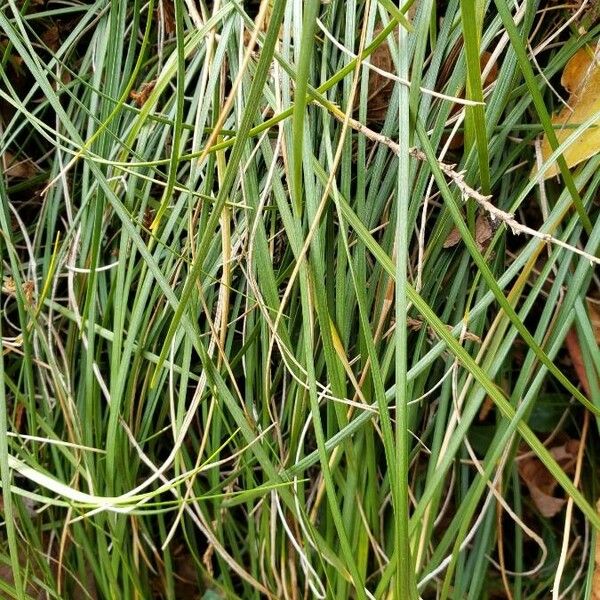
Plant Overview
Often called the "Dwarf Lilyturf," this charming evergreen is the petite, refined cousin of the more common Monkey Grass. Originating from the shaded woodlands of East Asia, it serves as a living velvet carpet, perfect for softening the edges of stone paths or filling the "empty" gaps under large trees where traditional grass refuses to grow.
🔍 How to Identify
- 🌿 The Foliage: Features very narrow, dark green leaves that grow in tight, arching tufts, usually reaching only about 4–6 inches in height.
- 🪻 The Blooms: During late summer, tiny spikes of pale lilac or white flowers peek through the leaves, resembling miniature, upright hyacinths.
- 🌑 The Fruit: After the flowers fade, the plant produces glossy, pea-sized black berries that often persist well into the winter months.
🏡 In Your Garden
- 🪵 The Shade Specialist: Unlike many groundcovers that demand sun, Liriope minor excels in deep shade. It is a problem-solver for "dry shade" areas under mature trees where root competition is intense.
- 🌱 Slow and Steady: It spreads via underground runners (rhizomes) but does so much more slowly than its larger relatives. This makes it manageable and "polite," acting as a filler rather than an invasive spreader.
- ✂️ Spring Refresh: It requires very little attention, but a quick trim with shears in early spring (before the new emerald shoots emerge) helps clear away any winter bronzing and keeps the mound looking tidy.
⚠️ Safety & Toxicity
- 🛡️ Low Risk: Liriope minor is generally considered non-toxic to humans and is not listed as a major threat to common household pets.
- 🤢 Berry Caution: While not deadly, the dark berries contain saponins which can cause mild stomach upset, nausea, or diarrhea if ingested in large quantities by curious children or dogs.
- 🐾 Pet-Friendly Choice: Because it is sturdier than true grass and non-poisonous, it is often recommended for "dog-scaped" gardens where pets might brush against or occasionally nibble on greenery.
✨ Fun Fact
🧚 Mythological Roots: The genus is named after Liriope, a beautiful wood nymph from Greek mythology. She was the mother of Narcissus, the youth who famously fell in love with his own reflection—fitting for a plant that looks so elegant reflected in a garden pond.

Detailed Care Instructions
To grow Liriope Minor plants, here are some steps you can follow:
- Choose a suitable location: Liriope Minor plants thrive in partial shade to full shade, so select a spot that receives indirect sunlight or only a few hours of direct sunlight per day. The soil should be well-draining.
- Prepare the soil: Liriope Minor plants prefer fertile, loamy soil. Amend the soil with organic matter such as compost or aged manure to improve its fertility and drainage. Ensure the soil pH is slightly acidic to neutral (around 6.0 to 7.0).
- Planting: Dig a hole that is slightly wider and deeper than the root ball of the Liriope Minor plant. Place the plant in the hole, making sure it is at the same level as it was in the nursery container. Backfill the hole with soil and gently firm it around the plant.
- Watering: Water the newly planted Liriope Minor thoroughly to settle the soil around the roots. Keep the soil consistently moist but not waterlogged. During dry spells, water deeply once or twice a week.
- Mulching: Apply a layer of organic mulch, such as wood chips or bark, around the plant. Mulching helps retain moisture, suppresses weeds, and keeps the soil cool.
- Fertilizing: Liriope Minor plants do not require excessive fertilization. Apply a slow-release balanced fertilizer in spring to promote healthy growth. Follow the manufacturer's instructions for the appropriate amount to use.
- Maintenance: Liriope Minor plants are relatively low-maintenance. Remove any weeds that may compete with the plants. Cut back the foliage to the ground in late winter or early spring before new growth emerges to tidy up the plant. Dividing the clumps every few years can help rejuvenate the plant and prevent overcrowding.
By following these steps, you should be able to grow Liriope Minor plants successfully.

Place in a bright room that is sun drenched almost all day. Or directly in a south-facing window.

To water this plant, you will want to ensure that the soil is consistently moist but not waterlogged. Be sure to check the soil moisture level regularly by sticking your finger a few inches into the soil. If it feels dry, it's time to water. Water the plant deeply enough so that the water seeps down to the roots, but be careful not to overwater. You can also mist the leaves occasionally, especially during hot weather, to increase humidity around the plant. Lastly, avoid wetting the leaves while watering to prevent any fungal diseases.
- Choose a balanced fertilizer with equal amounts of nitrogen, phosphorus, and potassium.
- Apply the fertilizer in early spring before new growth appears.
- Sprinkle the granules evenly on the soil around the plant, making sure not to touch the leaves.
- Water the plant thoroughly after fertilizing to help the nutrients penetrate the soil.
- Repeat the application once every six months, in the spring and fall, to promote steady growth and blooming.
The ideal soil for this plant should be well-draining and rich in organic matter. It should have a pH level ranging from slightly acidic to neutral, between 5.5 to 7.5. The soil should be moist but not waterlogged. It is important to ensure that the soil is not consistently dry or too wet, as this can harm the plant's growth. Adding compost or leaf mold to the soil is recommended, as it helps to improve its structure and fertility. The plant can also benefit from occasional fertilization with a balanced fertilizer.
To propagate this plant, you could use division or propagation by seed.
For division, wait until the plant has finished flowering and then carefully dig up the clump to separate the individual plants. Each plant should have their own set of roots. Replant each plant at the same depth and in the same type of soil as the original plant.
For propagation by seed, collect the seed from the plant after it has finished flowering. Plant the seeds in a well-drained potting mix, covering with a light layer of soil. Keep the soil moist and ensure the pot is placed in a warm, well-lit location that receives indirect sunlight. The seeds should germinate within several weeks.
Once the new plants have established themselves, they can be transplanted into their permanent location. It is important to water the new plants frequently to ensure they do not dry out while they establish their roots.
Overall, propagation is a great way to expand your garden, provide plants for friends and family, or share a plant you love with others. It can be easy and rewarding to propagate Liriope Minor, provided you follow the proper steps.








