Plant Overview
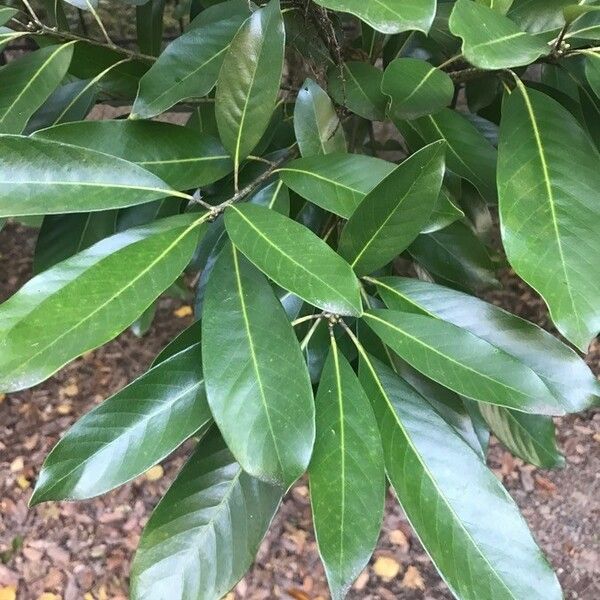
Often called the Henry Chestnut Oak, this elegant evergreen is a master of disguise. While its long, slender leaves might make you think of a willow or a laurel at first glance, its sturdy acorns reveal its true identity as a member of the "Stone Oak" family. Native to China, it is a favorite for gardeners looking for year-round greenery and a sophisticated, architectural silhouette.
🔍 How to Identify
- 🍃 Willow-like Leaves: The foliage is exceptionally long (up to 8 inches) and narrow, with a glossy, dark green finish and a smooth, waxy texture that stays vibrant through the winter.
- 🌰 Stone Acorns: It produces small, rounded acorns that sit in shallow, woody cups. These fruits are remarkably hard and dense, appearing in clusters along the stems.
- 🪵 Smooth Bark: Unlike the rugged, furrowed bark of many common oaks, the trunk of the Henry Chestnut Oak remains relatively smooth and greyish-brown, even as the tree matures into its rounded canopy.
🏡 In Your Garden
- 🌳 The Taproot Rule: This tree develops a very deep, singular taproot early in its life. Because of this "anchor," it hates being transplanted. It is best to plant it in its "forever home" while it is still a young sapling to avoid root shock.
- ⛅ Versatile Shade: While it reaches its full glory in bright sun, it is one of the more shade-tolerant evergreen oaks. It works beautifully as a privacy screen or a standalone specimen tree that won't drop a carpet of leaves every autumn.
⚠️ Safety & Toxicity
- ✅ Low Risk: The Henry Chestnut Oak is not considered poisonous to humans or pets through touch or proximity.
- 🐕 Tannin Caution: Like all oaks, the acorns and leaves contain tannins. If dogs or livestock ingest them in large quantities, it can lead to gastrointestinal distress. The hard acorns can also be a choking hazard for small children or pets.
✨ Fun Fact
The name Lithocarpus comes from the Greek words lithos (stone) and karpos (fruit). This is a literal description of its acorns, which are so incredibly hard and heavy that they feel like polished pebbles!

Detailed Care Instructions

Place in a bright room that is sun drenched almost all day. Or directly in a south-facing window.

The presence of a dry surface layer of soil does not indicate that the plant requires water. Instead, stick your finger 1-2" (3-5 cm) deep in the soil to feel dampness or moisture content. If the soil seems dry, it's time to water your greens. If the soil is still moist, however, it is better not to water your plant and instead wait a day or two. Overwatering or waterlogging raises the risk of root rot. So if the soil takes longer than a week to dry, check the light conditions because it's likely that the plant isn't getting enough light. It's fine if the upper layer of soil is dry between waterings, but the deeper soil layer should always have some moisture.








