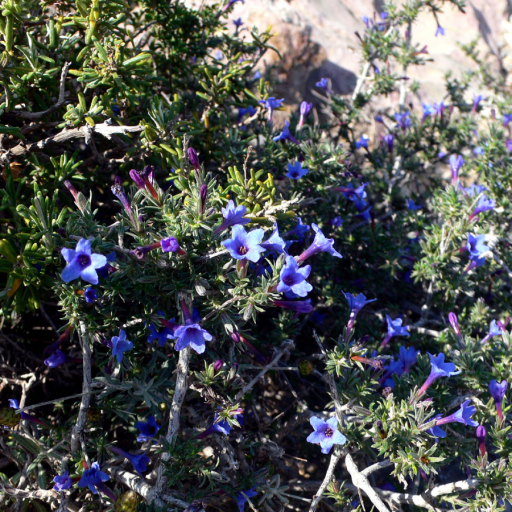
Plant Overview
The Shrubby Gromwell, known scientifically as Lithodora fruticosa, is a Mediterranean gem that brings a splash of electric, "gentian blue" to rocky landscapes. Often found clinging to sun-baked limestone cliffs in Spain and Southern France, this hardy evergreen is a favorite for rock gardens where other plants might wither. Its name perfectly captures its nature, derived from the Greek words Lithos (stone) and Dorea (gift)—it is truly a gift that thrives among the stones.
🔍 How to Identify
- 💙 The Bloom: Funnel-shaped flowers that often start as purplish buds before opening into a piercing, intense sapphire blue.
- 🌿 Foliage: Narrow, needle-like leaves with a grayish-green tint, covered in tiny, stiff hairs that give them a rough, sandpaper-like texture.
- 🪵 Growth Habit: A low-growing, woody sub-shrub that forms dense, mounded cushions, eventually becoming twisted and "bonsai-like" with age.
🏡 In Your Garden
- 🪨 The Lime Specialist: Unlike many garden plants that prefer neutral soil, this species is a "calcicole." It actively thrives in alkaline, lime-rich, or chalky soils where most other "blue-flowered" plants would struggle.
- ☀️ Drought Warrior: Once established, it is incredibly drought-tolerant. It hates "wet feet," so ensure your soil drains quickly; a gritty or gravelly mix is its best friend.
- ✂️ Pruning Nuance: Because it is a woody shrub, it can become "leggy" or bare in the center over time. Lightly shearing the tips after the flowering season encourages fresh, bushy growth.
⚠️ Safety & Toxicity
- ✅ Status: Generally considered non-toxic and safe.
- 🐾 Pets & Kids: There are no reported toxicities for dogs, cats, or horses. However, the tiny hairs on the leaves can sometimes be slightly abrasive to very sensitive skin if handled roughly.
✨ Fun Fact
The "Gromwell" name refers to the plant's seeds, which are incredibly hard, white, and shiny—looking almost like tiny polished porcelain beads or "stony seeds" dropped among the leaves.

Detailed Care Instructions
| Color | Blue With Reddish-Purple Stripes |
| Soil Ph | Acidic |
| Humidity | Normal |
| Lighting | Full Sun |
| Soil Type | Well-Drained Sand |
| Bloom Time | Early Spring Through Mid To Late Summer |
| Difficulty | Easy |
| Plant Type | Herbaceous Flowering Perennial Groundcover |
| Hibernation | Cold Period |
| Mature Size | 6 To 10 In. Tall, 24 To 36 Inches Wide |
| Native Area | Europe (The Mediterranean, Northwestern France, Southern Greece, Algeria And Turkey) |
| Sun Exposure | Full Sun To Part Shade |
| Hardiness Zones | 6-8 |
To grow Lithodora fruticosa (commonly known as the 'Grecian washboard' or 'heavenly blue'), follow these steps:
- Climate and soil requirements: Lithodora fruticosa thrives in regions with mild winters and well-drained soil. It prefers full sun but can tolerate partial shade. Choose a planting location that receives at least 6 hours of direct sunlight each day and has acidic to slightly alkaline soil.
- Propagation: You can propagate Lithodora fruticosa through seeds, cuttings, or division. Seeds should be sown in a seed tray or small pots filled with well-draining potting mix. Keep the soil moist and maintain temperatures around 65-70°F (18-21°C) until germination, which can take several weeks.
- Cuttings can be taken from established plants in early spring or late summer. Choose healthy side shoots and trim them to about 4-6 inches (10-15 cm) in length. Remove the lower leaves and dip the cut end in rooting hormone. Place the cutting in a pot filled with well-draining soil mix, keeping it moist and in partial shade until roots develop.
- Division can be done by carefully digging up an established plant, then dividing the root ball into smaller sections. Replant the divided sections in well-drained soil, ensuring they receive adequate moisture until established.
- Planting: Whether from seeds, cuttings, or division, transplant the Lithodora fruticosa into pre-prepared holes or containers filled with well-drained soil. Space individual plants about 12-18 inches (30-45 cm) apart to allow for their spreading habit.
- Watering: While Lithodora fruticosa is drought-tolerant once established, it requires regular watering during its first growing season. Water deeply but infrequently to encourage deep root growth. Avoid overwatering, as overly wet conditions can lead to root rot.
- Mulching: Apply a layer of organic mulch around the plants to conserve moisture, suppress weeds, and protect the roots from extreme temperatures.
- Pruning: After flowering, lightly shear back the plant to maintain a compact shape and encourage bushier growth. However, avoid heavy pruning, as it may reduce flowering the following year.
- Fertilization: Generally, Lithodora fruticosa does not require frequent fertilization. If the soil is poor, you can apply a balanced, slow-release fertilizer in spring or early summer.
- Pest and disease control: Lithodora fruticosa is relatively pest and disease resistant. However, regular monitoring for common garden pests like aphids or snails is recommended. In case of pest infestations, treat with appropriate organic or chemical solutions.
By following these guidelines, you should be able to successfully grow Lithodora fruticosa and enjoy its beautiful blue flowers and evergreen foliage.

Place in a window with dappled sun or a spot in the middle of a room. Or directly in a window facing west or east.

To water this plant, you should give it a moderate amount of water on a regular basis, making sure the soil remains evenly moist but not waterlogged. When watering, try to avoid getting water on the foliage, as this can cause damage or disease. Additionally, it's important to provide good drainage to prevent the roots from becoming waterlogged. During the hottest months of the year, you may need to increase watering frequency to keep the plant healthy and hydrated.
To fertilize this plant, first test the soil pH to ensure it is within the appropriate range. Choose a balanced fertilizer with equal amounts of nitrogen, phosphorus, and potassium. Apply the fertilizer according to the package instructions, avoiding getting any on the foliage or stems. Water thoroughly after fertilizing to ensure the nutrients are absorbed into the soil. Fertilize once in the spring and again in the fall for best results.
Lithodora Fruticosa is a specific type of plant that requires specific soil conditions for optimal growth. The best soil for this plant would be a well-draining, sandy soil with a slightly acidic pH level of around 6.0-6.5. The soil should be rich in organic matter and nutrients to promote healthy growth and provide adequate support for the plant's roots. Additionally, the soil should be kept moist but not waterlogged, as this can lead to root rot and other issues. Overall, proper selection and preparation of soil is crucial for the successful growth and development of Lithodora Fruticosa plants.
To propagate this plant, follow these steps:
- Fill a small container with well-draining soil mix.
- Take a cutting from the parent plant, making sure it is at least 3 inches long and has several leaves.
- Remove the leaves from the bottom of the cutting, leaving only a few at the top.
- Dip the cut end of the cutting into rooting hormone.
- Insert the cutting into the soil and press the soil around it to secure it in place.
- Water the cutting thoroughly and place it in a bright location with indirect sunlight.
- Keep the soil moist but not waterlogged.
- After a few weeks, check for roots by gently tugging on the cutting. If it resists, roots have formed.
- Once roots have formed, transfer the new plant to a larger container or into the ground in a new location.
- Water regularly and watch your new plant grow!








