Plant Overview
Often called the Golden Gromwell or Cobre Gromwell, this sun-loving perennial is a hidden gem of the high deserts and mountain slopes of the American Southwest and Mexico. With its vibrant, trumpet-shaped blooms that look like splashes of liquid sunshine, it is a favorite for those trying to bring a touch of the wild, rugged alpine beauty into their own landscape. Its name, derived from the Greek for "stone seed," hints at its tough nature and the incredibly hard, porcelain-like seeds it produces.
🔍 How to Identify
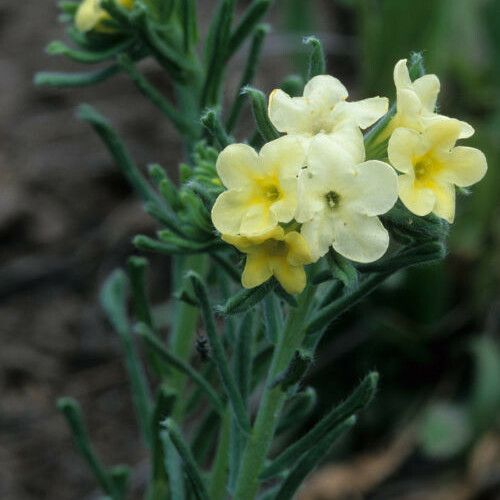
- 🌼 Brilliant Blooms: The flowers are a deep, saturated yellow to golden-orange, featuring five rounded petals that form a narrow tube before flaring out.
- 🌿 Bristly Foliage: The narrow, lance-shaped leaves are covered in fine, stiff hairs that give the plant a slightly rough, "sandpapery" texture and a silvery-green sheen.
- 💎 Stone Seeds: Look for small, white, or ivory-colored nutlets that are famously hard and smooth, resembling tiny polished pebbles or pearls hidden at the base of the flower.
🏡 In Your Garden
- ☀️ Sun & Drainage: This plant is a true child of the sun; it demands bright light and exceptionally well-draining soil. If its "feet" stay wet for too long, the root system is prone to rot, so rocky or sandy spots are ideal.
- ⛰️ High-Altitude Native: Because it naturally thrives in pine-oak woodlands and grassy slopes, it prefers regions with cooler nights. Once established, its deep taproot makes it incredibly drought-tolerant, though it dislikes being moved once it has settled in.
⚠️ Safety & Toxicity
- 🟢 General Status: Generally considered non-toxic to humans and pets, but should be handled with a bit of caution.
- 🌵 Skin Irritation: The bristly hairs on the stems and leaves can be a mechanical irritant. For those with sensitive skin, handling the plant without gloves might cause a mild, itchy rash or "prickly" sensation.
- 🥣 Dietary Caution: While some species in the Boraginaceae family have historical medicinal uses, they often contain pyrrolizidine alkaloids, which can be harmful if ingested in large quantities. It is best kept as an ornamental rather than a culinary herb.
✨ Fun Fact
The seeds of the Golden Gromwell are so incredibly hard and shiny that they were historically used by indigenous cultures as beads for jewelry and decorative handiwork. They are essentially nature’s own "organic pearls" that never lose their luster!

Detailed Care Instructions

Place in a bright room that is sun drenched almost all day. Or directly in a south-facing window.

Some plants require more regular watering than others, which should be done every few days. It's critical to maintain the soil moist all of the time. The water requirements of the same plant placed in pots with varying sizes will differ. Because the water in the smaller pot evaporates faster than the water in the larger pot, it will require more watering. Regardless of pot size, the surface should constantly be maintained moist.








