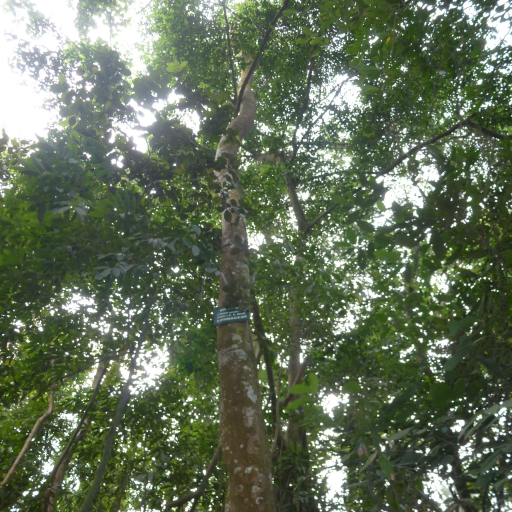
Plant Overview
Known by its rather descriptive name, the "Soft Boll-wood" or "Indian Laurel," Litsea glutinosa is a resilient evergreen tree that hides a "sticky" secret within its bark. Native to the tropical forests of South and Southeast Asia, it has been a staple in traditional village pharmacies and industrial incense production for centuries. Whether it is providing a dense canopy of shade or acting as a natural glue, this tree is a versatile survivor of the Lauraceae family.
🔍 How to Identify
- 🍃 The Leaves: Look for elliptical or oblong-shaped leaves that feel slightly leathery. The undersides are often covered in fine, soft hairs, giving them a pale, velvety appearance.
- 🪵 The Bark: The bark is thin and grayish-brown. A key identifying trait is that when the bark is bruised or crushed, it releases a distinctively slimy, mucilaginous sap that feels like natural glue.
- 🌼 Flowers and Fruit: It produces small, inconspicuous clusters of yellowish-green flowers. These eventually turn into small, round, pea-sized berries that transition from green to a deep, shiny black when ripe.
🏡 In Your Garden
- 🌱 The Pioneer Spirit: This tree is considered a "pioneer species," meaning it is incredibly hardy and often one of the first plants to reclaim disturbed or cleared land. It isn't picky about soil quality but thrives in humid, tropical environments.
- 💧 The "Glue" Tree: In many cultures, the ground-up bark is mixed with water to create a binding agent. This natural paste is used to hold incense sticks together and has historically been used as a plaster for construction and traditional medicine.
⚠️ Safety & Toxicity
- ✅ Status: Generally non-toxic and considered safe for handling.
- 🐾 Details: While not known to be poisonous to pets or humans, the high mucilage (slime) content in the leaves and bark can cause mild digestive upset if ingested in large quantities by curious dogs or cats. It is always best to admire its medicinal history rather than making it a snack.
✨ Fun Fact
In traditional medicine, the sticky paste made from the bark of Litsea glutinosa was often used as a "living cast"—it was applied to sprains or broken bones to provide a cooling, binding support that hardened as it dried!

Detailed Care Instructions
To grow a Litsea Glutinosa plant, also known as the Indian laurel, you can follow these steps:
- Choose the right location: Litsea Glutinosa prefers a warm, sunny location with well-draining soil. It can tolerate a variety of soil types but thrives in rich, loamy soil.
- Prepare the soil: Before planting, prepare the soil by removing any weeds or grass. Add organic matter such as compost or well-rotted manure to improve soil fertility and drainage.
- Planting: Dig a hole slightly larger than the root ball of the plant. Place the plant in the hole at the same level it was growing in its container. Fill the hole with soil, gently firming it around the roots.
- Watering: Water the plant thoroughly immediately after planting and continue to provide regular watering, especially during the first few weeks while it establishes. Avoid overwatering, as excessive moisture can harm the plant.
- Mulching: Apply a layer of mulch around the base of the plant to help retain moisture, suppress weeds, and regulate soil temperature. Use organic materials like wood chips or straw for best results.
- Pruning: Prune the plant as needed to maintain its shape and remove any dead or damaged branches. Regular pruning will help promote healthy growth and improve overall appearance.
- Fertilization: Fertilize the Litsea Glutinosa plant once or twice a year with a balanced, slow-release fertilizer. Follow the instructions on the fertilizer package for specific application rates and timing.
- Pests and diseases: Litsea Glutinosa is generally resistant to pests and diseases. However, keep an eye out for common garden pests like aphids or scale insects and treat them promptly if detected.
Remember that different regions and climates may require specific care considerations, so it's always beneficial to research the specific needs of the plant in your area or consult with a local nursery or gardening expert for tailored advice.

Place in a window with dappled sun or a spot in the middle of a room. Or directly in a window facing west or east.

To water this particular plant, it is important to first take into consideration the conditions in which it is growing. The soil type, weather, and amount of sunlight it receives will all impact the amount of water it requires.
Generally, the plant should be watered consistently but not excessively. Overwatering can lead to root rot and other issues, while underwatering can cause the plant to wilt and dry out.
One way to check if the plant needs water is to feel the top layer of soil. If it is dry to the touch, the plant likely needs watering. However, if the soil feels moist or wet, it is best to hold off on watering until the soil has dried out a bit.
When watering, it is best to water deeply to encourage strong root growth. The plant should be thoroughly watered until water flows out of the drainage holes at the bottom of the pot or soil. It is important to allow excess water to drain away to prevent waterlogging.
Lastly, it is important to keep an eye on the plant throughout the growing season and adjust watering as needed based on environmental conditions and growth patterns.
- Choose a balanced fertilizer with equal parts nitrogen, phosphorus, and potassium.
- Apply the fertilizer in the early spring, just as new growth begins to emerge.
- Use a slow-release fertilizer to ensure that nutrients are released gradually over time.
- Apply the fertilizer according to package instructions, taking care not to over-fertilize, which can damage the plant.
- Water the plant deeply after fertilizing to help distribute the nutrients throughout the soil.
- Repeat fertilization once or twice per year, depending on the growth rate and health of the plant.
Litsea Glutinosa plant prefers a well-draining soil that is rich in organic matter. The ideal soil pH range for this plant is slightly acidic to neutral (between 5.5 and 7.0). Sandy loam or loamy soils are ideal, but it can also grow in clay soils if they are well-draining. The soil should be moist, but not too wet, as excessive moisture can lead to root rot. Adding compost or well-rotted manure can help improve the soil quality. It is also recommended to avoid using heavy chemical fertilizers as this can harm the plant's growth.
Litsea Glutinosa can be propagated by using stem cuttings. Take stem cuttings from the healthy and disease-free parent plant that are about 15-20 cm long and have a diameter of around 0.5 cm. Make sure to take cuttings early in the morning or late in the afternoon to avoid hot sun exposure. Remove the lower leaves of the cutting and dip the base in rooting hormone powder. Then, plant the cutting in a mixture of well-drained soil and organic compost. Water the cutting deeply and regularly to keep the soil moist. Place the pot in a warm and bright location but avoid direct sunlight. The cutting should develop roots within a few weeks. Once the roots have developed, transplant the young plant into a bigger pot or into the ground, and keep it in a location with partial shade.








