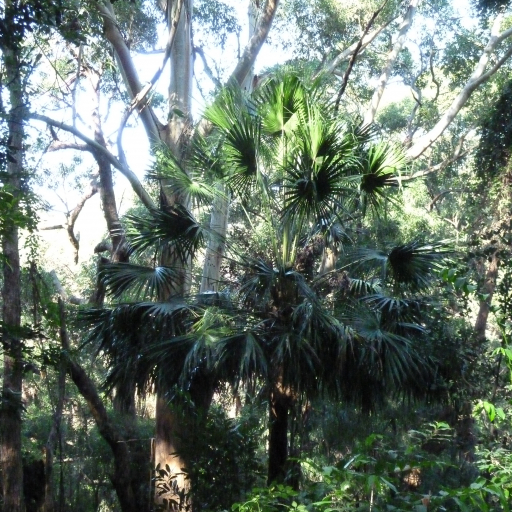
Plant Overview
Widely known as the Cabbage Tree Palm, this Australian icon brings a touch of prehistoric grandeur to any landscape. Found naturally along the coastline and in rainforest margins, it earned its name because early European settlers and Indigenous Australians harvested its young, crisp growing bud—the "cabbage"—to eat. While it looks like a typical tropical palm, it is surprisingly tough and can handle much cooler temperatures than its delicate appearance suggests.
🔍 How to Identify
- 🌿 Fan-Shaped Fronds: Unlike feathery palms, this species features massive, dark green leaves that fan out in a circular shape, with the leaf tips often drooping elegantly toward the ground.
- 🪵 The Trunk: As it matures, it develops a slender, grey trunk marked with horizontal rings (scars from old leaves), reaching impressive heights in the wild but remaining manageable in large garden spaces.
- ⚔️ Armored Stems: Look closely at the leaf stalks (petioles); they are lined with sharp, dark, hooked spines that act as a natural defense against climbing animals.
🏡 In Your Garden
- 🌊 Coastal Resilience: This palm is incredibly salt-tolerant, making it a favorite for seaside gardens where salt spray would wither other tropical plants.
- 🐢 Slow and Steady: It is a slow-growing species. If you are planting one, understand that it focuses on root and trunk girth before shooting upward, so patience is a virtue with the Livistona.
- 💧 Moisture Logic: While it can survive dry spells once established, it truly thrives in moist, rich soil. In its natural habitat, it loves "wet feet" near creek lines, so don't let it dry out completely in the summer.
⚠️ Safety & Toxicity
- 🟢 Non-Toxic: Good news for pet owners and parents—the Livistona australis is not known to be toxic to cats, dogs, or humans if ingested.
- 🩹 Physical Hazard: The primary safety concern is the "teeth" along the leaf stems. These spines are very sharp and can cause nasty scratches during pruning, so always wear heavy-duty gloves when handling fronds.
✨ Fun Fact
The leaves of this palm were the source of Australia’s first home-grown fashion craze. In the 1800s, the fibers were bleached and woven into "Cabbage Tree Hats," which became the signature headwear for bushmen and explorers!

Detailed Care Instructions
To grow a Livistona Australis plant, also known as Cabbage Palm or fan palm, you will need to follow these steps:
- Choose a suitable location: Livistona Australis plants prefer bright, indirect light. Select a spot that gets partial shade or filtered sunlight throughout the day.
- Prepare the soil: The plant prefers well-draining soil. Mix equal parts of regular garden soil, perlite, and sand to create a suitable growing medium. This will ensure proper drainage and prevent waterlogging.
- Acquire a healthy plant: Purchase a healthy Livistona Australis plant from a reputable nursery or garden center. Look for a plant with green and firm leaves.
- Planting: Dig a hole in your prepared soil that is slightly larger than the plant's root ball. Gently remove the plant from its container and place it into the hole. Adjust the plant's position so that it is sitting at the same depth it was in the container. Backfill the hole with soil, gently firming it around the base of the plant.
- Watering: Water the plant thoroughly after planting to help settle the soil and remove any air pockets. Ensure that the soil is consistently moist but not waterlogged. Water deeply when the top inch of soil feels dry.
- Fertilizing: Apply a slow-release palm fertilizer according to the package instructions. Fertilize once in early spring and once in mid-summer to provide essential nutrients.
- Mulching: Apply a layer of organic mulch, such as wood chips or shredded bark, around the base of the plant. This will help retain moisture, regulate temperature, and prevent weed growth.
- Pruning: Remove any damaged or dead fronds by cutting them at the base of the stem. This will keep the plant looking tidy and healthy. Avoid removing too many fronds at once, as this can stress the plant.
- Protection from cold: If your area experiences freezing temperatures, provide protection to the plant during winter. Cover it with a frost blanket or move it indoors to a garage or greenhouse until temperatures rise above freezing.
- Monitor for pests and diseases: Keep an eye out for common palm pests such as scales, spider mites, or mealybugs. Treat infestations promptly with appropriate insecticides or organic solutions.
Remember to be patient, as Livistona Australis plants can take time to establish and grow. With proper care, they can become stunning additions to your indoor or outdoor space.

Place in a bright room that is sun drenched almost all day. Or directly in a south-facing window.

The Livistona Australis plant is a tropical plant that requires the appropriate amount of water to thrive. Firstly, ensure that the soil is slightly damp, but not overly saturated, before watering. Secondly, the frequency of watering will depend on factors such as the temperature, humidity, and soil type. It is recommended to water the plant thoroughly when the top 1-2 inches of soil feel dry to the touch. Avoid overwatering the plant as it can cause root rot and other issues. Additionally, ensure that the plant is not exposed to waterlogged soil or standing water as this can also lead to root rot. Lastly, it is essential to use a well-draining potting mix and container to allow for proper drainage.
To fertilize this plant, use a balanced fertilizer with equal parts nitrogen, phosphorus, and potassium. Apply the fertilizer once a month during the growing season (spring and summer) and reduce frequency during the dormant season (fall and winter). Make sure to dilute the fertilizer to half-strength before applying to avoid burning the plant's roots. Water the plant thoroughly before and after fertilizing.
The ideal soil for the plant is well-draining and rich in organic matter. It should be slightly acidic with a pH between 6.0-7.0. A mixture of loam, sand, and peat moss is a good option. The soil should have good moisture retention capabilities but must also allow excess water to drain out. It is important to avoid using heavy or compacted soils that can lead to root rot. Additionally, the soil should be regularly fertilized with balanced nutrients to support healthy growth.
There are several ways to propagate this plant, but one popular method is through seed propagation. To start, collect the seeds from the plant and soak them in warm water for 24 hours. Then, plant the seeds in a well-draining soil mix and cover them lightly with soil. Water the soil lightly and cover the pot with a plastic bag to create a humid environment.
Place the pot in a warm, bright location, but avoid direct sunlight. The seeds should germinate within a few weeks. Once the seedlings have developed a few leaves, they can be transplanted into individual pots.
Another method of propagation is through division of the plant. To do this, carefully dig up the plant and separate the offshoots from the parent plant. Each offshoot should have its own set of roots. Plant the offshoots in individual pots with well-draining soil and water them lightly. Place them in a warm, bright location, but avoid direct sunlight for the first few weeks.
With proper care, these propagated plants should thrive and grow into beautiful mature plants.








