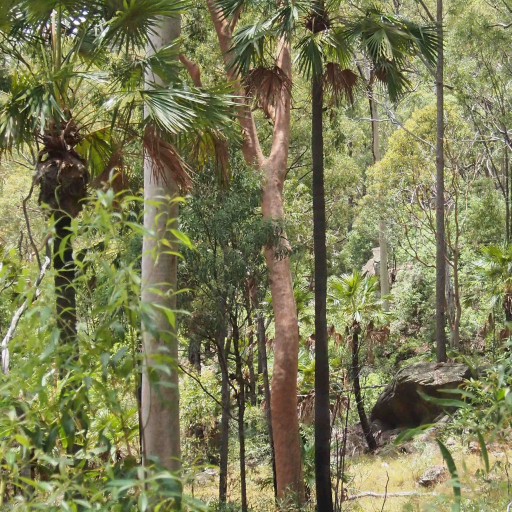
Plant Overview
Known as the Bronze Fan Palm or the Black-stemmed Fan Palm, Livistona fulva is an Australian aristocrat of the palm world. Originating from the rocky ranges of Queensland, it is highly prized by collectors for its "hidden" glamour. While it appears as a sturdy green palm from afar, a passing breeze reveals a shimmering, metallic copper underside that looks as though the leaves have been brushed with gold.
🔍 How to Identify
- 🍃 The Metallic Underside: The most striking feature is the dense, velvety coating (indumentum) on the bottom of the leaves, which ranges from silvery-grey to a deep, burnt orange or bronze.
- ✋ Fan-Shaped Fronds: It produces large, stiff, circular leaves that are deeply divided into many segments, creating a classic "fan" silhouette.
- 🌑 Dark Petioles: The leaf stems (petioles) are remarkably dark, often appearing charcoal or near-black, and are lined with small, sharp teeth.
🏡 In Your Garden
- ☀️ Light Maturity: While young plants prefer the protection of dappled shade, mature specimens are surprisingly sun-hardy. That "bronze fuzz" actually acts as a natural sunscreen, helping the plant reflect intense heat and retain moisture.
- 💧 Drainage is Key: In its native habitat, it grows near rocky creeks and tablelands. It hates "wet feet," so ensure your soil is well-draining. It is much more drought-tolerant than its cousins once its root system is established.
⚠️ Safety & Toxicity
- ✅ Non-Toxic: This palm is generally considered non-toxic to cats, dogs, and horses, making it a safe choice for pet-friendly landscapes.
- ⚔️ Physical Hazard: Use caution when pruning! The "teeth" along the leaf stems are very sharp and can cause painful scratches or snag clothing. It is best to wear thick gloves when handling the fronds.
✨ Fun Fact
The species name Fulva comes from the Latin word for "tawny" or "brownish-yellow." Botanists chose this name because the golden-bronze fuzz on the leaves is so thick it can actually be rubbed off with your thumb, revealing the green leaf underneath!

Detailed Care Instructions
Growing a Livistona fulva, commonly known as the Australian Fan Palm, involves several steps to ensure the plant thrives. This palm is well-suited to tropical and subtropical climates, and with the right care, it can be a beautiful addition to your garden or indoor plant collection. Here’s what you need to do:
1. Seed Selection and Germination:
- Seed Acquisition: Obtain fresh seeds from a reputable source.
- Preparation: Soak the seeds in warm water for 24-48 hours to soften the seed coat and enhance germination.
- Sowing: Plant the seeds in a well-draining seed-starting mix. You can use a mix of sand, peat, and perlite. Bury the seeds about 1 inch deep.
- Conditions: Place the planted seeds in a warm, humid environment. Maintain a temperature between 75-85°F (24-29°C). A seedling heat mat can help maintain consistent warmth.
- Watering: Keep the soil consistently moist but not waterlogged. Use a spray bottle to mist the surface if necessary.
- Patience: Germination can take several weeks to a few months, so be patient.
2. Transplanting Seedlings:
- Timing: Once seedlings have developed a few true leaves, they can be carefully transplanted to larger pots.
- Soil: Use a well-draining potting mix. A mix of potting soil, sand, and orchid bark works well.
- Container: Choose a container with good drainage holes.
3. Planting Location:
- Outdoor Planting: Livistona fulva prefers a sunny to partially shaded location. In extremely hot climates, some afternoon shade can be beneficial.
- Indoor Planting: Bright, indirect light is ideal. If placed in direct sunlight, slowly acclimate the plant to prevent leaf burn.
4. Watering:
- Consistency: Keep the soil consistently moist but not soggy. Watering frequency will depend on the climate and soil type.
- Over-watering: Avoid over-watering as it can lead to root rot.
5. Temperature and Humidity:
- Ideal Temperature: This palm prefers warm temperatures, ideally between 75-85°F (24-29°C).
- Humidity: High humidity is beneficial but not essential. If growing indoors, occasional misting can help maintain humidity levels.
6. Fertilization:
- Timing: During the growing season (spring and summer), apply a balanced, slow-release fertilizer.
- Frequency: Fertilize every 2-3 months. Reduce or cease fertilization during the dormant winter months.
- Type: Use a balanced palm fertilizer with micronutrients.
7. Pruning and Maintenance:
- Fronds: Remove dead or damaged fronds to encourage healthy growth.
- Care: Regularly check for pests such as spider mites or scale and treat as necessary.
8. Pests and Diseases:
- Common Pests: Watch for spider mites, mealybugs, and scale.
- Treatment: In case of infestation, treat with appropriate insecticidal soap or neem oil.
9. Growth and Development:
- Patience: Livistona fulva is a slow-growing palm. It may take several years to reach a significant size.
- Transplanting: As the plant grows, it may require repotting into larger containers.
By following these guidelines, you can successfully grow Livistona fulva and enjoy its unique, fan-shaped foliage. Remember, patience and consistent care are key to nurturing this beautiful palm.
Watering a Livistona fulva, or a plant species in the genus Livistona, requires a thoughtful approach to ensure its health and growth. Here are the steps and considerations for properly watering this plant:
- Watering Frequency:
- Young Plants: For young specimens, keep the soil consistently moist but not soggy. Water them regularly to prevent the soil from drying out completely.
- Established Plants: Once the plant matures, it becomes more drought-tolerant. Water these mature plants less frequently, allowing the top few inches of soil to dry out between watering.
- Young Plants: For young specimens, keep the soil consistently moist but not soggy. Water them regularly to prevent the soil from drying out completely.
- Soil Moisture:
- It’s crucial to maintain soil moisture at an optimal level. The soil should be well-drained. Sandy or loamy soil works well for this purpose.
- Test soil moisture by inserting your finger about 2-3 inches into the soil. If it feels dry, it's time to water.
- It’s crucial to maintain soil moisture at an optimal level. The soil should be well-drained. Sandy or loamy soil works well for this purpose.
- Watering Method:
- Water deeply to ensure that the roots are adequately hydrated. This means soaking the soil thoroughly during each watering session.
- Avoid shallow watering since it can cause the roots to remain near the surface, making the plant less resilient to drought conditions.
- Water deeply to ensure that the roots are adequately hydrated. This means soaking the soil thoroughly during each watering session.
- Drainage:
- Ensure the pot or planting site has good drainage to prevent waterlogging, which can lead to root rot.
- If grown in a pot, use containers with drainage holes and a well-draining potting mix.
- Ensure the pot or planting site has good drainage to prevent waterlogging, which can lead to root rot.
- Environmental Factors:
- Adjust your watering schedule based on the climate and season. During hot and dry periods, the plant may require more frequent watering.
- Conversely, reduce watering during the cooler months or when the plant is in a dormant phase.
- Adjust your watering schedule based on the climate and season. During hot and dry periods, the plant may require more frequent watering.
- Observation:
- Regularly check the plant for signs of over or under-watering. Yellowing leaves or leaf drop can be signs of too much water, while brown, crispy edges can indicate underwatering.
- Regularly check the plant for signs of over or under-watering. Yellowing leaves or leaf drop can be signs of too much water, while brown, crispy edges can indicate underwatering.
- Humidity:
- While the plant is somewhat drought-tolerant once established, it can benefit from higher humidity, especially if grown indoors. Consider misting the leaves occasionally or using a humidity tray.
Remember, it's important to understand that watering needs can vary based on specific environmental conditions and the plant's growth stage. Adjust your watering routine accordingly to ensure a healthy and thriving plant.
- While the plant is somewhat drought-tolerant once established, it can benefit from higher humidity, especially if grown indoors. Consider misting the leaves occasionally or using a humidity tray.
Livistona fulva thrives well with the following fertilizing regimen:
- Type of Fertilizer: Use a balanced, slow-release granular fertilizer with an N-P-K ratio around 10-10-10 or 12-12-12. You can also use a liquid fertilizer designed for palms if you prefer.
- Frequency: Fertilize the plant during the growing season, which typically spans from spring to early fall. Apply the granular fertilizer every 3 to 4 months or the liquid fertilizer every 4 to 6 weeks. Avoid fertilizing during the winter months when the plant's growth slows down.
- Application:
- For granular fertilizer, evenly distribute the recommended amount around the base of the plant, avoiding direct contact with the trunk to prevent burning. Gently work it into the top inch of the soil.
- For liquid fertilizer, dilute it according to the package instructions and apply it directly to the soil. Water the plant thoroughly before and after applying the liquid fertilizer to help distribute the nutrients evenly and prevent root burn.
- For granular fertilizer, evenly distribute the recommended amount around the base of the plant, avoiding direct contact with the trunk to prevent burning. Gently work it into the top inch of the soil.
- Amount: Follow the dosage instructions on the fertilizer package precisely. Typically, for granular fertilizer, you might use around 1 to 2 tablespoons per square foot of soil surface. For liquid fertilizer, mix the specified amount per gallon of water.
- Micronutrients: Ensure that the fertilizer contains essential micronutrients such as magnesium, manganese, and iron, which are crucial for the health of this plant.
- Soil pH: Maintain a slightly acidic to neutral soil pH, ideally between 6.0 and 7.0, to ensure optimal nutrient uptake.
Always monitor the plant for signs of nutrient deficiency or over-fertilization (such as yellowing leaves or brown tips) and adjust your fertilizing practices accordingly. Remember to water the plant regularly to keep the soil moist but well-drained.
To create an ideal growing medium for a Livistona Fulva, aim for a well-draining soil mix to prevent waterlogging and root rot, which these palm trees are particularly sensitive to. Here’s a breakdown of what to include:
- Base Material: Start with a high-quality potting mix that is light and airy. This provides good aeration and root growth.
- Organic Matter: Incorporate organic matter such as compost, peat moss, or well-rotted manure. These materials will enrich the soil, improve moisture retention, and provide essential nutrients.
- Sand or Perlite: To ensure excellent drainage, mix in coarse sand or perlite. These materials help to prevent the soil from becoming too compacted and waterlogged.
- pH Level: The plant thrives best in slightly acidic to neutral soil, with a pH range of about 6.0 to 7.5. You can test and adjust the pH as necessary with appropriate amendments.
- Nutrients: While the organic matter will supply some nutrients, you might also consider a balanced slow-release fertilizer to ensure the plant has access to necessary nutrients over time.
Here’s a simple soil mix recipe you can use:
- 2 parts high-quality potting mix
- 1 part coarse sand or perlite
- 1 part compost or peat moss
This blend provides a good balance of nutrients, aeration, and drainage to help your plant thrive. Regularly monitor the soil moisture to ensure it remains evenly moist but not waterlogged.
Propagating Livistona fulva can be an exciting process, primarily achieved through seed germination. Here is a step-by-step guide:
Seed Collection
- Timing: Collect seeds when they are fully mature, usually indicated by a change in color and softening of the fruit.
- Cleaning: Remove the fleshy exterior from the seeds. This can be done by soaking them in water for a day or two and then scrubbing off the pulp.
- Drying: Allow the cleaned seeds to dry for a few days before sowing.
Seed Preparation
- Scarification (Optional): To improve germination rates, you can scarify the seeds by gently sanding the seed coat. This step can help water penetrate the seed more easily.
- Soaking: Soak the seeds in warm water for 24-48 hours. This helps to kick-start the germination process by softening the seed coat.
Sowing the Seeds
- Soil Mix: Prepare a well-draining soil mix. A combination of peat moss, perlite, and sand works well. Alternatively, you can use a commercial seed starting mix.
- Containers: Use small pots or seedling trays. Ensure that they have adequate drainage holes.
- Planting Depth: Plant the seeds about 1-2 centimeters deep.
- Spacing: Space the seeds evenly in the trays or pots to avoid overcrowding.
Germination Environment
- Temperature: Maintain a warm environment for the seeds. An optimal temperature range is between 25-30°C (77-86°F).
- Moisture: Keep the soil consistently moist but not waterlogged. You can cover the containers with a plastic lid or bag to retain humidity.
- Light: Place the containers in a bright area with indirect sunlight. Direct sunlight can be too intense for germinating seeds.
Germination Duration
- Patience: Germination can take several weeks to a few months. Regularly check the moisture level of the soil and ensure the temperature remains stable.
Transplanting Seedlings
Once the seedlings have developed a few leaves and are large enough to handle:
- Hardening Off: Gradually expose the seedlings to outdoor conditions if you plan to grow them outdoors. This process should be done over a week or two.
- Transplanting: Transplant the seedlings into larger pots or directly into the ground. Ensure the soil is well-draining and choose a suitable location according to their light needs—partial shade to full sun.
Aftercare
- Watering: Keep the soil consistently moist, especially while the plant is young. Avoid waterlogging.
- Fertilizing: Use a balanced, slow-release fertilizer during the growing season to support healthy growth.
- Protection: Protect young plants from extreme weather conditions, pests, and diseases.
By following these steps, you can successfully propagate Livistona fulva from seeds and nurture them into healthy, mature plants.








