Plant Overview
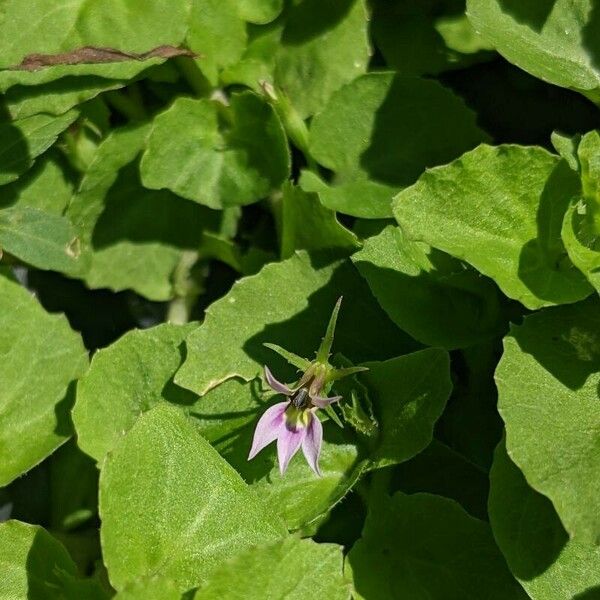
Meet the Creeping Lobelia or Money-leaf Lobelia, a delicate green tapestry often found draping over the edges of stone walls or carpeting damp forest floors in East Asia. This plant is a favorite for those seeking a lush, fairytale aesthetic without the aggressive spread of common ivy. Its tiny, star-shaped flowers look like fallen lavender confetti resting against a backdrop of emerald coins.
🔍 How to Identify
- 🍃 Leaf Shape: Features small, rounded, or kidney-shaped leaves with slightly wavy edges. They look remarkably like tiny green coins, which is how it earned its name.
- 🌸 Bloom Style: Produces petite, five-petaled flowers that are usually light purple, lavender, or white. The flowers are asymmetrical, with a distinct "split" look common to the Lobelia family.
- 🌱 Growth Habit: A prostrate, trailing perennial that stays very low to the ground. It spreads via creeping stems (stolons) that root as they touch the soil, creating a living carpet.
🏡 In Your Garden
- 💧 Moisture Lover: This plant is a "thirsty" groundcover. It thrives in consistently damp spots where other plants might struggle with root rot, making it perfect for the edges of a garden pond or a shaded rockery.
- ☁️ Sun Sensitivity: Think of this as a forest-floor dweller. It hates being "baked" by harsh afternoon sun. It performs best in dappled light or partial shade; too much sun will scorch the delicate leaves and stop the blooming.
- 🏺 Container Charisma: Because of its trailing nature, it looks spectacular in hanging baskets or "spilling" over the sides of mixed containers, providing a soft texture that contrasts well with upright ferns.
⚠️ Safety & Toxicity
- 🚫 Status: Mildly to moderately toxic if ingested.
- 🐾 Details: Like many members of the Lobelia genus, it contains alkaloids (such as lobeline). If eaten in large quantities by cats, dogs, or small children, it can cause stomach upset, drooling, or vomiting. It is best placed in hanging pots if you have curious pets.
✨ Fun Fact
The species name nummularia comes from the Latin word nummulus, meaning "small coin." Because of its coin-shaped leaves, various species with this name were historically associated with "Moneyworts" and were kept in gardens to symbolize attracting wealth and prosperity to the household!

Detailed Care Instructions

Place in a bright room that is sun drenched almost all day. Or directly in a south-facing window.

Some plants require more regular watering than others, which should be done every few days. It's critical to maintain the soil moist all of the time. The water requirements of the same plant placed in pots with varying sizes will differ. Because the water in the smaller pot evaporates faster than the water in the larger pot, it will require more watering. Regardless of pot size, the surface should constantly be maintained moist.








