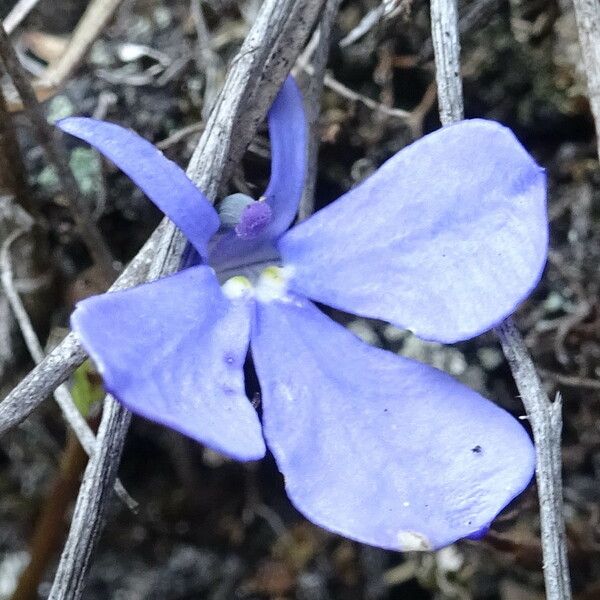
Plant Overview
Often called the "Delicate Lobelia," this charming wildflower creates a misty veil of azure wherever it takes root. Its Latin name, tenera, literally translates to "tender" or "soft," perfectly describing its fine, wiry stems and ethereal appearance. While it looks like it belongs in a fairy tale, it is a hardy choice for adding a splash of "true blue" to rock gardens and hanging baskets.
🔍 How to Identify
- 🌸 The "Lobelia" Lip: Tiny, tubular flowers featuring a distinct shape—two small upper petals and three larger, fan-like lower petals that create a landing pad for insects.
- 🌿 Wiry Stems: Exceptionally thin, reddish-green stems that tend to sprawl or trail rather than stand perfectly upright.
- 🍃 Minimalist Foliage: Narrow, lance-shaped leaves that are sparsely arranged, making the plant look light and airy rather than dense or bushy.
🏡 In Your Garden
- 💧 The "Goldilocks" Moisture: Because its stems are so thin, Lobelia tenera cannot store much water. It prefers soil that stays consistently damp; if the soil dries out completely, the plant may quickly shrivel and struggle to recover.
- ☀️ Afternoon Siesta: While it loves the morning sun to brighten its colors, it is sensitive to extreme heat. In hotter climates, providing dappled afternoon shade will prevent the delicate blooms from "burning out" mid-summer.
⚠️ Safety & Toxicity
- 🚫 Toxic if Ingested: Like most members of the Lobelia family, this plant contains lobeline. If eaten in significant quantities, it can cause nausea, vomiting, and tremors.
- 🐾 Pet Warning: This plant is considered toxic to dogs, cats, and horses. It’s best placed in hanging baskets or tall planters where curious paws can't reach it.
✨ Fun Fact
[🦋] Bee Runways: If you look closely at the center of the flower, you will often see tiny white or yellow markings. These are evolutionary "nectar guides"—biological signposts that tell bees exactly where to land to find the sweetest reward!

Detailed Care Instructions
To grow Lobelia Tenera, also known as trailing lobelia or edging lobelia, you can follow these steps:
- Select a suitable location: Lobelia Tenera thrives in partial shade to full sun, so choose a spot that receives at least 4-6 hours of sunlight each day. It also prefers moist and well-drained soil.
- Prepare the soil: Before planting, loosen the soil with a garden fork or a tiller to ensure good drainage. Incorporate organic matter or compost into the soil to improve its fertility.
- Start indoors (optional): Lobelia Tenera can be started indoors around 10-12 weeks before the last frost date in your area. Fill seedling trays or small pots with seed-starting mix, scatter the seeds on the surface, and gently press them into the soil. Keep the soil consistently moist until germination occurs.
- Direct sowing (alternative): You can also sow the seeds directly into the garden once the danger of frost has passed and the soil has warmed up. Choose a location with good air circulation to prevent diseases.
- Transplant seedlings (if started indoors): When the seedlings have grown their first true leaves, transplant them into individual pots or into the ground, spacing them about 6-12 inches apart. Handle the delicate seedlings gently to avoid damaging their roots.
- Watering: Lobelia Tenera prefers consistently moist soil, so water it regularly to keep the soil evenly moist. Avoid overwatering or allowing the soil to become waterlogged.
- Fertilization: Feed the plants with a balanced liquid fertilizer every 2-3 weeks during the growing season. Follow the manufacturer's instructions for application rates.
- Pinching back: To encourage bushier growth, you can pinch back the tips of the plants once they reach about 3-4 inches in height. This will promote branching and more profuse blooming.
- Deadheading: Remove faded flowers by pinching or cutting them off to promote continuous blooming and prevent the plant from setting seed. This will redirect the plant's energy into producing new flowers.
- Control pests and diseases: Monitor your plants regularly for pests such as aphids or slugs. Treat any issues promptly with organic or chemical controls as needed.
By following these steps and providing the right care, you can successfully grow Lobelia Tenera plants in your garden or containers. Enjoy the beautiful cascading flowers of this lovely plant!

Place in a bright room that is sun drenched almost all day. Or directly in a south-facing window.

To effectively water Lobelia Tenera, you need to follow these steps:
1. Observe the soil: Check the soil moisture level before watering the plant. Insert your finger about one inch into the soil to feel its moisture content. Lobelia Tenera prefers slightly moist soil, so it should not become completely dry.
2. Watering frequency: Depending on the climate and potting conditions, Lobelia Tenera requires regular watering. As a general rule, water the plant when the top inch of soil feels dry. Avoid overwatering as it can lead to root rot or other fungal diseases. Underwatering, on the other hand, can cause the plant to wilt and decline.
3. Watering technique: When watering Lobelia Tenera, aim to apply water evenly throughout the soil. Pour water gently at the base of the plant, avoiding the foliage as much as possible. This will help prevent the development of fungal diseases and rot. Additionally, watering from the bottom, by placing the pot in a tray of water, can encourage healthy root growth.
4. Drainage: Ensure that the pot or container you use for Lobelia Tenera has proper drainage holes at the bottom. This will allow excess water to escape, preventing waterlogging and root stress.
5. Time of day: Watering Lobelia Tenera early in the morning or late in the evening is ideal. This helps minimize water loss due to evaporation and allows the plant to absorb moisture effectively.
6. Monitor plant health: Regularly inspect your Lobelia Tenera for signs of underwatering or overwatering. Wilting or drooping leaves may indicate the need for more water, while yellowing or browning leaves can signify excessive moisture. Adjust your watering routine accordingly.
Remember, the above steps provide general guidelines for watering Lobelia Tenera. Factors like temperature, humidity, pot size, and soil composition can influence the watering needs of the plant, so it's important to adapt your watering schedule accordingly.
To fertilize the Lobelia Tenera plant, follow these instructions:
- Choose a balanced, water-soluble fertilizer with equal concentrations of nitrogen, phosphorus, and potassium (NPK). For example, a 10-10-10 or 20-20-20 fertilizer would work well.
- Dilute the fertilizer according to the package instructions. Generally, a concentration of 1/4 to 1/2 of the recommended strength is suitable for potted Lobelia Tenera plants.
- Water the plant thoroughly before applying the fertilizer. This helps prevent root burn and allows the roots to absorb the nutrients more effectively.
- Pour the diluted fertilizer solution onto the soil around the base of the plant, avoiding direct contact with the foliage. Ensure that the entire root zone is thoroughly moistened.
- Repeat the fertilization process every two to four weeks throughout the growing season, typically from spring to early fall. As the plant grows, you can gradually increase the fertilizer concentration up to the recommended strength if desired.
- Monitor the plant for signs of nutrient deficiencies or excesses. Adjust the fertilization frequency or concentration accordingly. Signs of deficiency may include yellowing leaves, stunted growth, or poor flowering, while excess fertilizer may cause leaf burn or excessive foliage growth with few blooms.
Remember to always follow the manufacturer's instructions and guidelines for the specific brand of fertilizer you are using. Additionally, it's important to provide proper light, water, and temperature conditions to ensure the overall health and vitality of your Lobelia Tenera plant.
When cultivating Lobelia Tenera plants, it is crucial to select the appropriate soil to ensure their healthy growth and development. This plant thrives best in a well-draining soil medium that offers good aeration. The soil should have a slightly acidic to neutral pH, ranging from 6 to 7.5. It is important to avoid heavy clay soils and poorly draining ones, as they may retain excessive water and cause root rot.
In terms of texture, a loamy soil with a light and crumbly consistency is preferred, as it allows for proper water absorption and root growth. This type of soil retains enough moisture without becoming waterlogged. Organic matter, such as compost or well-rotted manure, can greatly enhance soil fertility and provide essential nutrients for the plant's optimal growth.
Additionally, supplementing the soil with a slow-release fertilizer is beneficial to ensure sufficient nutrient supply throughout the growing season. This will support the Lobelia Tenera's vibrant foliage and abundant flowering. It is essential to follow the recommended dosage and schedule for fertilization to prevent nutrient burn or over-fertilization.
Regularly monitoring the moisture levels in the soil is crucial, as Lobelia Tenera plants require consistent but not excessive watering. Ensure the soil is moist but not soaked, as waterlogging can lead to root rot. Proper drainage is essential for this plant.
In summary, the ideal soil composition for Lobelia Tenera plants includes a loamy texture, good drainage, a slightly acidic to neutral pH range, and the incorporation of organic matter or a slow-release fertilizer to provide adequate nutrition. Following these considerations will help create an optimal growing environment for these beautiful plants.
Propagating Lobelia Tenera plants can be done using several methods. Here is a detailed guide on how to propagate this plant:
- Selecting the Method: There are three common methods to propagate Lobelia Tenera plants: seeds, stem cuttings, and division. Choose the method that suits you best, considering factors like availability of plant material and your preferred approach.
- Seeds: Collect mature seeds from the Lobelia Tenera plant. Make sure the seed pods are dry and brown before harvesting. Sow the seeds in a suitable seed-starting mix, barely covering them with a thin layer of soil. Maintain a warm and humid environment for germination. Use a seed tray or a covered container to create a greenhouse-like environment. Keep the soil moist, but avoid overwatering to prevent seedlings from rotting. Germination usually takes 2-3 weeks.
- Stem Cuttings: Take stem cuttings from a healthy Lobelia Tenera plant during the growing season (typically spring or summer). Choose a branch with several nodes and remove any flowers or buds. Trim the cutting to a length of around 4-6 inches (10-15 cm). Remove the lower leaves, leaving a few at the top. Dip the cut end in a rooting hormone to enhance the chances of successful rooting. Plant the cutting in a well-draining potting mix, making sure it remains upright. Place the cutting in a warm and humid environment with indirect light. Mist the cutting regularly to maintain humidity and water moderately. Rooting may take 2-4 weeks.
- Division: This method is applicable if you have an established Lobelia Tenera plant with multiple clumps. Carefully dig up the plant and separate the clumps into smaller sections. Ensure that each section has roots attached to it. Replant the divisions in well-draining soil, spacing them appropriately. Water thoroughly after replanting and provide adequate moisture to ensure successful establishment.
- Care and Maintenance: After propagating Lobelia Tenera plants, it is crucial to provide proper care to promote their growth and development. Place the young seedlings or cuttings in a location where they receive bright, indirect light. Maintain a warm and humid environment, ensuring adequate air circulation to prevent fungal diseases. Water the plants regularly, keeping the soil consistently moist but not waterlogged. Fertilize the plants every 2-4 weeks during the growing season with a balanced liquid fertilizer. Regularly inspect the plants for pests or diseases, addressing any issues promptly.
By following these propagation methods and providing suitable care, you can successfully propagate Lobelia Tenera plants and expand your collection.








