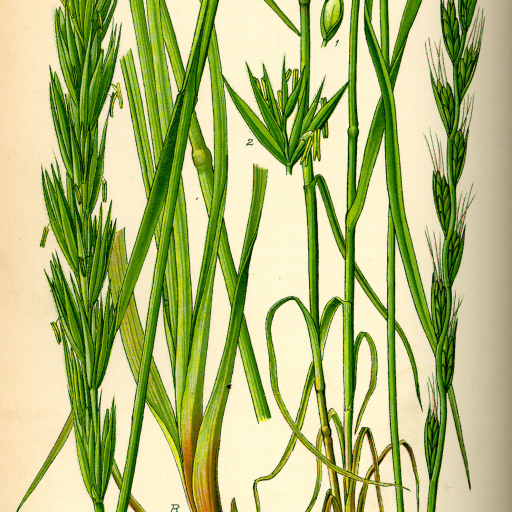
Plant Overview
Known as the "False Wheat" or "Darnel," Lolium temulentum has a notorious reputation dating back to ancient times. Historically feared by farmers, this grass is a master of disguise, growing alongside cereal crops and hiding its identity until the harvest reveals its toxic secret. It is often cited as the "poisonous weed" of botanical history and folklore.
🔍 How to Identify
- 🌾 The Wheat Mimic: In its early stages, the leaves are a deep, waxy green and look almost identical to young wheat, making it nearly impossible to pull out by hand without accidentally destroying the crop.
- 🧵 Stiff Spikelets: The flowering head consists of a long, narrow spike where the seeds (spikelets) are arranged "edge-on" to the central stem, unlike wheat which is more crowded and rounded.
- 📏 Protective Bracts: Each seed cluster is hugged by a long, stiff leaf-like structure called a glume, which is often as long as or longer than the entire spikelet.
🏡 In Your Garden
- 🚜 Agricultural Hitchhiker: You won't find this plant in a nursery; it typically appears as a "weed" in gardens via contaminated birdseed or low-quality grass seed mixes, thriving in disturbed, nitrogen-rich soil.
- 🧪 The Symbiotic Secret: The plant's "personality" is actually shaped by a hidden fungus living inside its tissues. This endophyte produces the alkaloids that make the plant hardy against pests but dangerous to mammals.
⚠️ Safety & Toxicity
- 🚫 The "Drunken" Danger: The species name temulentum is Latin for "drunken." Ingesting the seeds causes "Darnel poisoning," characterized by dizziness, slurred speech, trembling, and nausea.
- 🐾 Livestock & Pets: It is highly toxic to horses, dogs, and cattle. Because it mimics edible grains, it is a significant hazard in hay or grazing pastures and should be removed manually (with gloves) before it goes to seed.
✨ Fun Fact
📖 The Biblical Saboteur: In the New Testament "Parable of the Tares," the "tares" are widely believed to be Darnel. In Roman times, sowing Darnel seeds in an enemy’s wheat field was a recognized (and illegal) form of biological warfare!

Detailed Care Instructions
Lolium temulentum, also known as darnel or false wheat, is a type of annual grass that can be invasive in some regions. If you still want to grow it, here are some steps you can take:
- Choose a sunny location with well-drained soil: Lolium temulentum prefers full sun and soil that is not too waterlogged.
- Sow seeds directly into the soil: You can sow the seeds directly into the soil in early spring or fall. Make sure to space the seeds evenly and cover them lightly with soil.
- Water regularly: Keep the soil consistently moist but not waterlogged. Watering in the morning is best to prevent fungal diseases.
- Fertilize sparingly: Lolium temulentum does not require much fertilization, but you can apply a balanced fertilizer once or twice during the growing season.
- Control weeds: As an annual grass, Lolium temulentum can spread quickly and compete with other plants. Regular weeding can help prevent it from becoming invasive.
- Harvest seeds: If you want to collect seeds from your Lolium temulentum plant, let the seed heads dry out on the plant before harvesting.
- Be mindful of its invasiveness: Keep in mind that Lolium temulentum can spread easily and may become a problem in some areas. Consider growing it in containers or taking steps to prevent it from spreading if it becomes problematic.
Overall, growing Lolium temulentum may not be suitable for all gardeners due to its invasive nature, but if you decide to grow it, follow these steps to help the plant thrive.

Place in a bright room that is sun drenched almost all day. Or directly in a south-facing window.

Lolium temulentum is a plant that requires consistent watering to thrive. To water this plant, make sure to keep the soil evenly moist but not waterlogged. Water the plant at the base, rather than overhead, to prevent water from stagnating on the leaves. It is important to check the soil regularly to determine when it needs watering, typically when the top inch of soil feels dry to the touch. During hot weather, it may be necessary to water more frequently to prevent the plant from drying out. Overall, maintaining a consistent watering schedule is essential for the health and growth of Lolium temulentum.
To fertilize the plant, apply a balanced fertilizer with equal parts nitrogen, phosphorus, and potassium in the spring, summer, and fall. Follow the manufacturer's recommended application rate and frequency, and water the plant thoroughly after fertilizing to help the nutrients absorb into the soil. Avoid over-fertilizing, as this can promote excessive growth and may harm the plant. It is also recommended to conduct a soil test to determine the specific nutrient needs of the plant before fertilizing.
Lolium temulentum is a plant that thrives in well-draining soil with a slightly acidic to neutral pH level. It is best to use a loamy soil mixture that is rich in organic matter to provide the plant with the necessary nutrients for healthy growth. Additionally, a soil that is slightly sandy can also be beneficial as it will help prevent waterlogging, which can be harmful to the plant. Make sure to regularly water the plant to keep the soil moist but not waterlogged, as this can lead to root rot.
Lolium temulentum can be propagated through both seed and division methods. To propagate from seeds, collect the mature seed heads in late summer or early fall. Allow the seeds to dry completely before removing them from the seed heads.
Next, sow the seeds in well-draining soil in a sunny location. Water consistently to keep the soil moist but not waterlogged. Germination typically occurs within 2-3 weeks.
For propagation by division, carefully dig up an established plant and separate the clumps into smaller sections, making sure each section has roots attached. Replant the divisions in a new location with well-draining soil and water thoroughly.
Regardless of the propagation method used, it is important to provide the young plants with proper care and maintenance to ensure their successful growth and development.








