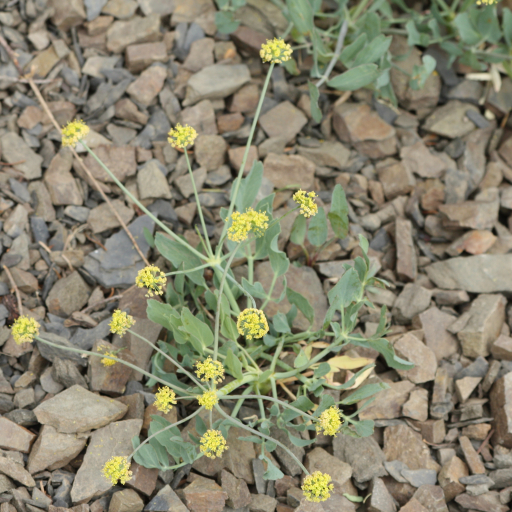
Plant Overview
Often called the Pestle Parsnip or Barestem Biscuitroot, this hardy perennial is a cornerstone of the wild Western North American landscape. For centuries, it has been a vital resource for Indigenous peoples, who valued it so highly for its nutritional and medicinal properties that it earned the nickname "Indian Celery." Its distinctive flowering stalks rise naked and smooth from a basal clump of leaves, standing like architectural sentinels on sun-drenched, rocky slopes.
🔍 How to Identify
- 🥦 The Stalks: Look for thick, hollow, and smooth (glaucous) flowering stems that are completely "naked"—meaning they have no leaves attached to them as they rise toward the sky.
- 🌼 The Flowers: The plant produces small, bright yellow blossoms arranged in a large, flat-topped "umbel" (resembling an upside-down umbrella), which eventually transform into flat, winged seeds.
- 🌿 The Foliage: Blue-green, compound leaves that are divided into several leaflets. These leaves stay huddled close to the ground in a basal rosette, providing a lush contrast to the tall flower spikes.
🏡 In Your Garden
- 🏜️ Drought Warrior: This plant is a master of survival in dry, well-draining, and even rocky soils. It is an ideal candidate for xeriscaping or native rock gardens where other plants might struggle with low water.
- 🚫 The "No-Move" Rule: Like many members of the carrot family, the Barestem Biscuitroot develops a deep, sturdy taproot. While this root allows it to find water deep underground, it also makes the plant hate being moved. Once it is planted, it should stay put, as transplanting often results in the death of the plant.
⚠️ Safety & Toxicity
- ✅ Status: Generally considered non-toxic and historically edible. The young stems and leaves were traditionally eaten raw or cooked.
- 🛑 The Deadly Lookalike: A major warning for foragers: Lomatium nudicaule belongs to the Apiaceae family, which includes the Poison Hemlock and Water Hemlock. These lookalikes are among the most violently toxic plants in the world. Never consume wild plants unless you are 100% certain of the identification.
✨ Fun Fact
- 🌬️ Nature’s Breath Mint: The seeds of the Barestem Biscuitroot are highly aromatic, smelling like a concentrated blend of celery and parsley. Many Indigenous tribes traditionally chewed these seeds not only for their medicinal benefits but also as a natural breath freshener!

Detailed Care Instructions
To grow Lomatium nudicaule, also known as the barestem biscuitroot, you can follow these steps:
- Obtain seeds or transplants: You can purchase seeds or transplants from local nurseries, garden centers, or online seed suppliers. Make sure to select healthy and viable plants or seeds.
- Choose a suitable location: Lomatium nudicaule prefers full sun to part shade. Select a spot in your garden that receives at least 6 hours of direct sunlight per day. The soil should be well-draining and rich in organic matter.
- Prepare the soil: Loosen the soil in the planting area with a garden fork or tiller. Remove any weeds, rocks, or debris that may hinder growth. Incorporate well-rotted compost or organic matter to improve the soil's fertility and moisture retention.
- Plant the seeds or transplants: If using seeds, follow the instructions on the seed packet for proper planting depth and spacing. Sow the seeds directly into the prepared soil, gently covering them with a thin layer of soil. Keep the soil consistently moist until germination occurs.
If using transplants, dig a hole slightly larger than the root ball of the plant. Place the plant in the hole and backfill with soil, ensuring that the top of the root ball is level with the soil surface. Firmly press the soil around the plant and water thoroughly.
- Watering and maintenance: Water the plant regularly during its first year to establish a strong root system. Keep the soil consistently moist but not waterlogged. Once established, Lomatium nudicaule is relatively drought-tolerant but appreciates occasional deep watering during dry spells.
- Mulch and weed control: Apply a layer of organic mulch around the plant to help retain moisture, regulate soil temperature, and suppress weed growth. Keep the area around the plant free from weeds, as they can compete for nutrients and water.
- Fertilization: Lomatium nudicaule generally does not require regular fertilization. However, if your soil is poor or lacking in nutrients, you can apply a balanced slow-release fertilizer per the package instructions once or twice a year.
- Pruning: Lomatium nudicaule does not require extensive pruning. However, you can remove any dead or damaged stems in early spring to promote new growth and maintain a tidy appearance.
- Pest and disease control: Lomatium nudicaule is generally resistant to pests and diseases. However, occasional aphid infestations or fungal diseases may occur. Monitor your plants regularly and take appropriate action if necessary. Insecticidal soap or a strong blast of water can help control aphids, while fungicides can be used for fungal diseases following the label instructions.
With proper care and attention, your Lomatium nudicaule plant should thrive and provide beautiful blooms in its growing season.

Place in a bright room that is sun drenched almost all day. Or directly in a south-facing window.

To water this plant, you should moisten the soil around the base of the plant using a watering can or hose with a gentle flow. Do not overwater, as this can lead to root rot. Allow the top inch of soil to dry out before watering again. Take care not to wet the leaves, as this can encourage the growth of mildew or other fungal diseases. Depending on the climate and soil conditions, you may need to adjust your watering schedule seasonally. In general, this plant is fairly drought-tolerant and requires less water than many other species.
To fertilize this plant, first ensure that the soil is well-draining and of a neutral pH level. Apply a balanced fertilizer that is high in phosphorus and potassium in the early spring before new growth appears. Avoid fertilizing during the summer months as this can harm the plant. Instead, apply a slow-release fertilizer in the fall to help promote root development during the winter months. Water the plant thoroughly after fertilizing to help nutrients reach the roots.
Lomatium Nudicaule is a plant that requires a well-draining and nutrient-rich soil. It does well in soils that have ample amounts of organic matter, such as compost or peat moss. The pH of the soil should be slightly acidic to neutral, with a range of 6.0 to 7.0 being ideal. This plant also prefers a soil that is loamy, which means it contains roughly equal parts of sand, silt, and clay. It is important to avoid soils that are heavy in clay or sand, as these can cause poor drainage or water retention issues. Adding perlite or vermiculite to the soil can help improve drainage, which is important for preventing root rot. In addition, Lomatium Nudicaule prefers to grow in areas with full sun exposure.
To propagate this plant, you will need to collect seeds from the mature seed heads. Make sure to allow the seeds to fully dry on the plant before collecting them. Next, you can either sow the seeds directly into your desired location or start them indoors in individual containers with well-draining soil. The seeds will need to be kept moist but not waterlogged and should germinate within a few weeks. Once the seedlings have developed a few sets of true leaves, you can transplant them into their permanent location. It is important to note that this plant has a taproot and may not transplant well once established, so be sure to select a location that will allow it to grow undisturbed.








