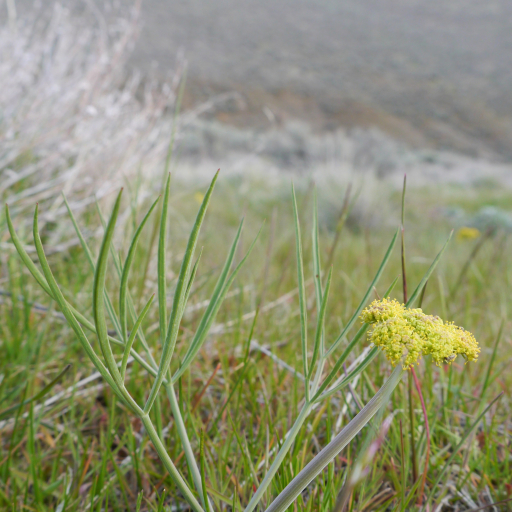
Plant Overview
Commonly known as the Nineleaf Biscuitroot, this resilient wildflower is a staple of the Western North American landscape. It gets its name from its distinctive leaf structure and its historical importance as a food source for Indigenous peoples, who harvested the thick, starchy roots to make flour. Whether clinging to a rocky hillside or swaying in a dry meadow, its bright yellow clusters are a beacon for early-season pollinators.
🔍 How to Identify
- 🌿 Leaf Structure: The name "Nineleaf" comes from its compound leaves that typically split into three segments, which then split again into three narrow, grass-like leaflets.
- 🌼 Flower Clusters: It features tiny, bright yellow flowers arranged in "umbels"—flat-topped or rounded clusters that resemble a tiny, golden umbrella.
- 📏 Growth Habit: This plant grows from a deep, woody taproot, sending up smooth, leafless stems that can reach up to 3 feet in height, though they are often shorter in wind-swept areas.
🏡 In Your Garden
- 🏜️ Drought Survival: Because it possesses a long, sturdy taproot, it is incredibly drought-tolerant. In a garden setting, it hates being moved once established, so choose its "forever home" carefully to avoid "transplant shock."
- 🐝 Pollinator Magnet: It is an essential early-season nectar source for native bees and butterflies, making it a perfect addition to a wild-scape or xeriscape garden that supports local biodiversity.
- 🌱 Soil Preference: It thrives in well-drained, even gravelly soil. Overwatering is its greatest enemy, as it is biologically programmed to endure long, dry summers.
⚠️ Safety & Toxicity
- 🚫 The Look-alike Danger: While Nineleaf Biscuitroot itself is not toxic, it bears a striking and dangerous resemblance to Poison Hemlock and Water Hemlock.
- ⚠️ Identification Warning: Never consume wild plants in the carrot family (Apiaceae) unless you are an expert. Poison Hemlock usually has purple splotches on the stem, whereas Biscuitroot stems are typically solid green.
- 🐾 Pet Safety: It is generally considered non-toxic to pets, but due to the high risk of misidentification with deadly relatives in the wild, it is best kept away from curious nibblers.
✨ Fun Fact
🧺 During the Lewis and Clark expedition, the explorers relied on various Lomatium species for survival. They often traded with the Nez Perce for "biscuits" made from the dried, pounded roots, which are said to have a flavor profile somewhere between celery and parsnips.

Detailed Care Instructions
To grow Lomatium triternatum, also known as desert parsley or nineleaf biscuitroot, follow these steps:
- Climate and location: Lomatium triternatum is native to dry and arid regions. It thrives in full sun and well-draining soil. Make sure you choose an appropriate location that mimics these conditions.
- Soil preparation: The soil should be sandy or loamy, with good drainage. Use a shovel or garden fork to loosen the soil and remove any weeds or rocks.
- Sowing seeds: Lomatium triternatum can be grown from seeds. Sow the seeds directly in the prepared soil in the spring or fall, about ¼ inch deep. Space the seeds around 6 inches apart.
- Watering: Immediately after sowing the seeds, give them a thorough watering. After this, water the plants sparingly, only when the soil feels dry. Overwatering may cause root rot, so be cautious.
- Weed control: Keep the area free from weeds, especially during the early stages of growth, as they can compete with the plant for nutrients and water.
- Maintenance: Once the plants are established, they require very little maintenance. Monitor the soil moisture levels and water as needed. Remove any dead leaves or stems as they appear.
- Harvesting and propagation: Lomatium triternatum is a perennial plant that can be propagated through division. After a couple of years, you can dig up the plant and divide the root clumps, then replant them in various locations.
Remember that Lomatium triternatum is a slow-growing plant, and it may take several years for it to reach full maturity and produce flowers. Be patient and provide the necessary care.

Place in a bright room that is sun drenched almost all day. Or directly in a south-facing window.

Lomatium Triternatum is a plant that requires consistent and careful watering to thrive. It is important to water the plant deeply but not excessively, as it prefers well-draining soils that do not hold onto moisture.
To water Lomatium Triternatum, it is best to wait until the top inch of soil is dry before watering. This ensures that the roots have access to both oxygen and water, which is important for healthy growth.
When watering, it is important to deeply saturate the soil around the base of the plant, but be careful not to overwater or let the soil become waterlogged. It is also best to avoid getting water on the leaves or stems of the plant, as this can cause fungal diseases and other problems.
It is ideal to water Lomatium Triternatum in the early morning or late afternoon, when temperatures are cooler and the plant can absorb moisture more effectively. During hot summer months, it may be necessary to water more frequently to prevent the soil from drying out too quickly.
It is always important to monitor the soil moisture levels, as this can vary depending on environmental conditions and the specific needs of the plant. With proper watering and care, Lomatium Triternatum can thrive and produce beautiful blooms and foliage.
To effectively fertilize the Lomatium Triternatum plant, follow these guidelines:
- Choose a balanced slow-release granular fertilizer with a ratio such as 10-10-10 or 14-14-14.
- Apply the fertilizer in early spring, before the plant starts actively growing.
- Measure and follow the package instructions for the recommended amount of fertilizer based on the plant's size.
- Sprinkle the granules evenly around the base of the plant, avoiding direct contact with the stems or leaves.
- Gently work the fertilizer into the topsoil using a small hand rake to ensure it is well-distributed.
- Water the plant immediately after fertilizing to help activate the nutrients and prevent the risk of root burn.
- Maintain regular watering throughout the growing season, keeping the soil moist but not waterlogged.
- Repeat the fertilizer application once or twice throughout the growing season, spacing them at least 6-8 weeks apart.
- Avoid over-fertilizing, as excessive nutrients can cause harm to the plant or result in weak growth.
- Monitor the plant's health and adjust the fertilization schedule if necessary, taking into account any signs of nutrient deficiencies or excessive growth.
Lomatium Triternatum plant prefers a well-draining soil with a pH range of 6.0 to 7.0. The soil should be a sandy loam or gravelly soil with good drainage to avoid waterlogging. The plant can also tolerate rocky or clay soils if they are well-draining. It is important to avoid heavy soils that retain moisture for longer periods as they can cause root rot and other fungal diseases. A healthy soil mix should contain enough organic matter to help retain moisture and nutrients, but not too much that it prevents good drainage. Adding Peat Moss or Compost to the soil can help improve soil structure, increase water retention and encourage root growth. Lomatium Triternatum plants grow best in full sun conditions.
To propagate Lomatium Triternatum, also known as biscuitroot or desert parsley, you can follow these steps:
- Choose a suitable location: Find a location with well-draining soil and partial to full sun exposure. This plant thrives in arid and sunny environments.
- Harvest seeds: Look for mature seed heads on the plant, which are often dried and brown in color. Gently shake the seed heads or use your fingers to remove the seeds. Collect them in a paper bag or envelope for further use.
- Seed stratification: Many Lomatium Triternatum seeds require a dormancy period to germinate successfully. This can be achieved through a process called seed stratification. Place the collected seeds in a container with a damp paper towel or sand, and then refrigerate them at around 40°F (4°C) for a few weeks. This simulates the cold temperatures of winter and helps break seed dormancy.
- Prepare planting area: Clear the planting area of any debris or weeds. Loosen the soil using a garden fork or tiller to a depth of about 4-6 inches (10-15 cm). This will make it easier for the plant's roots to establish themselves.
- Sow the seeds: Spread the refrigerated and stratified seeds evenly over the prepared soil. Lightly press them into the soil, ensuring they are not buried too deeply. Aim for a seed depth of about 1/8 inch (3 mm).
- Water the seeds: Immediately after sowing, give the seeds a gentle watering. It is essential to keep the soil moist but not waterlogged during the germination process. Use a fine-mist spray or watering can to prevent disturbing or displacing the seeds.
- Maintain consistent moisture: Check the soil regularly and provide water whenever it becomes dry. Avoid overwatering, as this may cause rotting or fungal problems. Consistent moisture will help the seeds germinate.
- Transplanting seedlings: After the seeds germinate and the seedlings reach a suitable size, typically after a few weeks, you can carefully transplant them into individual pots or a prepared garden bed. Choose a location that matches the optimal growing conditions for Lomatium Triternatum.
- Provide ongoing care: Continue to provide regular watering, but reduce the frequency as the plants establish themselves. Once the plants are fully grown, they are relatively low-maintenance and adaptable to dry conditions.
By following these steps, you can successfully propagate Lomatium Triternatum and enjoy this unique and beautiful plant in your garden.








