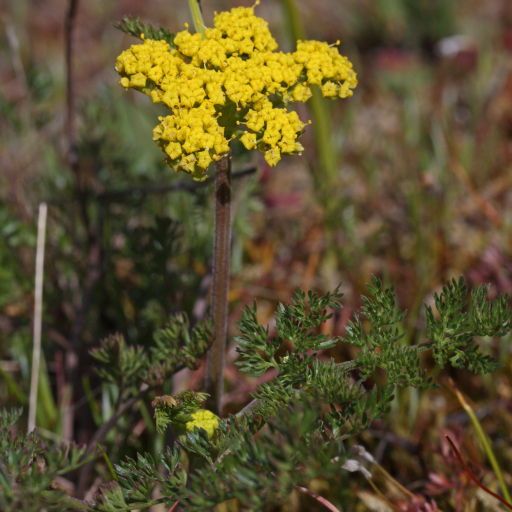
Plant Overview
Known as Spring Gold or Fineleaf Biscuitroot, this vibrant wildflower is one of the first heralds of spring across the meadows of Western North America. Its common name "Biscuitroot" comes from the historical use of its starchy, parsnip-like roots, which were ground into flour by Indigenous peoples to make travel cakes or "biscuits."
🔍 How to Identify
- 🌼 Luminous Blooms: Tiny, bright yellow flowers grow in flat-topped clusters called "umbels," looking like miniature golden umbrellas held aloft.
- 🌿 Lacy Foliage: The leaves are exceptionally fine and divided, resembling the delicate fronds of a carrot or a fern, often staying low to the ground.
- 🎈 Bladder Seeds: After blooming, it produces distinctive winged seeds that look slightly inflated or "bladder-like," which is what its Latin name utriculatum refers to.
🏡 In Your Garden
- 🌱 Taproot Tenacity: Like many members of the carrot family, this plant develops a deep, sturdy taproot. This makes it incredibly drought-tolerant but means it hates being moved—pick its "forever home" in your garden carefully!
- 🦋 Pollinator Party: It is a vital early-season food source for pollinators. It is a specific host plant for the Anise Swallowtail butterfly, providing a nursery for their caterpillars.
- ☀️ Sun & Drainage: It thrives in rocky, well-draining soil and full sun, making it a perfect candidate for rock gardens or wildflower meadows where other plants might struggle with thin soil.
⚠️ Safety & Toxicity
- 🟢 General Safety: While Lomatium utriculatum itself is not considered toxic and has a history of edible use, it belongs to the Apiaceae family.
- 🚫 The Look-Alike Danger: Use extreme caution. This family includes the most "deadly" plants in the world, such as Poison Hemlock and Water Hemlock. Never forage or consume this plant unless you are an expert, as the foliage can look strikingly similar to its lethal cousins.
✨ Fun Fact
The roots of the Fineleaf Biscuitroot don't just taste like biscuits; they have a distinct celery or parsley-like aroma. Historically, the seeds were also used by some tribes as a fragrant "incense" or a deodorizer!

Detailed Care Instructions
To grow Lomatium utriculatum, also known as spring gold or desert parsley, you can follow these steps:
- Seed collection: Look for mature seed heads on existing plants in the wild. Harvest the seeds when they turn tan or brown and start to split.
- Seed preparation: Clean the seeds by removing any debris or plant material. You can soak them in water for a few hours to soften the hard seed coat before planting.
- Germination: Plant the seeds in well-draining soil mix, preferably sandy or loamy soil. Sow the seeds at a depth of 1/4 inch and keep the soil consistently moist. Germination may take a few weeks to a few months, as Lomatium utriculatum has a naturally low germination rate.
- Light and temperature: Provide the seedlings with bright, indirect sunlight or partial shade. Lomatium utriculatum grows naturally in arid regions, so it prefers cool to warm temperatures, between 60-80°F (15-27°C).
- Watering: Water the seedlings regularly, keeping the soil evenly moist but not waterlogged. Avoid overwatering, as it can cause root rot. Once established, Lomatium utriculatum is relatively drought-tolerant.
- Transplanting: When the seedlings have grown to 2-4 inches tall, you can transplant them to their permanent outdoor location. Choose a spot with full sun or partial shade, and make sure the soil is well-draining.
- Maintenance: Lomatium utriculatum requires minimal maintenance once established. It is adapted to dry conditions, so water sparingly, preferably during extended periods of drought. Remove any weeds or competing vegetation around the plant to prevent overcrowding.
- Propagation: In addition to growing from seeds, Lomatium utriculatum can be propagated by dividing mature plants in early spring. Dig up the plant and carefully separate the roots, replanting them in suitable locations.
Remember that Lomatium utriculatum is a native plant and may be best suited for regions with a similar climate. Always consult with local gardening experts or your nearest native plant society for specific advice tailored to your area.

Place in a bright room that is sun drenched almost all day. Or directly in a south-facing window.

To water this plant, you should first ensure that the soil is dry to the touch. This plant prefers well-draining soil, so it is important not to overwater it. When watering, do so slowly to ensure that the water reaches the roots and does not simply run off the soil surface. It is recommended to water this plant deeply but infrequently, allowing the soil to dry out in between watering sessions. Avoid getting water on the leaves as excessive moisture can cause fungal diseases. It is also important to monitor the plant for signs of overwatering, such as yellowing leaves or a droopy appearance.
To fertilize Lomatium Utriculatum, use a balanced fertilizer with an equal proportion of nitrogen, phosphorus, and potassium. Apply the fertilizer to the soil around the base of the plant during the growing season, ideally in early spring and again in mid-summer. Avoid over-fertilization or using a fertilizer that contains high levels of nitrogen, as this can stimulate excessive vegetative growth and reduce flowering. Always follow the instructions on the fertilizer packaging and adjust the application rate based on soil and plant conditions.
Lomatium Utriculatum plant prefers well-drained soil that is rich in organic matter. The pH level of the soil should be neutral to slightly acidic. Sandy loam is the ideal soil type for this plant. It should not be planted in heavy clay soil or soil that is prone to waterlogging. The soil should be moist but not waterlogged as overwatering can cause root rot. Adding compost or aged manure to the soil can improve its fertility and texture. Lomatium Utriculatum plant prefers full sun exposure but can also grow in partial shade. Proper soil preparation is essential for the healthy growth and development of this plant.
To propagate this plant, one can collect mature seeds from the plant and sow them directly into a well-draining soil mix. The soil should be kept moist but not waterlogged, and the seed tray should be placed in a spot with indirect sunlight. Germination can take anywhere from several weeks to several months.
Alternatively, one can propagate this plant through division. The plant can be dug up, and the clump can be gently divided into smaller sections, ensuring that each section has some roots attached. These sections can then be replanted in a new location or in new pots with fresh soil mix.
Both methods of propagation can be done in the spring or fall when the plant is not actively growing.








