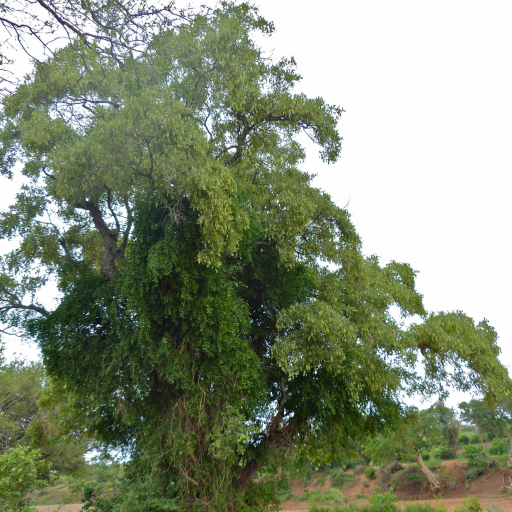
Plant Overview
Known famously as the Apple-leaf or the Rain Tree, Lonchocarpus capassa (now botanically classified as Philenoptera violacea) is a stunning deciduous tree native to the African savannas. It is beloved for its cooling canopy and the spectacular, sweet-scented violet blossoms that appear in early summer. In many cultures, it is seen as a tree of shelter, providing a sanctuary for both weary travelers and local wildlife.
🔍 How to Identify
- 🍃 Leathery Foliage: The leaves are large, hairless, and a distinct grey-green color. They have a tough, leathery texture that looks strikingly similar to the leaves of a common apple tree, giving it its popular nickname.
- 🌸 Violet Blooms: It produces pendulous sprays of small, pea-like flowers in shades of lilac and deep purple. These flowers emit a heavy, honey-like fragrance that can perfume an entire garden.
- 🌳 Smooth Bark: The trunk is typically straight with smooth, light grey bark that may become slightly flaky or corky as the tree matures, often showing patches of darker grey.
🏡 In Your Garden
- ☀️ Drought Specialist: Having evolved in the Kalahari and surrounding regions, this tree is incredibly drought-tolerant. It has a deep taproot system, meaning it prefers to be left alone once planted rather than being frequently moved or over-watered.
- 🐝 Wildlife Hub: If you want a garden full of life, this is the tree for you. It is a primary host for various butterfly species and serves as a vital nectar source for honeybees and birds.
- 🪴 Soil Preference: It thrives in well-drained, sandy soil. Because of its size and robust root system, it is best suited for larger gardens or estates where it has plenty of room to spread its wide, shading crown.
⚠️ Safety & Toxicity
- 🟢 General Safety: This tree is generally considered non-toxic to humans and pets when touched or grown ornamentally.
- 🚫 Seed Caution: While the leaves are often browsed by livestock and wild animals, the seeds and pods should not be ingested by humans or domestic pets, as they contain compounds common in legumes that can cause digestive upset.
✨ Fun Fact
The nickname "Rain Tree" comes from a curious biological partnership. Tiny insects called froghoppers often colonize the branches, sucking the sap and vibrating to excrete excess moisture. On hot, sunny days, this liquid drips from the branches like a gentle, localized rain shower, cooling anyone standing beneath the canopy!

Detailed Care Instructions








