Plant Overview
Often called the "Berry of Longevity" by the Ainu people of Japan, Lonicera caerulea is the hardy rebel of the honeysuckle family. While most honeysuckles offer only fragrant flowers and toxic red berries, the Honeyberry provides delicious, teardrop-shaped fruits that taste like a zesty cross between a blueberry, blackberry, and raspberry. It is an incredibly tough deciduous shrub, famously thriving in frozen northern climates where other fruit bushes would struggle to survive.
🔍 How to Identify
- 🌿 Foliage: Small, oval-shaped leaves with a matte green finish, arranged in opposite pairs along the woody stems.
- 🔔 Flowers: Pale yellow or creamy white, funnel-shaped blossoms that emerge in pairs early in the spring, often before the leaves fully unfurl.
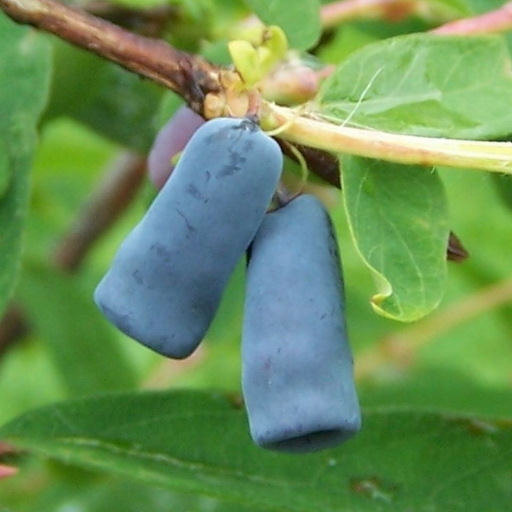
- 🫐 The Fruit: Unlike the round berries of a blueberry, these are elongated, often looking like small blue cylinders or "rectangular" grapes, covered in a dusty waxy coating.
🏡 In Your Garden
- 🤝 The Buddy System: Most Honeyberry varieties are not self-fertile. To ensure a heavy harvest, you need to plant at least two different cultivars that bloom at the same time to allow for cross-pollination.
- ❄️ Cold Weather Hero: This plant is a "Cold Warrior," capable of surviving temperatures as low as -40°F. Interestingly, the open flowers can even withstand a light frost without dropping, a rare trait for fruiting plants.
- ☀️ Sun & Soil: While it tolerates partial shade, you’ll get the sweetest fruit in full sun. It is much less finicky about soil pH than blueberries, comfortably growing in standard garden soil as long as it stays moist.
⚠️ Safety & Toxicity
- ✅ Safe for Consumption: The blue-black berries are non-toxic and packed with more antioxidants and Vitamin C than most common garden fruits.
- 🐾 Pet Safety: The fruit is generally considered safe, but as with many garden shrubs, the woody stems and leaves are not meant for consumption and could cause mild digestive upset in curious pets if eaten in large quantities.
- 🚫 Distinction: Always ensure you have identified the blue fruiting variety. Many other Lonicera (Honeysuckle) species produce red or orange berries which are toxic to humans.
✨ Fun Fact
The name "Haskap" is the traditional Japanese name for the plant, derived from the indigenous Ainu language meaning "many fruits on the surface of branches." It has been harvested from the wild for centuries as a "vision-boosting" superfruit.

Detailed Care Instructions
| Soil Ph | Neutral Or Acidic |
| Lighting | Full Sun |
| Plant Type | Fruit Shrub |
| Mature Size | About 5 Feet Tall And Wide |
| Sun Exposure | Full Sun |
| Hardiness Zones | 2-7 |
To grow Lonicera caerulea, also known as blue honeysuckle or honeyberry, follow these steps:
- Climate and Location: Honeyberries prefer cooler climates and can withstand frost. They grow best in USDA hardiness zones 2-7. Select a location that receives full sun or partial shade.
- Soil Conditions: Honeyberries prefer well-draining soil with a pH level between 5.5 and 7.5. If your soil is heavy or clayey, add organic matter such as compost or peat moss to improve drainage.
- Planting: The best time to plant honeyberries is in early spring or late fall when the soil is workable. Dig a hole twice as wide and just as deep as the plant's root ball. Place the plant in the hole and backfill it with soil, firming gently around the base.
- Watering: Honeyberries require regular watering, especially during their first year. Keep the soil moist but not waterlogged. Provide 1-2 inches of water per week, either through rainfall or supplemental irrigation.
- Mulching: Apply a layer of organic mulch around the base of the plant to help retain moisture, suppress weeds, and regulate soil temperature. Use materials like wood chips, straw, or leaves, and ensure the mulch is kept a few inches away from the stem to prevent rot.
- Fertilization: Honeyberries benefit from a balanced organic fertilizer in early spring before new growth begins. Follow the recommended dosage on the fertilizer package and lightly scratch it into the topsoil around the plant.
- Pruning: Prune honeyberries in late winter or early spring to remove any damaged, dead, or crossing branches. This improves airflow, stimulates new growth, and helps maintain the plant's shape.
- Pollination: Honeyberries are usually self-fertile, but planting multiple varieties can improve pollination and fruit production. Cross-pollination with another cultivar tends to yield better results.
- Pest and Disease Control: Honeyberries are generally pest and disease-resistant. However, watch out for aphids, birds, and larger mammals that may try to feed on the fruits. Protect the plants with bird netting, and if necessary, use organic pest control methods.
- Harvesting: Honeyberries ripen in late spring to early summer, usually around June. The fruits are ready for harvest when they turn deep blue and easily detach from the stem. Harvest them carefully to avoid damaging the plant.
By following these guidelines, you can successfully grow Lonicera caerulea and enjoy its sweet and nutritious berries.

Place in a window with dappled sun or a spot in the middle of a room. Or directly in a window facing west or east.

To water this plant, first, ensure that the soil is dry to the touch before watering. Water the plant until the soil is evenly moist, but not waterlogged. Make sure to avoid getting water on the leaves to prevent fungal diseases. Watering frequency may vary depending on the environment, but generally, it should be watered consistently, about once a week. During hot and dry weather, the plant may require more frequent watering. It is important to note that overwatering can lead to root rot and other issues, so it is best to water the plant in moderation.
To fertilize a Lonicera Caerulea plant, apply a balanced fertilizer in the early spring before new growth begins. Use a slow-release type of fertilizer that provides nutrients over a longer period of time. Apply the fertilizer around the base of the plant, avoiding direct contact with the stems and foliage. Water the plant immediately after applying the fertilizer to ensure the soil absorbs the nutrients. Repeat the fertilization process once or twice during the growing season if necessary. Over-fertilization can damage the plant, so follow the recommended amount on the fertilizer package.
When planting Lonicera Caerulea, it is important to use a soil that is well-draining and high in organic matter. The soil should have a minimum pH level of 5.5 and a maximum pH level of 7.5. The soil should be moist but not waterlogged, as Lonicera Caerulea is vulnerable to root rot. It is recommended to use a soil that has been amended with compost or other organic matter to improve the soil's fertility and structure. Sandy loam or loam soil is ideal for Lonicera Caerulea, as it provides adequate drainage and nutrient availability. A soil that is too heavy or clay-like can cause water to accumulate around the roots and suffocate the plant. Additionally, the soil should be well-aerated to promote healthy root growth and prevent soil compaction. Overall, a balanced soil with good drainage, high organic matter, and a neutral pH level is ideal for Lonicera Caerulea's growth and health.
To propagate this plant, you will need to take a stem cutting in the early summer when the plant is actively growing. Choose a healthy stem that is a few inches long and cut it just below a leaf node. Remove all of the leaves except for the top two or three. Dip the cut end of the stem into rooting hormone powder, then plant it in a well-draining soil mix. Water the plant lightly and cover it with a plastic bag to create a humid environment. Keep the soil moist but not too wet, and place the plant in a bright but shaded area. In 4-6 weeks, the cutting should have developed a root system and be ready to transplant into a larger container or outdoor location.
Common pests of the blue honeysuckle include Spider mites, aphids, larvae. Make a habit of checking your blue honeysuckle frequently for pests so that any infestations can be caught and managed early.








