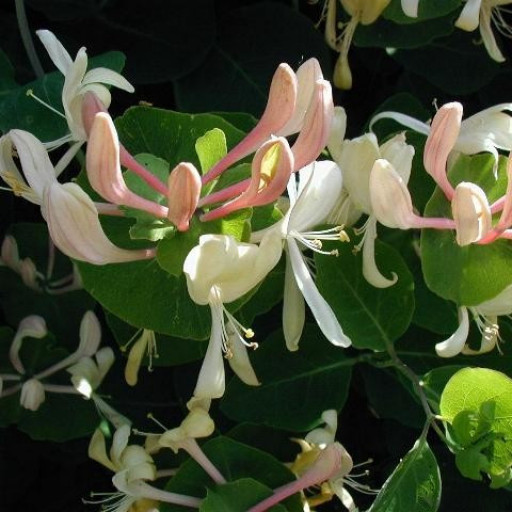
Plant Overview
Known as the "Italian Woodbine" or "Goat-leaf Honeysuckle," this classic climbing vine has been a staple of romantic cottage gardens for centuries. Its intoxicating, honey-sweet perfume is most potent at dusk, specifically designed to lure nocturnal moths from great distances. In the language of flowers, it has long symbolized devoted affection and the "bonds of love" due to its clinging growth habit.
🔍 How to Identify
- 🍃 Perfoliate Leaves: The most distinct feature is the upper pair of leaves, which are fused together at the base to form a solid green "saucer" that the flower stem appears to grow straight through.
- 🎺 Trumpet Blooms: Clusters of tubular, cream-colored flowers often tinged with a delicate pink or purple. As they age, the blossoms deepen into a rich, golden yellow.
- 🍒 Summer Berries: After the flowering season, the plant produces small, translucent orange-to-red berries that sit nestled in the center of the fused upper leaves.
🏡 In Your Garden
- 🧗 Vertical Ambition: This is a vigorous "twiner" that needs a sturdy trellis, fence, or arbor to climb. Unlike ivy, it doesn't have suction cups, so it physically wraps its stems around its support.
- 🦶 Cool Feet, Hot Head: To see this plant thrive, follow the "clematis rule." It prefers having its roots in cool, moist, shaded soil (use mulch or groundcover plants) while its flowering vines reach up into the bright sunlight.
- 🌬️ Air Circulation: While it loves a warm wall, ensure it isn't tucked into a stagnant corner. Good airflow is the best defense against powdery mildew, which can sometimes dull its beautiful foliage in late summer.
⚠️ Safety & Toxicity
- 🚫 Toxic Berries: While the nectar is often enjoyed by humans, the bright orange-red berries are toxic. They contain saponins which can cause stomach upset, vomiting, or diarrhea if ingested.
- 🐾 Pet Warning: Keep an eye on curious dogs or cats. Ingestion of the berries or large amounts of foliage can lead to lethargy and digestive distress.
- 🌿 Skin Sensitivity: Some gardeners report mild skin irritation after heavy pruning; wearing gloves is a good precaution for those with sensitive skin.
✨ Fun Fact
The species name Caprifolium literally translates to "Goat Leaf" in Latin. It earned this name because of the ancient observation that wild goats in the hills of Europe would often climb onto their hind legs to reach the high, succulent leaves of this vine.

Detailed Care Instructions
Growing Lonicera caprifolium, also known as Italian woodbine or goat-leaf honeysuckle, is relatively easy if you follow these steps:
- Location: Choose a location that receives full sun to partial shade. The plant can tolerate various soil types but prefers well-draining soil.
- Planting: Dig a hole twice the size of the root ball and place the plant in the hole. Backfill the hole with soil and pat it down gently.
- Watering: Water the newly planted Lonicera caprifolium thoroughly and keep the soil moist, but not soggy, until it establishes roots. After that, water when the top inch of soil feels dry, about once a week.
- Mulching: Apply a layer of organic mulch around the base of the plant, leaving space around the stem to prevent moisture-related issues and encourage root growth.
- Fertilizing: Apply a balanced, slow-release fertilizer in early spring and again in early summer to provide essential nutrients.
- Pruning: Prune Lonicera caprifolium in late winter or early spring before new growth begins. Remove any dead, damaged, or diseased branches. You can also shape the plant by trimming back unruly branches.
- Support: Lonicera caprifolium is a climbing vine, so providing support such as a trellis, arbor, or fence will allow it to grow vertically.
- Pests and Diseases: Keep an eye out for aphids, powdery mildew, and leaf spot. Regularly inspect the plant for any signs of damage or infections, and treat accordingly using organic pest control methods or appropriate fungicides.
- Training: As the plant grows, gently train the stems to climb on the support structure by lightly tying them with garden twine.
- Propagation: If desired, you can propagate Lonicera caprifolium by taking softwood cuttings in early summer or hardwood cuttings in late autumn.
Remember to check with your local gardening center or nursery for specific advice tailored to your region and climate.

Place in a window with dappled sun or a spot in the middle of a room. Or directly in a window facing west or east.

To properly water this plant, it is important to take into consideration the soil type, weather, and growth stage of the plant. First, check the soil moisture by sticking your finger about an inch deep into the soil. If it feels dry, it is time to water. However, if the soil feels moist, hold off on watering until it has dried out a bit more.
When watering, aim to provide a deep soak rather than a light sprinkle. This will encourage the roots to grow deeper into the soil and become more drought-resistant. Water the plant at its base rather than spraying water on the leaves or flowers. Avoid getting the foliage wet, as this can promote the growth of fungal diseases.
During hot and dry weather, you may need to water more frequently, possibly every few days. However, during cooler and wetter weather, you may not need to water as often, possibly only once a week. Be mindful not to overwater the plant, as this can lead to root rot and ultimately kill the plant.
As the plant matures, its water needs may change. For example, a juvenile plant may require more water as it establishes its root system, while a mature plant may require less water once it has fully developed.
In summary, when watering this plant, consider the soil moisture, provide a deep soak, avoid getting the foliage wet, and adjust watering frequency based on weather and growth stage.
To fertilize the Lonicera Caprifolium plant, use a balanced fertilizer with equal amounts of nitrogen, phosphorus, and potassium. Apply the fertilizer in the spring and again in the summer, following the package instructions for the amount to use. Be careful not to over-fertilize, as this can damage the plant. Water the plant immediately after fertilizing to help the nutrients reach the roots.
Lonicera Caprifolium plants prefer well-drained soil that is rich in nutrients and organic matter. The pH of the soil should be slightly acidic to neutral, ideally around 6.0 to 7.0. It is important to avoid heavy clay soils as they can lead to stagnant water and root rot. A loamy soil with a good balance of sand, silt, and clay is ideal for this plant. To promote healthy growth and flowering, it is recommended to amend the soil with compost or a slow-release fertilizer before planting. Additionally, regular mulching around the base of the plant will help to retain moisture in the soil and suppress weeds.
To propagate this plant, you can take stem cuttings from a healthy and mature plant. These cuttings should be about 4-6 inches in length and taken from the softwood of the plant. Remove any leaves from the bottom half of the cutting and dip the cut end in rooting hormone. Place the cutting in a pot filled with a well-draining soil mix and water thoroughly. Cover the pot with a plastic bag to create a humid environment and place it in a bright, indirect light spot. Remove the plastic bag once the plant has rooted and hardened off and transplant it into a larger pot or the ground.
Common pests of the honeysuckle include Spider mites, aphids, larvae. Make a habit of checking your honeysuckle frequently for pests so that any infestations can be caught and managed early.








