Plant Overview
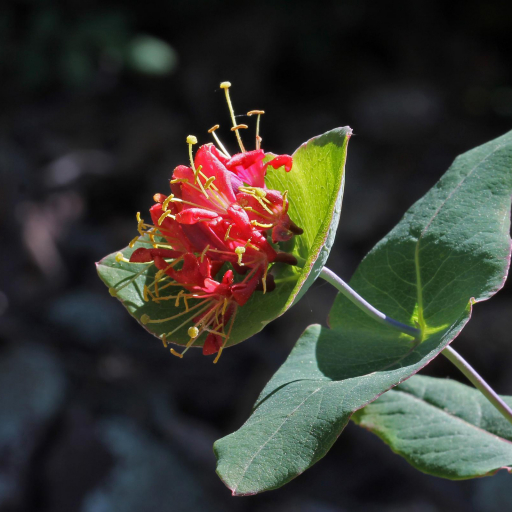
Often called the Limber Honeysuckle or Glaucous Honeysuckle, Lonicera dioica is a graceful, native North American vine that dances through woodlands and over rocky cliffs. Unlike its aggressive, invasive cousins, this honeysuckle is a well-behaved guest in the garden, known for its unique "fused" leaves and subtle, waxy beauty. It is a favorite of early-season pollinators who seek out its tubular nectar-rich blooms.
🔍 How to Identify
- 🍃 The "Unity" Leaves: The most striking feature is the uppermost pair of leaves, which are completely fused together at their bases, forming a single oval disk that the stem appears to grow straight through.
- ❄️ Waxy Coating: The undersides of the leaves have a distinct "glaucous" or white-waxy coating, giving them a cool, frosted appearance that contrasts beautifully with the green tops.
- 🎺 Tubular Blooms: It produces clusters of trumpet-shaped flowers at the ends of the branches, which can range in color from a pale, buttery yellow to a deep, dusky reddish-purple.
- 🍒 Summer Berries: After the flowers fade, they are replaced by tight clusters of bright, translucent red berries that persist into the late summer.
🏡 In Your Garden
- ⛰️ Rocky Roots: This plant is incredibly hardy and thrives in environments where other vines might struggle, such as thin, rocky soils or limestone outcroppings. It doesn't require deep, rich "potting soil" to find its footing.
- 🐦 Hummingbird Magnet: If you want to attract Ruby-throated Hummingbirds, this is your plant. Their long beaks are perfectly evolved to reach the nectar hidden deep within the tubular flowers.
- 🌿 Non-Aggressive Growth: Unlike the invasive Japanese Honeysuckle, the Limber Honeysuckle grows at a moderate pace. It won't swallow your fence or stifle nearby trees, making it ideal for smaller native plant gardens.
⚠️ Safety & Toxicity
- 🚫 Toxic Berries: While birds love them, the red berries are toxic to humans. If ingested, they can cause nausea, vomiting, and abdominal pain.
- 🐶 Pet Warning: Keep an eye on curious dogs and cats. The foliage and berries contain saponins and other compounds that can lead to digestive upset if chewed on.
- 🧤 Mild Irritant: Some individuals with sensitive skin may experience mild redness if the sap from a broken stem stays on the skin for too long.
✨ Fun Fact
The name dioica actually comes from a botanical mistake! The scientist who named it, Carl Linnaeus, originally believed the plant had separate male and female individuals (dioecious). Even though we now know every plant carries both parts, the name "dioica" remains as a permanent historical "oops" in the world of botany.

Detailed Care Instructions
To grow Lonicera dioica, also known as the limber honeysuckle, follow these steps:
- Choose an appropriate location: Select a spot that receives partial to full sun exposure. The plant can tolerate a wide range of soil types but prefers well-draining soil.
- Planting: Dig a hole that is twice as wide and deep as the plant's root ball. Place the plant in the hole, making sure the top of the root ball is level with the ground. Backfill the hole with soil, gently firming it around the roots.
- Watering: Water the plant thoroughly after planting. Water regularly to keep the soil consistently moist but not waterlogged. During dry periods, you may need to provide additional irrigation.
- Mulching: Apply a layer of mulch around the base of the plant to help conserve moisture and suppress weeds. Leave a small space around the stem to prevent moisture buildup and potential rot.
- Pruning: Limber honeysuckle benefits from occasional pruning to maintain shape and promote healthy growth. Prune in late winter or early spring before new growth begins. Remove any dead, damaged, or crossing branches.
- Fertilizing: Fertilizing is typically not necessary for Lonicera dioica. However, if the plant appears weak or lacks vigor, you may apply a balanced slow-release fertilizer in spring.
- Support: Provide a trellis or other support structure if you want the plant to climb. The limber honeysuckle is a climbing vine that can reach up to 15-20 feet in height.
- Pest and disease control: The limber honeysuckle is generally resistant to pests and diseases. However, check regularly for any signs of aphids, powdery mildew, or other common issues. If problems arise, treat accordingly.
- Propagation: Lonicera dioica can be propagated through seeds, cuttings, or layering. Collect seeds from ripe fruits and sow them in a well-prepared seedbed. Cuttings can be taken in summer and rooted in a moist growing medium. Layering involves bending a partially-woody stem to the ground, securing it, and covering it with soil to encourage root formation.
Remember to check your local regulations regarding the planting of non-native or invasive species before introducing Lonicera dioica to your garden.

Place in a bright room that is sun drenched almost all day. Or directly in a south-facing window.

To properly care for this plant, it is important to provide adequate watering. This plant prefers well-draining soil, so be careful not to overwater as this can result in root rot. A good rule of thumb is to water once the top inch of soil feels dry to the touch. When watering, make sure to water deeply rather than just a light surface watering. This encourages roots to grow deep into the soil and promotes better overall plant health. Be sure to avoid getting water on the leaves as this can lead to fungal diseases. During hotter weather or drought conditions, you may need to water more frequently to ensure the plant stays hydrated.
To fertilize the Lonicera dioica plant, use a balanced fertilizer with equal parts nitrogen, phosphorus, and potassium. Apply it to the soil around the base of the plant, not directly on the foliage. Water the plant thoroughly after fertilization to help distribute the nutrients throughout the soil. Fertilize every two to four weeks during the growing season, and reduce frequency during the winter months. Be careful not to over-fertilize, as this can lead to root burn and damage to the plant.
Lonicera Dioica is a climbing plant that prefers a well-draining and nutrient-rich soil. The ideal soil for this plant is loamy or sandy soil with a pH range between 5.5 and 7.5. It should be moist, but not waterlogged, and should have good drainage to prevent root rot.
The soil should have a good amount of organic matter and be rich in nutrients like nitrogen, phosphorus, and potassium, which are important for the growth and development of the plant. A slow-release fertilizer can also be added to the soil to provide ongoing nutrition for the plant.
It is recommended to avoid using heavy clay soils or soils that stay wet for long periods of time. It is also important to keep the soil moist but not soggy, as overwatering can cause root rot and other problems.
Overall, a well-draining, nutrient-rich soil with a slightly acidic to neutral pH is best for Lonicera Dioica.
To propagate this plant, first, choose a healthy mature stem with no visible signs of damage or disease.
Next, take a cutting from the stem, making sure it is about 4-6 inches long with at least two to three leaf nodes.
Remove all the leaves except the top few, and then dip the cut end in rooting hormone.
Prepare a pot with well-draining soil and water it thoroughly to moisten the soil.
Create a small hole in the soil and insert the cutting, gently pressing the soil around it to hold it in place.
Cover the pot with plastic or a clear plastic bag to create a humid environment and place it in a bright, indirect light location.
Water the cutting as needed to maintain moist soil and check for signs of growth after a few weeks.
Once the cutting has developed roots and new growth, it is ready to be transplanted into a larger container or planted in the ground.








