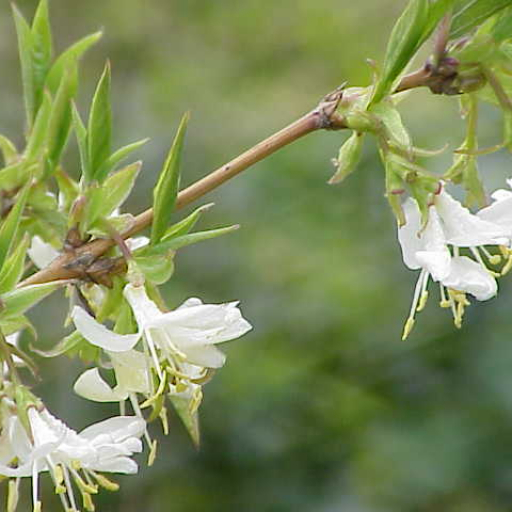
Plant Overview
Often called the "Winter Honeysuckle" or "Sweet Breath of Spring," Lonicera fragrantissima is a garden’s secret weapon against the winter blues. While most of the landscape is still deep in slumber, this hardy shrub erupts with tiny, unassuming flowers that pack a citrusy perfume so powerful it can drift across an entire yard on a cold breeze. Originally brought from China in the mid-1800s, it has become a nostalgic favorite for its ability to signal that warmer days are just around the corner.
🔍 How to Identify
- 🌸 The Flowers: Look for small, creamy-white, tubular blossoms that grow in pairs along the leafless branches in late winter or very early spring.
- 🍃 The Foliage: Features stiff, oval-shaped leaves with a dull bluish-green tint. In warmer climates, it remains semi-evergreen, but in colder zones, it drops its leaves to reveal a messy, arching skeletal frame.
- 🍒 The Fruit: In late spring, the flowers transition into small, dull red berries that are often hidden beneath the new season’s leaf growth.
🏡 In Your Garden
- 📍 Strategic Placement: This isn't a "specimen" plant for the center of the lawn because it can look a bit "twiggy" or unkempt. Instead, tuck it near a doorway, a gate, or an open window where you can enjoy the intense fragrance without needing to go outside.
- ✂️ The Pruning Rule: Always prune immediately after the flowers fade. This shrub blooms on "old wood," meaning if you trim it in the fall or winter, you are accidentally cutting off all of next year’s fragrant blossoms.
- 🌳 Growth Habit: It is incredibly tough and adaptable to most soil types. It is often used as a privacy screen or a "background" shrub that stays quiet all summer and takes center stage in February.
⚠️ Safety & Toxicity
- 🐾 Mildly Toxic: The red berries produced in late spring are considered mildly toxic to humans, cats, and dogs.
- 🤢 The Effects: Ingestion can lead to stomach upset, vomiting, or diarrhea. While the flowers are generally safe and highly fragrant, it is best to keep curious children and pets away from the berries.
- 🌿 Invasive Note: In some parts of the Eastern United States, it is considered invasive because birds spread the seeds easily. Check your local environment before planting in wild-adjacent areas.
✨ Fun Fact
🍋 Lemon Soap Scent: The fragrance is so distinct that many gardeners compare it to the smell of high-end lemon soap or even fruit-flavored cereal. In the Victorian era, sprigs were often brought indoors to act as a natural air freshener for stuffy winter rooms.

Detailed Care Instructions
Here are some steps to help you grow a Lonicera fragrantissima plant:
- Choose a suitable location: Lonicera fragrantissima plants prefer full sun to partial shade. Select a spot in your garden or yard that receives at least 4-6 hours of direct sunlight daily.
- Prepare the soil: These plants thrive in well-draining soil that is rich in organic matter. Amend the soil by adding compost or well-rotted manure to improve its fertility and drainage.
- Planting: Dig a hole that is slightly wider and deeper than the plant's root ball. Gently remove the plant from its container and place it in the hole, ensuring that the top of the root ball is level with or slightly above the soil surface. Backfill the hole with soil, gently firming it around the plant.
- Watering: Lonicera fragrantissima plants require regular watering, especially during dry periods. Keep the soil moist but not waterlogged. Water deeply and thoroughly, allowing the soil to dry out slightly between waterings.
- Mulching: Apply a layer of organic mulch, such as wood chips or shredded bark, around the base of the plant. Mulching helps conserve moisture, suppresses weed growth, and regulates soil temperature.
- Pruning: Lonicera fragrantissima benefits from annual pruning to maintain its shape and promote healthy growth. Prune in early spring before new growth begins by removing any dead, damaged, or crossing branches. This will encourage new growth and improve the plant's overall appearance.
- Fertilizing: Lonicera fragrantissima plants generally do not require much fertilizer. However, you can apply a balanced slow-release fertilizer in early spring to provide necessary nutrients. Follow the manufacturer's instructions for application rates.
- Pest and disease control: These plants are generally resistant to pests and diseases. However, keep an eye out for aphids, spider mites, and powdery mildew. If necessary, treat insect infestations or fungal diseases with appropriate organic or chemical controls.
- Enjoy the fragrance: Lonicera fragrantissima plants produce highly fragrant flowers in late winter or early spring. Make sure to take the time to enjoy their delightful scent.
Remember to research any specific regional guidelines or recommendations for growing Lonicera fragrantissima in your area, as conditions may vary.

Place in a bright room that is sun drenched almost all day. Or directly in a south-facing window.

Lonicera Fragrantissima should be given water regularly to keep the soil consistently moist. It should not be allowed to dry out completely or become waterlogged. It is important to water the plant deeply and evenly, making sure that the water reaches the roots. To avoid splashing water on the leaves, it is recommended to water the plant at soil level. The frequency of watering may vary based on the plant's environment, such as temperature, humidity, and sunlight exposure. It is important to monitor the soil moisture levels and adjust the watering schedule accordingly.
To promote healthy growth and flowering of this plant, apply a balanced fertilizer in the early spring and again in the summer. Use a fertilizer that is high in nitrogen for the first application and has a higher phosphorus content for the second application. Follow the package instructions for application rates and methods. Avoid over-fertilizing as this can lead to weak growth and reduced flower production. Water the plant deeply after each application to ensure proper nutrient uptake.
Lonicera Fragrantissima plants prefer well-draining soil that is rich in organic matter. The ideal pH range for the soil is between 6.0 and 7.5. The plant requires fertile soil that is moist but not waterlogged. It is recommended to use a loamy soil, which has a balanced mixture of clay, sand, and silt. Avoid using heavy soil or soil with a high clay content as it can lead to poor drainage and root rot. The soil should be regularly amended with compost and other organic matter to improve its fertility and structure. It is also important to choose a location that receives partial sun and is protected from strong winds. Adequate watering and proper soil conditions will encourage healthy growth and maximum flowering.
- Select a healthy stem: To propagate Lonicera Fragrantissima, choose a healthy stem from an existing plant. Look for a strong, woody stem that does not have any signs of disease or damage.
- Cut a young shoot: Using a sharp knife or pair of pruning shears, cut a young stem from the parent plant. Make the cut just below a node, which is the point where leaves grow from the stem.
- Remove the lower leaves: Once you have cut the stem, remove the lower leaves. This will help the stem put its energy into developing roots instead of supporting the leaves.
- Dip in rooting hormone: Dip the cut end of the stem in rooting hormone. This will encourage the stem to develop roots.
- Plant the stem: Plant the stem in a container filled with well-draining soil. Water the soil until it is moist but not soaked.
- Cover the container: Cover the container with a plastic bag or a cloche to create a humid environment for the stem.
- Wait for rooting: Place the container in a warm and bright area, but out of direct sunlight. Check the soil regularly, and mist the stem with water if the soil feels dry. It may take several weeks for the stem to develop roots.
- Transplant: Once the stem has developed strong roots, transplant it into a larger container or outside in a prepared bed with well-draining soil. Water the new plant regularly until it is established.








