Plant Overview
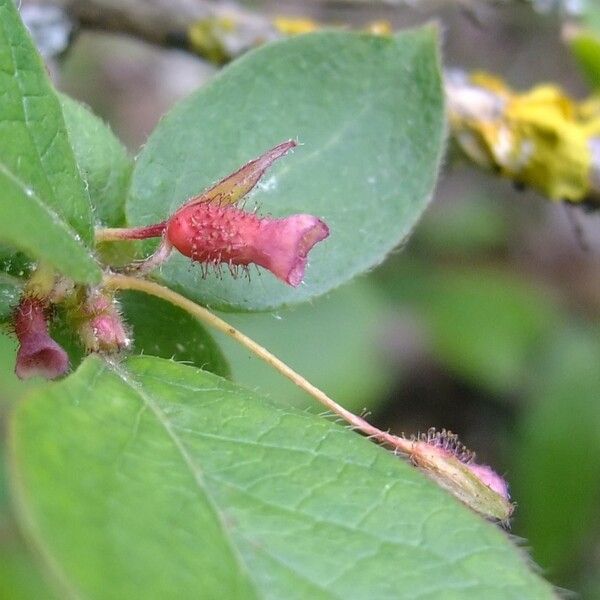
Known affectionately as the Slender Honeysuckle or Miyama-uguisu-kagura in its native Japan, this deciduous shrub is the epitome of woodland elegance. Unlike the aggressive climbing vines many associate with honeysuckle, this species grows as a graceful, airy bush. In early spring, it produces delicate, nodding pink flowers that look like tiny dancers suspended from the branches by invisible threads.
🔍 How to Identify
- 🌸 The Bloom: Small, bell-shaped flowers ranging from pale pink to deep rose. They hang singularly or in pairs from exceptionally long, slender stalks (peduncles), giving them a "pendulous" look.
- 🍃 The Foliage: Broadly ovate (egg-shaped) leaves that emerge with a slight bronze tint before turning a soft, matte green. They are arranged oppositely along very fine, twiggy branches.
- 🍒 The Fruit: In early summer, the flowers give way to oblong, translucent red berries. These berries are often described as looking like tiny, glowing rubies dangling beneath the leaves.
🏡 In Your Garden
- 🌳 Woodland Vibes: This plant thrives in "dappled shade," mimicking its home in the mountain forests of Japan. It prefers cool, humic soil that stays moist but never becomes waterlogged.
- ✂️ Low Maintenance: Because of its "slender" growth habit, it rarely needs heavy pruning. It’s a slow-to-moderate grower that maintains a natural, fountain-like shape without much human intervention.
- 🦋 Wildlife Magnet: While it lacks the heavy perfume of some honeysuckles, its early nectar is a vital food source for emerging spring pollinators and long-tongued insects.
⚠️ Safety & Toxicity
- 🟢 Status: Generally considered non-toxic, but caution is advised.
- 🐾 The Berries: While the fruit of Lonicera gracilipes is traditionally considered edible in Japan (with a sweet-tart flavor), many other red-berried honeysuckles are toxic. To prevent confusion and stomach upset in children or pets, it is best to treat the berries as ornamental rather than a snack.
✨ Fun Fact
In Japan, the name Uguisu-kagura suggests a connection to the Japanese Bush Warbler (Uguisu). Folklore suggests that the bird "dances" (kagura) among the branches of this shrub when it begins to bloom, signaling the official arrival of spring.

Detailed Care Instructions








