Plant Overview
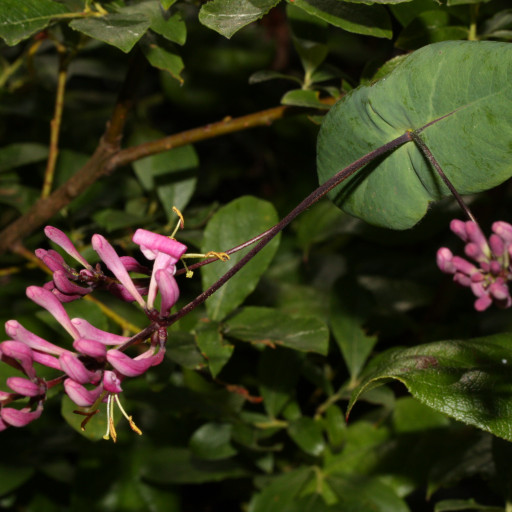
Known as the Pink Honeysuckle or California Honeysuckle, this charming deciduous vine is a native gem of the West Coast. Unlike its more aggressive, invasive relatives, Lonicera hispidula is a graceful scrambler that weaves itself through oak woodlands and chaparral. It is often celebrated for its "fairytale" appearance, featuring delicate pink trumpets that seem to float against its unique circular leaves.
🔍 How to Identify
- 🍃 Perfoliate Leaves: One of its most distinct features is the upper pair of leaves, which are fused together at the base to form a single, solid disk that the stem appears to grow right through.
- 🌸 Whimsical Blooms: The flowers are narrow, pink-to-purple trumpets with dramatically curling petals and long, elegant stamens that beckon to local pollinators.
- 🍓 Translucent Fruit: In late summer and autumn, the vine produces tight clusters of shiny, translucent red berries that look like tiny glass beads.
- 🎋 Hairy Stems: If you look closely at the young "vines," you’ll notice they are covered in fine, bristly hairs—this is actually where its scientific name, hispidula, comes from.
🏡 In Your Garden
- 🧗 The Natural Weaver: This isn't a "clinging" vine like ivy; it prefers to scramble and lean. In a garden setting, it looks best draped over a split-rail fence or allowed to wander through a sturdy native shrub like Ceanothus.
- 🌦️ Tough Love: Being a California native, it is incredibly drought-tolerant once established. It actually thrives on neglect and prefers well-draining soil—overwatering or heavy fertilizers often result in more "greenery" but fewer of those iconic pink flowers.
- 🦋 Wildlife Magnet: It is a high-value plant for ecology lovers. It serves as a primary nectar source for hummingbirds and a larval host for various beautiful moths.
⚠️ Safety & Toxicity
- 🐾 Mildly Toxic: While birds absolutely love the bright red berries, they are considered toxic to humans, dogs, and cats.
- 🤢 Symptoms: If ingested, the berries can cause nausea, vomiting, or diarrhea. It is best to plant this vine away from areas where curious toddlers or pets might be tempted to "sample" the fruit.
✨ Fun Fact
The hollow stems of the Pink Honeysuckle were historically used by some Indigenous peoples of the Pacific Coast to create pipe stems and small tools, showcasing the plant's utility beyond its obvious beauty.

Detailed Care Instructions

Place in a bright room that is sun drenched almost all day. Or directly in a south-facing window.

To water this plant, it is important to observe the moisture level of the soil. The plant prefers well-draining soil but also needs to be kept moist. The frequency of watering will depend on the climate and weather conditions, but generally, the plant should be watered deeply once or twice a week.
To ensure proper watering, use your finger to check the soil's moisture level one inch below the surface before watering. If the soil feels dry, it's time to water. When watering, avoid getting the leaves wet to prevent leaf scorch and fungal growth.
During hot and dry weather conditions, the plant may need more frequent watering to prevent drought stress and leaf drop. However, make sure not to overwater, as this can lead to root rot.
In summary, water this plant deeply once or twice a week depending on the moisture level of the soil, and avoid getting the leaves wet.
Lonicera Hispidula plants prefer soil that is well-draining and has a slightly acidic pH level. The soil should be rich in organic matter, such as compost or leaf litter, to provide the necessary nutrients for healthy growth. A mix of loam, sand, and peat moss can create an ideal growing medium for this plant. It is important to ensure that the soil is not compacted, as this can limit root growth and water uptake. Providing a layer of mulch around the base of the plant can also help to retain moisture and regulate soil temperature. Overall, a loose, fertile soil that promotes good drainage and nutrient uptake is best suited for Lonicera Hispidula plants.








