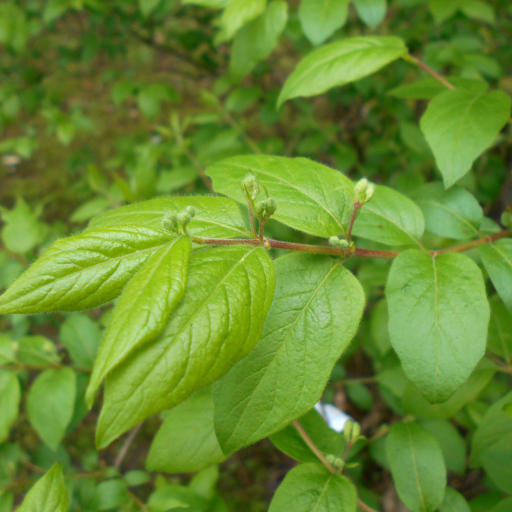
Plant Overview
Known as the Manchurian Honeysuckle, Lonicera ruprechtiana is a hardy, deciduous traveler from the cool forests of Northeast Asia. It is often celebrated for its "twin" blossoms that perform a beautiful color-changing act throughout the spring. While it brings a classic, wild-hedgerow charm to a landscape, it is a vigorous grower that demands a bit of discipline to keep it from wandering too far.
🔍 How to Identify
- 🌸 The Twin Flowers: Small, tubular flowers grow in pairs from the leaf axils. They emerge a crisp, snowy white but gradually mellow into a creamy golden-yellow as they age.
- 🍃 Soft Foliage: The leaves are egg-shaped and arranged oppositely along the stem. If you flip them over, you’ll notice a fine, fuzzy texture on the undersides, a key trait that distinguishes it from some of its cousins.
- 🍒 Summer Jewels: In late summer, the plant produces pairs of glossy, translucent red or orange-red berries that sit nestled against the green leaves.
🏡 In Your Garden
- 🌱 Vigorous Boundaries: This shrub is frequently used as a living privacy screen or windbreak because of its dense, upright growth habit. It can easily reach heights of 8 to 12 feet if left to its own devices.
- ✂️ The Pruning Rule: Because it grows so enthusiastically, it can become "leggy" or sparse at the bottom. Pruning it back after the flowers fade helps maintain a bushy, full shape and prevents it from overtaking smaller garden neighbors.
- 🦅 Wildlife Magnet: While humans should keep their distance from the fruit, birds absolutely love them. It acts as a natural birdfeeder, though gardeners should be aware that birds will "plant" the seeds elsewhere!
⚠️ Safety & Toxicity
- 🚫 Status: Mildly Toxic.
- 🐾 Details: The bright red berries are tempting but are generally considered inedible for humans, dogs, and cats. Ingesting them can lead to nausea, vomiting, or stomach upset. It is best kept in areas where curious toddlers or pets won't be tempted to "forage."
✨ Fun Fact
- 📜 Botanical Legacy: The plant is named after Franz Josef Ruprecht, a famous 19th-century botanist who spent his life exploring the vast wilderness of the Russian Empire to categorize its unique flora.

Detailed Care Instructions

Place in a bright room that is sun drenched almost all day. Or directly in a south-facing window.

Water-loving plants flourish in wet or sloppy soil and near ponds. The extensive root system enables these plants to absorb plenty of water. The surface of the soil should be kept moist at all times. Place your pot in a container filled with water to guarantee that plants get enough water. If the ground becomes dry, it is recommended that you water it well. Plants in smaller pots will need to be watered more frequently. Water the soil in which the plant is standing thoroughly using a watering can.








