Plant Overview
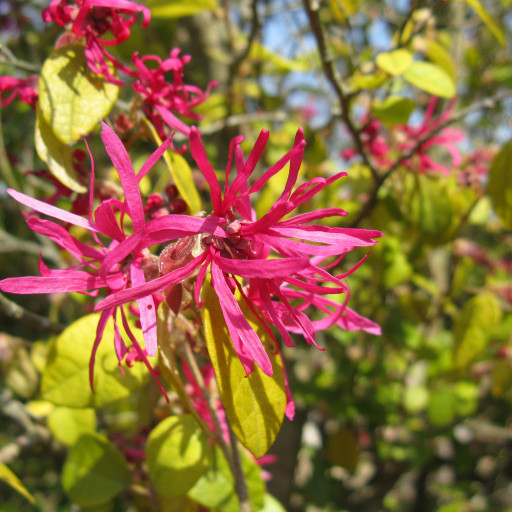
Often called the Chinese Fringe Flower, this elegant evergreen looks like a living fireworks display. Native to the woodlands of China, Japan, and Southeast Asia, it is a member of the witch-hazel family, celebrated for its unique "fringe" petals that dangle like shredded silk. Whether you have the classic white variety or the dramatic burgundy-leaved cultivars, this plant adds a touch of Zen-like grace to any landscape.
🔍 How to Identify
- 🌸 The "Fringe" Blooms: The flowers consist of four narrow, strap-shaped petals that look like clusters of confetti or ribbons.
- 🍃 Oval Foliage: The leaves are small, slightly abrasive to the touch, and grow in an alternate pattern. Depending on the variety, they range from olive green to a deep, chocolatey purple.
- 🌿 Arching Habit: It naturally grows in a layered, horizontal fashion, giving it a soft, tiered appearance rather than a stiff, upright shape.
🏡 In Your Garden
- 🧪 Soil Sensitivity: This plant is a "calcifuge," meaning it hates lime. It craves acidic soil; if the pH is too high, the leaves will turn yellow (chlorosis) because the plant can't "eat" the iron in the dirt.
- ✂️ Pruning Nuance: While it handles hedging well, its true beauty lies in its natural, fountain-like shape. If you must prune, do it immediately after flowering to avoid cutting off next year's "fireworks."
- ⛅ Sun & Color: While it is tough, the dark-leaved varieties need a good amount of sunlight to maintain their deep purple hue; in deep shade, they often fade back to a muddy green.
⚠️ Safety & Toxicity
- ✅ Pet Friendly: Loropetalum chinense is generally considered non-toxic to dogs, cats, and horses, making it a safe choice for family backyards.
- 🧤 Skin Irritation: While not poisonous, some gardeners find the slightly "sandpapery" texture of the leaves can cause mild skin irritation or itching after a heavy afternoon of pruning.
✨ Fun Fact
The name Loropetalum is derived from the Greek words loron (strap) and petalon (petal), literally translating to "Strap-Petal"—a perfect description of its unique, ribbon-like flowers!

Detailed Care Instructions
It is not listed as a toxic plant.
Is Chinese fringe flower invasive?
Although it is an introduced species from Asia and not native to North America, it is not considered an invasive plant.
How long does Chinese fringe bloom?
The gorgeous blooms of Chinese fringe flowers appear in mid-spring, but healthy shrubs can rebloom intermittently throughout the growing season.
| Color | Pink, Red, White, Yellow-White |
| Soil Ph | 4.5 - 6.5 |
| Soil Type | Well-Draining |
| Bloom Time | Spring |
| Plant Type | Shrub |
| Mature Size | 15' Tall (Depending On The Variety) |
| Native Area | China, Japan |
| Sun Exposure | Sun, Part-Shade |
| Hardiness Zones | 7, 8, 9 |
Here are some tips for growing Loropetalum Chinense plant:
- Location: Choose a sunny or partially shaded spot in your garden with well-draining soil. Loropetalum Chinense can tolerate a range of soil types but prefers slightly acidic soil.
- Planting: Dig a hole about twice the size of the plant's root ball. Place the plant in the hole, making sure the top of the root ball is level with the soil surface. Backfill the hole with soil, gently firming it around the roots.
- Watering: Keep the plant consistently moist, especially during the first year of growth. Use a drip irrigation system or water deeply and infrequently to encourage deeper root growth.
- Mulching: Apply a layer of organic mulch around the base of the plant to help retain moisture, suppress weeds, and regulate soil temperature.
- Pruning: Prune Loropetalum Chinense in early spring before new growth begins. This plant can tolerate a range of pruning styles, from shaping to more severe pruning. Regular pruning will help maintain its shape and promote bushier growth.
- Fertilizing: Apply a balanced slow-release fertilizer in late winter or early spring. Follow the instructions on the fertilizer packaging for proper application rates.
- Pest and Disease Control: Loropetalum Chinense is generally pest and disease resistant. However, keep an eye out for common garden pests like aphids, spider mites, or scale insects. Treat infestations with insecticidal soap or neem oil, following the product's instructions.
- Winter Protection: In colder regions, provide winter protection by mulching around the base of the plant and covering it with a layer of frost cloth or burlap if temperatures drop below freezing.
Remember to monitor the plant's growth regularly and adjust care practices accordingly. With proper care, your Loropetalum Chinense plant should grow and thrive in your garden.

Place in a bright room that is sun drenched almost all day. Or directly in a south-facing window.

To properly water this plant, you should first check the soil moisture level by sticking your finger into the soil up to your second knuckle. If it feels dry, it's time to water.
When watering, use a watering can or hose with a low pressure setting to avoid damaging the roots. Water slowly and evenly around the base of the plant until the soil is moist to a depth of at least 6 inches. Avoid getting the foliage wet to prevent fungus and other diseases from developing.
Water the plant deeply and thoroughly, but be careful not to overwater as this can lead to root rot. It's recommended to water this plant once or twice a week, depending on environmental conditions such as temperature, humidity, and rainfall.
During periods of drought or heat stress, increase the frequency of watering and consider mulching around the base of the plant to help retain moisture in the soil. Overall, consistent and well-timed watering is key to keeping this plant healthy and thriving.
To fertilize this plant, apply a balanced slow-release fertilizer in the spring and again in mid-summer. Follow the instructions on the label for the appropriate amount to apply based on the size of the plant. It is important not to over-fertilize, as this can cause damage to the plant. Water the plant deeply after fertilizing to ensure the nutrients are absorbed properly.
The ideal soil for this plant is a well-draining, slightly acidic soil with a pH range of 5.0-6.5. The soil should also be rich in organic matter and have good moisture retention. A mixture of peat moss, compost, and sand can be used to create a well-draining soil that is also rich in nutrients. It is important to avoid using heavy, clay soils that can become waterlogged and lead to root rot. Additionally, adding a layer of mulch around the base of the plant can help conserve moisture and protect the roots from extreme temperatures.
The loropetalum chinense plant can be propagated through both softwood and hardwood cuttings. Softwood cuttings are taken in the spring and early summer while hardwood cuttings are taken in the late fall and winter.
To take a softwood cutting, select a stem that is soft and flexible but not too young. Cut the stem at a 45-degree angle just below a node and remove any leaves on the lower half of the cutting. Dip the cut end in rooting hormone and plant in a container filled with a mix of sand and peat moss. Keep the soil moist and place the container in a bright location out of direct sunlight. Roots should form in a few weeks.
To take a hardwood cutting, select a stem that is thick and woody but still flexible. Cut the stem at a 45-degree angle and make sure the cutting is at least 6 inches long. Remove any leaves from the lower half of the cutting and dip the cut end in rooting hormone. Plant the cutting in a container filled with a mix of sand and peat moss and keep the soil moist. Place the container in a cool, bright location and roots should form in a few weeks.
Propagation can also be done through layering. Select a flexible stem and make a small cut on the underside of the stem. Dust the cut with rooting hormone and bury the cut under soil. Once roots have formed, cut the stem from the parent plant and transplant into a container.
Common pests of the chinese fringe-flower include Spider mites, aphids. Make a habit of checking your chinese fringe-flower frequently for pests so that any infestations can be caught and managed early.








