Plant Overview
Known by the charming nickname Greater Bird’s-foot-trefoil, this meadow-dweller is a resilient powerhouse that loves to keep its "toes" wet. Often found brightening up marshy banks and damp grasslands across Europe and North Africa, it is a vital friend to pollinators and a natural soil-healer. Its unique seed pods, which stretch out like the thin toes of a bird, give this plant its most famous descriptive name.
🔍 How to Identify
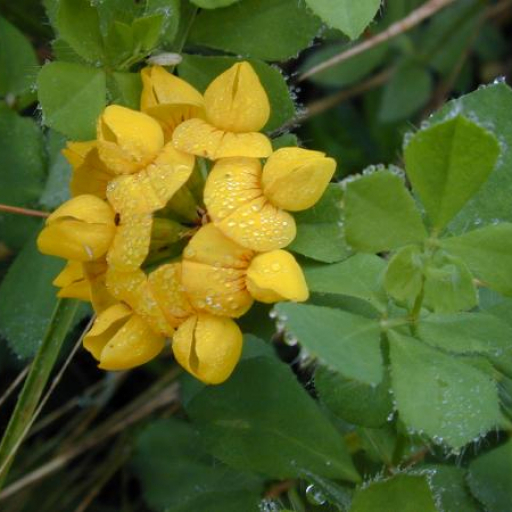
- 🌼 Golden Clusters: It features 5 to 12 bright yellow, pea-like flowers grouped at the top of a long stalk. You might notice subtle orange or reddish tints on the buds before they open.
- 🍃 Leaf Pattern: While "trefoil" implies three leaves, this plant actually has five leaflets; three at the tip and two smaller ones sitting right at the base of the leaf-stalk.
- 🧪 Hollow Stems: A key giveaway for this species is its stem—unlike its smaller cousins, the stems of Lotus pedunculatus are hollow and slightly hairy, allowing it to grow taller in competitive marshy tall-grass.
🏡 In Your Garden
- 💧 The Bog Specialist: This isn't a plant for a dry rockery. It thrives in heavy, boggy, or poorly drained acidic soil where other plants might suffer from "wet feet," making it a perfect choice for the edges of a garden pond.
- 🌱 Soil Enrichment: As a member of the legume family, it possesses a "superpower"—it works with soil bacteria to fix nitrogen. It effectively acts as a natural fertilizer, improving the soil quality for surrounding plants.
- 🦋 A Butterfly Buffet: It is a primary food plant for the caterpillars of the Common Blue butterfly and a high-priority nectar source for long-tongued bumblebees.
⚠️ Safety & Toxicity
- 🐾 Mild Caution: Like many legumes, the plant contains very low levels of cyanogenic glycosides. While it is used as high-quality forage for livestock, it should not be consumed by humans or household pets in large quantities.
- 🖐️ Touch Safe: It is perfectly safe to handle and does not cause skin irritation, making it a "friendly" addition to wilder, child-friendly garden spaces.
✨ Fun Fact
- 🕊️ The Footprint: The "Bird's-foot" name is remarkably literal. When the flowers fade, they turn into long, straight seed pods that radiate outward from a single point, looking exactly like the skeletal footprint of a crow or a thrush left in the mud.

Detailed Care Instructions
Growing Lotus Pedunculatus (also known as Hooded Lotus or Graceful Lotus) requires some specific conditions and care. Follow these steps to successfully grow the plant:
- Choose the suitable location: Lotus Pedunculatus thrives in full sun or partial shade. Select a spot with at least 6 hours of direct sunlight per day.
- Prepare the soil: Lotus Pedunculatus prefers a muddy or wet environment. If you have a pond or water garden, it's an ideal place to grow it. If not, use a large, shallow container with moist soil or clayey loam mixed with sand.
- Plant the lotus tubers: Purchase lotus tubers from a reputable source. Make sure the tubers are healthy and free from any signs of rot or damage. Plant the tubers in the soil at a depth of about 1-2 inches, with the concave side facing down.
- Watering and maintenance: Keep the soil or container consistently moist, but avoid waterlogging. If growing in a container, make sure the water level is about 2-3 inches above the soil. Use rainwater or dechlorinated water as Lotus Pedunculatus is sensitive to chemicals in tap water.
- Fertilization: Fertilize the lotus plant with a slow-release aquatic plant fertilizer, following the manufacturer's instructions. Apply the fertilizer once or twice a month during the growing season (spring to fall).
- Pruning: Prune any dead or decaying leaves regularly to maintain the plant's health and appearance. This will also help prevent the spread of diseases.
- Protection during winter: Lotus Pedunculatus is hardy to USDA zones 5-11. In colder regions, protect the lotus tubers during winter by bringing the container indoors or covering the surface of the pond with a floating cover to insulate them from freezing temperatures.
- Propagation: Lotus Pedunculatus can be propagated through division. After a few years, when the plant has established, you can carefully divide the tubers in early spring or late fall to create new plants.
Remember, growing Lotus Pedunculatus requires patience as it may take a couple of years before it starts flowering. With the right conditions and care, you can enjoy the beauty of this aquatic plant in your garden or water feature.

Place in a bright room that is sun drenched almost all day. Or directly in a south-facing window.

To water this plant, it is important to consider its watering requirements. This plant prefers to be grown in moist soil but does not tolerate waterlogging. Therefore, it is recommended to water the plant deeply and thoroughly, but allow the soil to dry out slightly between waterings.
To avoid damaging the plant, it is best to water it gently at the soil level rather than from above. This can be done using a watering can or hose with a gentle stream. It is also important to avoid wetting the leaves as this can promote fungal growth and disease.
During hot and dry weather, the plant may require more frequent watering. However, it is important to ensure that the soil is not constantly wet as this can cause root rot.
Overall, it is important to monitor the soil moisture levels and adjust watering accordingly. With proper watering and care, this plant can thrive and produce beautiful blooms.
- Begin fertilization when the soil has warmed up in spring.
- Use a balanced fertilizer with equal amounts of nitrogen, phosphorus, and potassium.
- Apply the fertilizer at a rate of 1 pound per 100 square feet of soil.
- Distribute the fertilizer evenly over the soil surface.
- Water the soil immediately after fertilizing to help the nutrients penetrate the root zone.
- Repeat fertilization every 4-6 weeks throughout the growing season.
- Avoid fertilizing during periods of drought to prevent root burn.
- Monitor the plant's growth and adjust fertilization as needed.
Lotus Pedunculatus plant prefers to grow in a well-draining soil that is slightly acidic to neutral in pH. The soil should be fertile and rich in nutrients, with a good balance of organic matter and mineral content. It should also be able to retain moisture well, without becoming waterlogged.
A sandy loam soil with a pH of around 6.0 to 7.0 is ideal for Lotus Pedunculatus plant. This type of soil not only provides good drainage and aeration but also allows nutrients to penetrate deeply into the roots. It is important to ensure that the soil is not too heavy or clayey as it may impede root development and growth.
Adding organic matter in the form of compost, decomposed leaves or manure can help improve the structure and overall fertility of the soil. This will also increase the soil's water-holding capacity, reducing the need for frequent watering.
Before planting, it is recommended to work the soil to a depth of at least 12 inches, breaking up any clumps and removing rocks or debris. This will allow the roots to penetrate the soil easily and establish themselves quickly.
Overall, the best soil for Lotus Pedunculatus plant should be well-draining, slightly acidic to neutral, and fertile with sufficient organic matter to provide nutrients and moisture retention.
To propagate this particular plant, you will need to take cuttings from the parent plant during the spring or early summer months. Cuttings should be taken from the semi-hardened portion of a stem, approximately 4-6 inches in length. The leaves on the lower half of the cutting should be removed, leaving only 2-3 leaves remaining on the upper half.
The cutting should then be placed into a rooting hormone, and planted into a potting mix comprised of peat moss and sand. The potting mix should be kept moist but not too wet, and the cutting should be placed in a location that receives bright but indirect sunlight.
Roots should begin to form within 2-3 weeks, at which point the plant can be transplanted into a larger container or directly into the ground. Keep the plant well-watered and fertilized, and it should continue to thrive and produce new growth over time.








