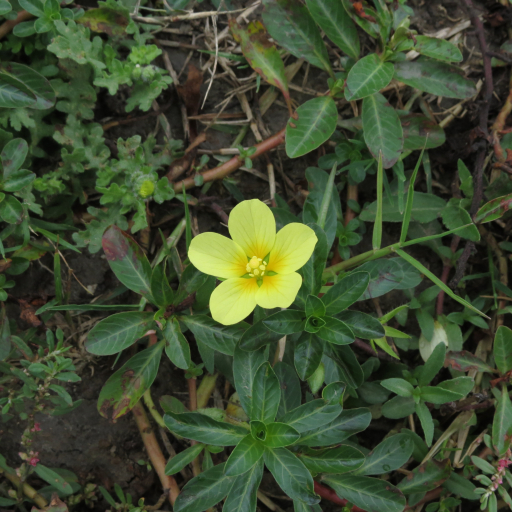
Plant Overview
Often called the Water Primrose or Creeping Water Primrose, this aquatic beauty is a master of the shoreline. It acts like a botanical explorer, using specialized "life jackets" to float across the surface of ponds and slow-moving rivers. While it is prized in water gardens for its delicate, creamy blossoms, it is a vigorous grower that can quickly transform a clear pond into a lush, green carpet.
🔍 How to Identify
- 🌼 The Flowers: Features elegant five-petaled flowers that are typically creamy white with a bright, sunny yellow splash at the center.
- ☁️ Breathing Roots: Look for distinctive white, upright, spongy cylinders growing along the stem. These are specialized "pneumatophores" that act like snorkels for the plant.
- 🍃 Glossy Foliage: The leaves are smooth, oval-shaped, and dark green, arranged alternately along reddish-tinted creeping stems.
🏡 In Your Garden
- 💧 Natural Filter: In a backyard pond, this plant is excellent for absorbing excess nutrients, which helps prevent algae blooms and keeps the water clearer for fish.
- 🚧 Containment is Key: Because it grows via creeping runners, it can easily escape its intended area. It is best planted in submerged pots or baskets to manage its spread and prevent it from choking out other aquatic species.
⚠️ Safety & Toxicity
- 🐾 Pet Safety: There are no widely reported toxic effects for dogs, cats, or horses, making it a generally safe choice for household water features.
- 🌊 Ecological Impact: The primary "danger" of this plant is to the environment. It is highly invasive in some regions; never release it into natural lakes or streams, as it can deplete oxygen levels for fish if it overgrows.
✨ Fun Fact
The Ludwigia adscendens is a true "snorkeler" of the plant world. Its white, spongy roots are filled with air-conducting tissue that allows the plant to breathe even when its main root system is buried in oxygen-poor, waterlogged mud!

Detailed Care Instructions
To grow Ludwigia adscendens, also known as Creeping Primrose-willow, you can follow the steps below:
- Choose the right location: Ludwigia adscendens requires bright, indirect light for optimum growth. It can tolerate some direct sunlight, but too much may cause its leaves to burn. Place the plant near a window with filtered sunlight or provide artificial lighting if necessary.
- Provide the right temperature and humidity: Ideally, the temperature should be between 65-80°F (18-27°C). This plant can adapt to slightly cooler or warmer temperatures, but extreme fluctuations should be avoided. A humidity level of around 50-60% should be maintained, which can be achieved by using a humidifier or placing the plant on a tray filled with water and pebbles.
- Select the appropriate container: Ludwigia adscendens can be grown in a variety of containers, including aquariums, flower pots, or planters. Ensure the container has adequate drainage holes to prevent waterlogging.
- Use the right soil: Ludwigia adscendens prefers a nutrient-rich substrate. You can use a freshwater aquarium substrate or a mixture of potting soil and sand or gravel. Make sure the soil is well-draining to avoid water accumulation at the roots.
- Planting: Gently separate the Ludwigia adscendens stems from the mother plant or purchase established stems from a nursery. Dig small holes in the substrate and place the plant stems, ensuring the roots are covered. You can also anchor the stems to the substrate using plant weights or small rocks until they root.
- Watering: Ludwigia adscendens prefers to be constantly moist but not waterlogged. Allow the top inch of soil to dry out slightly before watering again. Maintaining a consistent moisture level will promote healthy growth.
- Fertilization: Apply a balanced liquid fertilizer formulated for aquatic or houseplants once every two weeks during the growing season. Follow the instructions on the fertilizer packaging for appropriate dosage.
- Pruning: Regularly prune the Ludwigia adscendens stems to encourage bushier growth and prevent them from becoming overly tall and straggly. Trim the stems just above a leaf node, and new growth will emerge from there.
- Propagation: Ludwigia adscendens can be propagated by stem cuttings. Simply cut a healthy stem below a leaf node and plant it into the substrate. Rooting will occur within a few weeks, and a new plant will start to develop.
- Monitor for pests and diseases: Keep an eye out for common pests such as aphids, mealybugs, or snails. Treat any infestations promptly with appropriate pest control methods. Avoid overwatering to prevent root rot or fungal diseases.
By following these guidelines, you can successfully grow Ludwigia adscendens and enjoy its vibrant green foliage in your home or aquatic environment.

Place in a bright room that is sun drenched almost all day. Or directly in a south-facing window.

To water this plant, it is important to consider its specific needs. Ludwigia Adscendens prefers to be kept in moist soil, but not excessively wet. It is important to allow the top layer of soil to dry out slightly before watering again, as overwatering can lead to root rot. When watering, it is recommended to use room temperature water and to thoroughly saturate the soil, allowing the water to drain away. It is also important to ensure that any excess water is removed from the saucer or tray underneath the plant to prevent standing water. In addition, it is recommended to avoid getting water on the leaves of the plant, as this can cause damage or encourage the growth of fungal diseases.
To fertilize the Ludwigia Adscendens plant, apply a balanced liquid fertilizer every two weeks during the growing season. Use a fertilizer with equal parts nitrogen, phosphorus, and potassium. Avoid over-fertilizing, as it can cause the plant to become spindly and weak.
The ideal soil for this plant should be rich in nutrients and well-draining. It should be composed of a mix of organic matter such as compost and peat moss, as well as sand or perlite to ensure proper drainage. The pH level of the soil should be slightly acidic, between 6.5 and 7.0. It is also important to avoid soil that is too densely packed, as this can lead to root rot and other moisture-related issues. Additionally, the plant may benefit from the addition of fertilizers or other supplements to promote healthy growth.
To propagate this plant, take a healthy stem cutting that is at least four inches long and has several leaves. Remove the leaves from the bottom inch of the stem. Dip the cut end in rooting hormone and plant it in a well-draining substrate, such as sand, gravel, or an aquatic plant substrate. Place the cutting in an area with bright, indirect light and a temperature of around 70°F. Keep the substrate moist, but not waterlogged. Within a few weeks, the cutting should start to grow roots and eventually develop into a new plant.








