Plant Overview
Known affectionately as Partridgefoot or Luetkea, this charming evergreen subshrub looks more like a mossy fern than a member of the Rose family. It is a true survivor of the high altitudes, hailing from the misty, subalpine regions of Western North America. Its ability to weave a lush, emerald carpet over rocky ground makes it a favorite for rock gardeners looking to replicate the rugged beauty of the Pacific Northwest mountains.
🔍 How to Identify
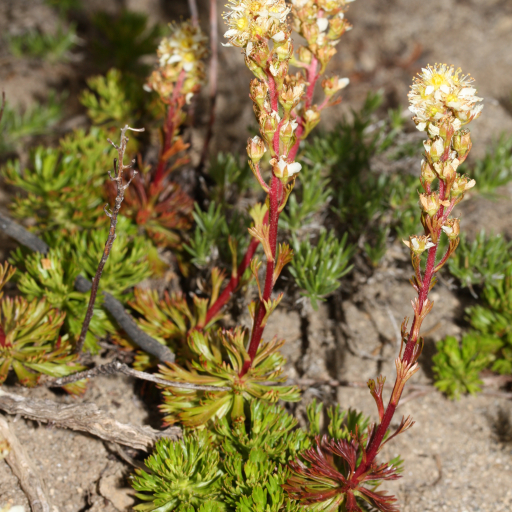
- 🌿 The Foliage: The leaves are deeply lobed and dissected, resembling a tiny bird’s footprint or a miniature hand-held fan. They form dense, low-growing mats that remain green throughout the year.
- ☁️ The Blooms: In mid-summer, the plant sends up small, erect stalks crowned with clusters of creamy white, five-petaled flowers. From a distance, a blooming patch looks like a dusting of fresh snow.
- 🌱 Growth Habit: It spreads via stolons (horizontal runners), creating a thick, cushion-like groundcover that rarely exceeds 4 inches in height, though the flower spikes reach a bit higher.
🏡 In Your Garden
- 🏔️ Alpine Aspirations: Because it originates from cool, mountainous zones, it hates "hot feet." It thrives in gravelly, well-draining soil that mimics a rocky slope, and it prefers locations where the summer air stays relatively cool.
- 💧 Moisture Balance: While it needs excellent drainage to prevent root rot, it shouldn't be allowed to bake into a crisp. It loves the humidity of coastal or mountain air and benefits from consistent moisture, especially during its first year of establishment.
⚠️ Safety & Toxicity
- ✅ Safe Status: Luetkea pectinata is generally considered non-toxic to humans, cats, and dogs. It is not known to contain any harmful alkaloids or irritants.
- 🐾 Pet Friendly: Because it stays low to the ground and is soft to the touch, it is a safe choice for areas where pets might roam, though it isn't particularly tasty or meant for consumption.
✨ Fun Fact
- 🧬 A Lonely Branch: Luetkea is a "monotypic" genus, meaning Luetkea pectinata is the only species of its kind in the entire world! It has no close siblings, making it a unique evolutionary relic of the northern mountains.

Detailed Care Instructions
Here are some guidelines to grow Luetkea pectinata (Partridgefoot) plants:
- Climate and Soil Requirements:
- Partridgefoot plants prefer cool temperature regions and grow well in USDA hardiness zones 2-7.
- They thrive in moist, well-draining soil that is rich in organic matter.
- Partridgefoot plants prefer cool temperature regions and grow well in USDA hardiness zones 2-7.
- Propagation:
- You can propagate Luetkea pectinata through both seeds and root cuttings.
- Seeds can be sown in a seed tray or directly in the garden in the spring or fall. Ensure a shallow planting depth of 1/8 inch and keep the soil consistently moist until germination.
- Root cuttings can be taken in early spring or late fall by cutting a healthy root segment and planting it in a well-prepared planting hole.
- You can propagate Luetkea pectinata through both seeds and root cuttings.
- Planting:
- Choose a location that receives partial shade to full sun.
- Dig a hole slightly larger than the root ball or seed starting tray.
- Space multiple plants around 6-12 inches apart.
- Gently place the plant in the hole, making sure the top of the root ball is level with the soil surface.
- Backfill the hole with soil, firm it gently, and water thoroughly.
- Choose a location that receives partial shade to full sun.
- Watering and Moisture:
- Partridgefoot plants prefer consistently moist soil. Regular watering is essential, especially during periods of drought or high temperatures.
- Avoid overwatering, as it can lead to root rot.
- Partridgefoot plants prefer consistently moist soil. Regular watering is essential, especially during periods of drought or high temperatures.
- Fertilization:
- Luetkea pectinata does not typically require excessive fertilization. However, incorporating compost or well-decomposed organic matter into the soil during planting can provide a nutrient boost.
- Luetkea pectinata does not typically require excessive fertilization. However, incorporating compost or well-decomposed organic matter into the soil during planting can provide a nutrient boost.
- Maintenance:
- Mulching around the base of the plant can help retain moisture and prevent weed growth.
- Remove any dead or damaged foliage to maintain plant health.
- Partridgefoot plants are relatively low-maintenance, but you can monitor them for pests and diseases. Intervene promptly if any issues arise.
- Mulching around the base of the plant can help retain moisture and prevent weed growth.
- Winter Care:
- Partridgefoot plants are hardy and can withstand cold temperatures. However, adding a layer of mulch around the base of the plant during late fall can provide some additional insulation.
Following these guidelines should help you successfully grow Luetkea pectinata plants. Remember to adjust care according to your specific climate and conditions.
- Partridgefoot plants are hardy and can withstand cold temperatures. However, adding a layer of mulch around the base of the plant during late fall can provide some additional insulation.

Place in a window with dappled sun or a spot in the middle of a room. Or directly in a window facing west or east.

1. Assess the soil: Before watering your plant, make sure to assess the soil for moisture level. You can do this by sticking your finger into the soil up to about an inch deep. If the soil feels dry, then it's time to water the plant.
2. Use filtered or distilled water: Luetkea Pectinata plant is sensitive to mineral buildup, so it's best to use filtered or distilled water for watering. Avoid using tap water, which can contain chlorine, fluoride, and other minerals that may harm the plant.
3. Water from below: Luetkea Pectinata plant can be watered from above, but it's best to water it from below. Place the pot in a container of water and let it soak for about 10-15 minutes. This will allow the soil to absorb water without disturbing the plant's delicate root system.
4. Don't overwater: Overwatering can cause root rot and kill the plant. Make sure to let the soil dry out between watering, and don't let the soil stay wet for too long.
5. Water slowly: When watering your plant, pour the water slowly and evenly around the base of the plant. This will allow the soil to absorb the water evenly, and prevent water from running off.
6. Watch for signs of overwatering: If the leaves of your Luetkea Pectinata plant turn yellow or brown and the soil is wet, this may be a sign of overwatering. In this case, stop watering the plant and let the soil dry out completely before resuming watering.
To fertilize this plant, use a balanced fertilizer with equal parts nitrogen, phosphorus, and potassium. Apply the fertilizer once a month during the growing season, which is typically in the spring and summer months. Follow the package instructions for dosage and application, and water thoroughly after fertilizing. Avoid fertilizing in the winter months or when the plant is dormant.
The ideal soil for Luetkea pectinata should have a slightly acidic pH, between 5.5 and 6.5. The soil should be well-draining and able to retain moisture without becoming waterlogged. It is recommended to use a high-quality potting mix that is rich in organic matter, such as compost or peat moss, to provide the plant with the necessary nutrients and promote healthy root growth. Other suitable components that can be added to the soil mixture include perlite or sand for improved drainage, and vermiculite or sphagnum moss to promote water retention. Care should be taken to avoid using soils that are too compacted or heavy, as these can lead to root rot and other issues.
To propagate this particular plant, you can follow the below steps:
- Obtain a healthy and mature Luetkea Pectinata plant specimen that you would like to propagate.
- Take a cutting from the stem of the plant that is at least six inches long. Choose a cutting that has several healthy leaves and little to no damage to the stems.
- Dip the cutting into a rooting hormone.
- Prepare a pot with soil that can hold water and that has good drainage. Make sure the soil is moist but not wet.
- Insert the cutting into the pot with the soil and press it down firmly.
- Cover the pot with a clear plastic bag to increase humidity and reduce moisture loss.
- Place the pot in an area where it will receive bright but indirect sunlight. If the plant is exposed to too much direct sunlight, it can dry out and become damaged.
- Monitor the cutting's progress by checking its soil condition and water levels every few days. You may need to mist or water the plant lightly to keep the soil moist.
- After several weeks, the cutting should develop roots and begin to produce new foliage. At this point, you can remove the plastic bag and allow the plant to grow normally.
- Once the plant has outgrown its pot, you can transplant it into a larger container or into the ground outside.








