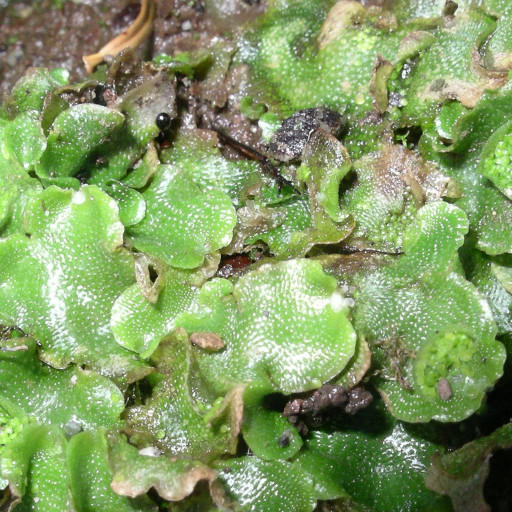
Plant Overview
Often called the Crescent-cup Liverwort, this ancient plant is a "living fossil" that predates the dinosaurs by millions of years. Its name comes from the Latin lunula, meaning "little moon," referring to the beautiful crescent-shaped cups that sit atop its emerald-green body. While many gardeners treat it as a stubborn greenhouse guest, it is a master of survival that thrives in the damp, shadowy corners of the world.
🔍 How to Identify
- 🌿 The Thallus: Unlike standard plants with stems and leaves, this liverwort grows as a flat, lobed "carpet" (thallus) that hugs the soil. It is thick, fleshy, and a vibrant light green.
- 🌙 Crescent Cups: The most distinctive feature is the tiny, half-moon-shaped cups on the upper surface. These hold small green granules used for reproduction.
- 💎 Glossy Texture: The surface often has a waxy, shimmering appearance with a faint honeycomb pattern of air pores visible under a magnifying glass.
🏡 In Your Garden
- 💧 The Moisture Marker: This plant is a natural hygrometer. If it suddenly appears in your flowerpots, it is a signal that your soil is staying too wet or the air is exceptionally humid.
- 🧱 Compaction Lover: It prefers heavy, undisturbed soil and thrives in the "micro-climate" of greenhouse floors, damp brickwork, or the shaded side of ceramic pots where water collects.
⚠️ Safety & Toxicity
- ✅ Safe Status: Lunularia cruciata is generally considered non-toxic to humans, dogs, and cats. It contains no known irritants or poisons.
- ⛸️ Slipping Hazard: Because it forms dense, waxy mats in damp areas, it can become incredibly slippery. Be cautious if it begins growing on stone garden steps or wooden decking.
✨ Fun Fact
The Crescent-cup Liverwort is a master of "ballistic" cloning. When a raindrop hits one of those tiny crescent cups, the splash creates enough force to launch the tiny green clones (called gemmae) over three feet away, allowing the plant to "jump" from one flowerpot to the next!

Detailed Care Instructions

Place in a window with dappled sun or a spot in the middle of a room. Or directly in a window facing west or east.
The plant in question requires moderate watering. The soil should be kept moist, without being waterlogged. It is important to avoid letting the soil dry out completely, which can be harmful to the plant. The frequency of watering will depend on various factors such as the temperature, humidity, and light conditions, but generally, it should be watered once or twice a week. Overwatering can also harm the plant, so be careful not to saturate the soil. It is recommended to water from the base of the plant, rather than watering the leaves directly. This will help prevent the plant from becoming waterlogged and developing root rot. Additionally, avoid using tap water that contains high levels of chlorine or fluoride, as this can also harm the plant.
The soil that is suitable for the plant is a rich, moist and well-draining soil. It should have good water retention capacity to ensure that the plant does not dry out. It is recommended to mix some organic matter such as compost or aged manure to improve the soil structure. The ideal pH range for the soil is slightly acidic to neutral, between 6.0 and 7.0. The plant requires a nutrient-rich soil, so adding a slow-release fertilizer can be beneficial. It is essential to avoid using heavy, clay soil, as it can lead to waterlogging and root rot. Loose, aerated soil is recommended to prevent any fungus or disease from developing. The type of soil used should also have a high porosity to allow for proper aeration and drainage. This will help the plant grow healthy roots and foliage.







