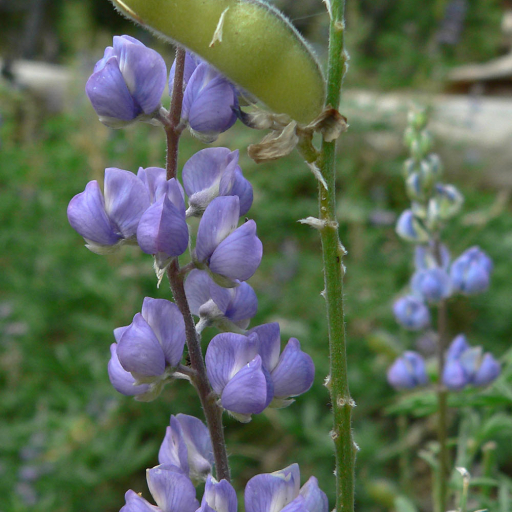
Plant Overview
Known as the Silvery Lupine, this elegant wildflower paints the mountain meadows and open forests of Western North America in shimmering shades of sapphire and violet. Its name is inspired by the fine, silky hairs that coat its foliage, making the plant appear to glow with a metallic sheen under the sun. While it looks delicate, it is a rugged pioneer that survives in harsh, rocky soils where other plants might fail.
🔍 How to Identify
- 🖐️ The Leaves: Look for "palmate" leaves that fan out like the fingers of a hand, typically featuring 5 to 9 narrow, lance-shaped leaflets radiating from a central point.
- ✨ Silvery Sheen: The stems and leaves are covered in tiny, flattened white hairs that give the entire plant a distinct silvery-green or gray appearance.
- 🏰 Flower Spires: It produces tall, upright spikes (racemes) of pea-like flowers, which are most commonly blue or purple, often with a splash of white or yellow on the "banner" petal.
🏡 In Your Garden
- 🌱 Soil Improver: This plant is a natural fertilizer; it has a symbiotic relationship with soil bacteria that allows it to "fix" nitrogen, improving the nutrient quality of the ground for surrounding plants.
- 🚫 Deep Roots: It develops a very long, stubborn taproot to find water deep underground, which means it is incredibly drought-tolerant but almost impossible to transplant once established.
⚠️ Safety & Toxicity
- 🛑 Toxic Assessment: Dangerous if ingested. The Silvery Lupine contains high concentrations of quinolizidine alkaloids, which are toxic to humans and animals.
- 🐾 Livestock & Pets: It is notorious among ranchers for causing "crooked calf syndrome" in livestock. Keep this plant away from areas where dogs, cats, or horses might be tempted to nibble on the seed pods.
✨ Fun Fact
🐺 The "Wolf" Plant: The genus name Lupinus comes from the Latin word lupus, meaning "wolf." Ancient Romans mistakenly believed that lupines "wolfed" or devoured all the nutrients in the soil because they were often the only plants found growing in depleted land. In reality, they were the only ones tough enough to survive there!

Detailed Care Instructions
To grow Lupinus argenteus plant, also known as Silvery Lupine, you can follow these steps:
- Choose a well-draining location: Lupinus argenteus prefers sandy or rocky soils with good drainage. Select a sunny spot in your garden for optimal growth.
- Prepare the soil: Before planting, it's important to prepare the soil. Dig the ground to a depth of about 12 inches, remove any weeds, rocks, or debris, and mix in organic matter such as compost or well-rotted manure to improve the soil's fertility.
- Plant seeds or seedlings: You can grow Lupinus argenteus from seeds or purchase seedlings from a reputable nursery. If using seeds, sow them directly into the prepared soil in early spring, about 1/4 to 1/2 inch deep. If using seedlings, dig a hole that is slightly larger than the container and place the seedling with its root ball into the hole. Gently firm the soil around the plant and water well.
- Watering: Keep the soil consistently moist but not waterlogged, especially during the plant's early growth stages. Once established, Lupinus argenteus is relatively drought-tolerant and doesn't require frequent watering, except in prolonged dry periods.
- Mulching: Apply a layer of organic mulch around the plant to conserve moisture, suppress weed growth, and regulate soil temperature. Pine straw, wood chips, or shredded bark can be used as mulch.
- Fertilization: Lupinus argenteus generally doesn't require heavy fertilization. If your soil lacks nutrients, you can add a balanced slow-release fertilizer during the initial soil preparation. Follow the specific manufacturer's instructions for the application rate.
- Pruning: Remove the spent flowers once they fade to encourage continuous blooming. This process helps the plant focus on producing new flowers rather than setting seeds.
- Protection from pests and diseases: Lupinus argenteus is generally not bothered by many pests or diseases. However, you should keep an eye out for aphid infestations or powdery mildew. If necessary, use organic insecticidal soap or neem oil to control pests or follow appropriate measures to control diseases.
- Overwintering: Lupinus argenteus is a hardy perennial plant that can tolerate colder temperatures. However, it can benefit from a layer of mulch applied around the base in late fall to protect it from extreme cold and frost.
By following these steps and providing proper care and maintenance, you can successfully grow Lupinus argenteus plants in your garden and enjoy their beautiful silvery foliage and vibrant flowers.

Place in a bright room that is sun drenched almost all day. Or directly in a south-facing window.

To water this plant, you should first check the soil moisture by inserting your finger about 1-2 inches deep into the soil. If the soil feels dry, it's time to water. Use a watering can or hose with a gentle sprayer attachment to water the soil directly around the plant. Be careful not to get water on the leaves or flowers as this can cause damage or disease. Water deeply and slowly, allowing the water to penetrate the soil and reach the roots. Do not overwater, as this can lead to root rot. Allow the soil to dry out slightly between waterings, but do not let it completely dry out. Monitor the plant's growth and adjust your watering schedule as needed.
To fertilize this plant, apply a balanced fertilizer during its growing season, typically in the spring and summer months. Apply the fertilizer according to the package instructions, making sure to avoid over-fertilization, which can damage the plant. Water the plant thoroughly after fertilizing to help distribute the nutrients evenly. Avoid fertilizing during the dormant season, as this may not be beneficial for the plant.
Lupinus Argenteus plant grows best in soil that is well-draining, slightly acidic, and rich in organic matter. Soil that is too heavy or compacted can cause root rot and stunt the growth of the plant.
It is recommended to use a soil mix that consists of equal parts of garden soil, sand, and peat moss. This combination provides good drainage, aeration, and nutrient retention.
When planting Lupinus Argenteus, make sure to amend the soil with compost or other organic matter to boost its fertility. It is also important to mulch around the base of the plant to retain moisture and suppress weeds.
Overall, the ideal soil for Lupinus Argenteus is loose, well-draining, and enriched with organic matter. With proper soil preparation, this plant can thrive and produce beautiful blooms year after year.
Propagating Lupinus Argenteus involves taking stem cuttings from a mature plant and placing them in a rooting hormone solution. The cuttings should have a few nodes and be about 4-6 inches long. Remove the lower leaves, leaving only a few at the top. Make a clean cut at a 45-degree angle and dip the cut end in rooting hormone. Place the cuttings in a well-draining potting mix and keep them moist by misting regularly. The cuttings should be placed in a warm, bright area but out of direct sunlight. Once roots have formed, transplant the new plants to a larger container or into the ground in a suitable location.








