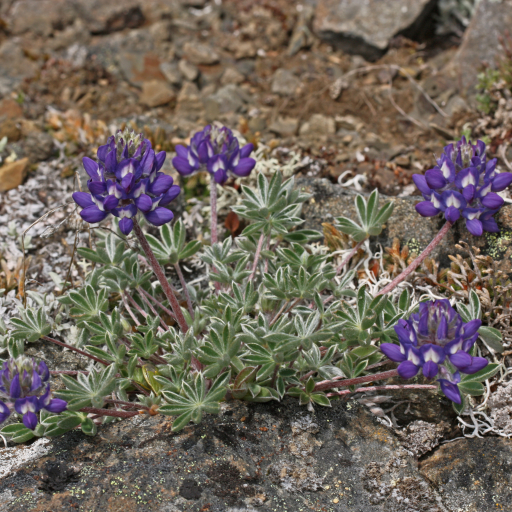
Plant Overview
Often called the Dwarf Lupine or Prairie Lupine, this resilient little perennial is a true pioneer of the wild. It gained worldwide fame for being one of the first plants to heroically return to the volcanic wasteland of Mount St. Helens after its 1980 eruption. Its silvery, "frosted" foliage and compact size make it look like a tiny, magical mountain dweller plucked straight from a storybook.
🔍 How to Identify
- 🌿 Silvery Foliage: The leaves are palmate (shaped like a hand) and covered in dense, silky white hairs that give the plant a shimmering, velvet appearance.
- 🪻 Pea-like Blooms: It produces short, dense spikes of flowers in shades of deep violet, sky blue, or occasionally white, each featuring the classic "banner and keel" shape typical of the pea family.
- 📏 Compact Stature: Unlike its tall garden cousins, this variety is a "dwarf," usually hugging the ground at only 4 to 10 inches tall, forming neat, silvery mats.
🏡 In Your Garden
- 🏜️ Tough Love Soil: This plant is a specialist in "bad" soil. It thrives in sandy, gravelly, or volcanic substrates where other plants struggle. It actually dislikes rich, heavy fertilizers, which can cause it to rot or grow too quickly and lose its compact shape.
- ⚓ The Taproot Rule: Like most lupines, it develops a long, sturdy taproot to find water deep underground. This makes it incredibly drought-tolerant but means it absolutely hates being moved. Pick its "forever home" in your garden carefully, as transplanting is rarely successful.
⚠️ Safety & Toxicity
- 🚫 Status: Toxic to pets and livestock.
- 🤢 Details: The plant contains quinolizidine alkaloids, which are most concentrated in the seeds and pods. If ingested by dogs, cats, or horses, it can cause tremors, respiratory distress, or digestive upset. It is best enjoyed as a visual treat rather than a physical one.
✨ Fun Fact
- 🌋 The Life-Bringer: Scientists call this plant a "biological island." After volcanic eruptions, these lupines trap wind-blown debris and fix nitrogen into the ash, creating tiny pockets of fertile soil that allow other plants and insects to return to the landscape!

Detailed Care Instructions
Lupinus Lepidus, also known as the prairie lupine, is a native species of lupine found in North America. Here are some tips on how to grow this plant:
- Planting: Lupinus Lepidus prefers well-draining soil and a sunny location. Plant seeds or seedlings in the spring after the danger of frost has passed. Lupines have long taproots, so it is best to plant them directly in the ground rather than transplanting them later.
- Watering: Water the plant regularly, especially during dry periods. Lupinus Lepidus is tolerant of drought but will benefit from consistent moisture to encourage healthy growth.
- Fertilizing: Lupines do not typically require fertilizer if planted in nutrient-rich soil. However, if your soil is poor, you can fertilize with a balanced fertilizer in the spring.
- Mulching: Mulch around the base of the plant to help retain moisture and suppress weeds. This will also help to keep the roots cool during hot weather.
- Pruning: Deadhead spent flowers to encourage new growth and prolong the blooming period. Cut back the plant after flowering to promote a bushier growth habit.
- Pests and diseases: Lupines are generally resistant to pests and diseases, but they can be susceptible to aphids and powdery mildew. Keep an eye out for these issues and treat them promptly if necessary.
By following these tips, you can successfully grow Lupinus Lepidus in your garden and enjoy its beautiful flowers throughout the growing season.

Place in a bright room that is sun drenched almost all day. Or directly in a south-facing window.

To properly water Lupinus Lepidus, it is important to understand the specific needs of this plant. It is recommended to water this plant consistently, keeping the soil evenly moist but not waterlogged. This can be achieved by checking the soil regularly and watering when the top inch of soil feels dry to the touch.
When watering Lupinus Lepidus, it is best to water at the base of the plant, avoiding wetting the foliage to prevent diseases. Using a watering can or a soaker hose can help deliver water directly to the roots.
During hot weather or periods of drought, it may be necessary to increase the frequency of watering to ensure the plant remains healthy and hydrated. However, it is important not to overwater, as this can lead to root rot and other issues.
In addition to regular watering, it is important to mulch around the base of the plant to help retain moisture and regulate soil temperature. This can help reduce the frequency of watering and help the plant thrive in its environment.
Overall, understanding the specific watering needs of Lupinus Lepidus and providing consistent moisture will help ensure the health and vitality of this plant.
Lupinus Lepidus plants benefit from regular fertilization to promote healthy growth and flowering. Use a balanced fertilizer with equal parts nitrogen, phosphorus, and potassium, applied according to package instructions. Fertilize in early spring before new growth emerges and again in midsummer to encourage continuous blooming. Avoid over-fertilizing to prevent nutrient imbalances and plant stress. Water the plant thoroughly after fertilizing to help distribute the nutrients evenly.
To cultivate Lupinus Lepidus plant, it is recommended to use a well-draining soil that is slightly acidic to neutral in pH. A mixture of sandy loam soil with peat moss or compost can provide the ideal growing conditions for this plant. Additionally, adding perlite or vermiculite to the soil can help improve its drainage and aeration, which will promote healthy root development. It is important to avoid using heavy clay soils, as they can lead to waterlogged conditions that may harm the plant. Overall, a light, fertile soil mix that allows for good air circulation and moisture retention is best for growing Lupinus Lepidus.
Propagation of Lupinus Lepidus plants can be done through seed collection and germination.
To collect seeds, wait until the seed pods begin to dry and turn brown on the plant. Then, remove the pods and extract the seeds by gently cracking them open.
Before sowing the seeds, it is advisable to scarify them by gently scraping or rubbing them with sandpaper to help break down the seed coat and promote germination.
Sow the scarified seeds in well-draining soil in a sunny location. Keep the soil consistently moist until germination occurs, which typically takes place within a few weeks.
Transplant the young seedlings to individual pots once they have reached a suitable size, and continue to provide them with adequate sunlight and water until they are ready to be planted in their permanent location.
With proper care and attention, Lupinus Lepidus plants can be successfully propagated from seeds.








