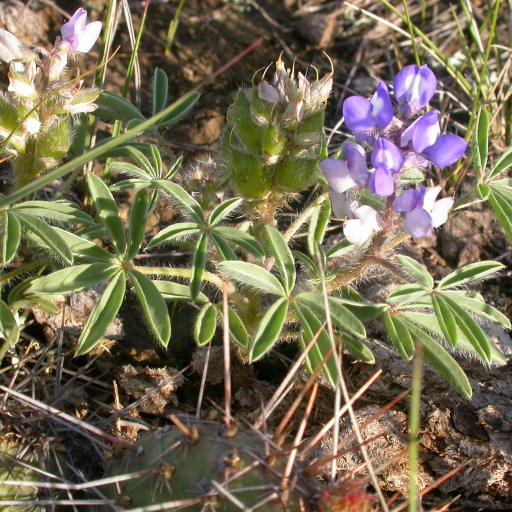
Plant Overview
Often called the Small Lupine or Rusty Lupine, this pint-sized prairie dweller is a master of survival in the arid landscapes of Western North America. Despite its small stature, it paints the desert and grasslands with splashes of brilliant blue and purple every spring. In historical folklore, lupines were once thought to "wolf" or deplete the nutrients from the soil (hence the name Lupinus), though we now know they are actually secret gardeners that help the earth.
🔍 How to Identify
- 🌿 Palmately Compound Leaves: The leaves look like tiny green stars or hands, with five to seven leaflets radiating from a central point, often covered in fine, silky hairs.
- 🪻 Pea-Like Blooms: The flowers are classic legumes, featuring a "banner, wings, and keel" structure in shades of sky blue, lavender, or occasionally white with a yellow center.
- 🧶 Woolly Texture: The entire plant—especially the stems and seed pods—is often coated in dense, light-colored hairs, giving it a soft, silvery, or "rusty" appearance.
🏡 In Your Garden
- 🏜️ The Sand Specialist: This lupine is a "psammophyte," meaning it thrives in sandy, loose soil where other plants might struggle. It is perfect for xeriscaping or rock gardens that mimic the high plains.
- 🚫 Look But Don't Touch: Because of its long, delicate taproot, the Small Lupine is notoriously difficult to transplant. If you want them in your garden, it is best to sow seeds directly into the ground rather than moving established plants.
- 🐝 A Pollinator Magnet: It plays a vital role in early spring ecosystems, providing a high-protein pollen source for native bumblebees and solitary bees emerging from winter.
⚠️ Safety & Toxicity
- 🛑 Status: Toxic if ingested.
- 🐕 Details: Like its larger cousins, the Small Lupine contains quinolizidine alkaloids. These compounds can cause respiratory distress or "lupinosis" in livestock and are considered toxic to curious dogs, cats, and small children if the seeds or foliage are eaten.
✨ Fun Fact
Contrary to the old myth that they "stole" nutrients, these plants actually have a symbiotic relationship with bacteria in their roots that allows them to "fix" nitrogen from the air. This process actually enriches the soil, making them a natural fertilizer for the surrounding desert landscape!

Detailed Care Instructions
To grow Lupinus pusillus (dwarf lupine) successfully, follow these steps:
- Choose a suitable planting location: Select a spot that receives full sun to partial shade. The soil should be well-draining and slightly acidic.
- Prepare the soil: Break up the soil and remove any weeds or grass from the planting area. Add compost or well-rotted manure to the soil to improve its fertility and drainage.
- Sow the seeds: Lupinus pusillus seeds can be directly sown into the ground in early spring or late fall. Alternatively, you can start them indoors 6-8 weeks before the last frost date and transplant them later. Plant the seeds 1/8 to 1/4 inch deep and space them around 6-10 inches apart.
- Water requirements: Keep the soil consistently moist but not waterlogged. Water the plants regularly after sowing the seeds or transplanting them. Ensure the soil is evenly moist during germination and establishment.
- Fertilize: Lupinus pusillus generally doesn't require much fertilization, but you can apply a balanced, slow-release fertilizer once or twice during the growing season to support healthy growth.
- Mulching: Apply a layer of organic mulch, such as straw or wood chips, around the plants to help retain moisture, suppress weed growth, and protect the roots from temperature extremes.
- Weed control: Regularly remove weeds that compete for nutrients and water with your lupine plants.
- Pruning: Deadhead the spent flowers regularly to promote continuous blooming and prevent the formation of seeds. This can also help the plant to put more energy into vegetative growth instead of seed production.
- Pests and diseases: Keep an eye out for slugs, snails, aphids, and other pests that can damage lupine plants. Treat any infestations promptly using organic or chemical insecticides if necessary. Additionally, ensure good air circulation around the plants to prevent fungal diseases like powdery mildew.
- Winter care: Although Lupinus pusillus is a hardy perennial, it is a good practice to provide a layer of mulch around the base of the plants to help protect them from freezing temperatures and temperature fluctuations during winter.
By following these steps, you should be able to successfully grow and enjoy your Lupinus pusillus plants.

Place in a bright room that is sun drenched almost all day. Or directly in a south-facing window.

Lupinus Pusillus is typically watered in a manner that maintains the moisture level of the soil without causing waterlogging. Here are some guidelines for watering this plant:
1. Assess the soil moisture: Before watering, check the moisture level of the soil by inserting your finger or a wooden stick into the soil up to two inches deep. If the soil feels dry at this depth, it is an indication that watering is necessary.
2. Watering frequency: Lupinus Pusillus generally requires watering whenever the soil begins to dry out. The frequency of watering depends on various factors like climate, temperature, and soil conditions. In general, during the growing season, watering the plant once or twice a week is sufficient. However, adjust the frequency as needed to maintain proper moisture levels.
3. Watering method: Use a watering can or a garden hose with a gentle spray attachment to water the plant. This will help prevent the soil from splashing and causing damage to the delicate foliage.
4. Watering depth: When watering Lupinus Pusillus, it is important to ensure that the water reaches the root zone. To achieve this, water the plant slowly and deeply, allowing the water to penetrate the soil until it reaches a depth of at least six inches.
5. Avoid overwatering: While it is crucial to provide adequate moisture, overwatering can be detrimental to the plant's health. To avoid overwatering, ensure that the soil has adequate drainage. Excessive waterlogging can lead to root rot and other diseases.
6. Mulching: Applying a layer of organic mulch around the base of the plant can help retain moisture and regulate soil temperature. This will reduce the need for frequent watering and help maintain a consistent moisture level.
7. Monitor plant needs: Pay attention to the plant's overall health and appearance. If the leaves appear droopy or yellowing, it may be a sign of over or under watering. Adjust your watering routine accordingly.
Remember, the watering requirements may vary based on individual growing conditions. It is important to keep an eye on the plant and adjust the watering schedule as needed to maintain its health and vigor.
To fertilize the Lupinus Pusillus plant, follow these instructions:
- Use a balanced, water-soluble fertilizer with equal parts nitrogen (N), phosphorus (P), and potassium (K). For example, a 10-10-10 or 20-20-20 fertilizer would work well.
- Dilute the fertilizer according to the manufacturer's instructions. Generally, a rate of 1 teaspoon per gallon of water is suitable.
- Apply the diluted fertilizer to the soil around the base of the plant. Avoid direct contact with the foliage as it may cause burning.
- Water the plant immediately after fertilizing to help the nutrients reach the plant's roots.
- Fertilize the Lupinus Pusillus plant every 4-6 weeks during the growing season, typically from spring to early fall. This will provide the necessary nutrients for healthy growth.
- Adjust the fertilizer schedule based on the plant's response. If you notice excessive leaf growth but reduced flower production, reduce the frequency of fertilization. Conversely, if the plant appears stunted or pale, increase the frequency or concentration of the fertilizer.
Remember to always read and follow the specific instructions provided with your chosen fertilizer product for the best results.
The best type of soil to use for the Lupinus Pusillus plant is one that is well-draining and slightly acidic with a pH range of 6.0 to 6.5. The soil should be rich in organic matter and have good fertility levels. It should have a loose and friable texture, allowing for proper root development and aeration. Additionally, the soil should be able to retain some moisture without becoming waterlogged, as excessive moisture can lead to root rot and other fungal diseases. Consistency in moisture levels is crucial, with periodic drying out between watering to prevent overhydration. Overall, the ideal soil type for Lupinus Pusillus is one that promotes healthy growth, nutrient uptake, and prevents waterlogging.
To propagate the Lupinus Pusillus plant, follow these steps:
- Select a healthy and mature plant to obtain seeds for propagation. Lupinus Pusillus usually produces seed pods containing multiple small seeds.
- Allow the seed pods to mature and dry on the plant itself. It is important to choose pods that have turned brown or gray and have started to split.
- Once the seed pods have dried, carefully collect them by gently removing them from the plant. Ensure that the seeds are completely dry and free from moisture.
- Fill a seed tray or small pots with a well-draining potting mix. Lupinus Pusillus prefers sandy or loamy soil.
- Sow the seeds on the soil surface, spacing them about 0.5 inch apart. Press the seeds gently into the soil, but do not bury them too deep as they require light for germination.
- Moisten the soil lightly with water. Maintain moisture, but avoid overwatering to prevent rotting of the seeds or seedlings.
- Place the seed tray or pots in a warm and bright location, preferably near a window receiving indirect sunlight. Lupinus Pusillus seeds require warm temperatures to germinate.
- It usually takes around 10-14 days for the seeds to germinate. Keep an eye on the soil moisture and ensure it stays consistently damp during this period.
- Once the seedlings have emerged, continue to provide them with a bright location. They may need to be gradually acclimated to direct sunlight if they were initially grown in low-light conditions.
- After the seedlings have developed a few sets of true leaves, they can be carefully transplanted into their permanent containers or a garden bed. Ensure the soil is well-draining to prevent root rot.
- Water the young plants regularly, keeping the soil slightly moist without overwatering.
- Provide support for the growing plants if necessary, as some species of Lupinus Pusillus can develop a slightly sprawling habit.
In following these steps, you should be able to successfully propagate the Lupinus Pusillus plant from seeds. Remember to be patient, as it may take a couple of years for the plant to fully establish itself and bloom.








