Plant Overview
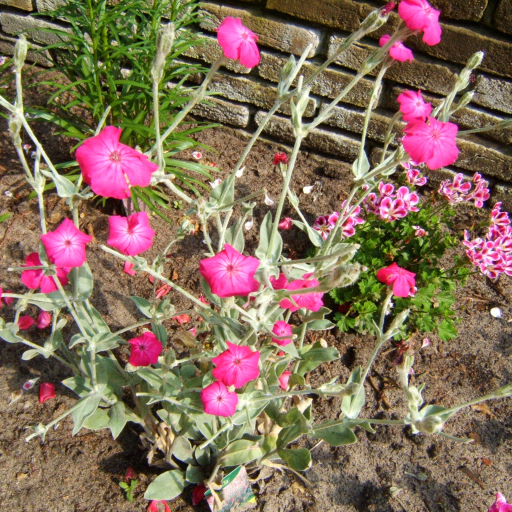
Often called the Rose Campion or "Mullein-pink," this Mediterranean native is a visual masterpiece of contrast. Its neon-bright blossoms seem to glow against a backdrop of soft, silver-gray foliage, earning it a place in cottage gardens for centuries. It is a resilient, old-fashioned favorite that thrives where more delicate flowers might falter.
🔍 How to Identify
- 🌸 The Flowers: Small, five-petaled blooms that are usually a striking, deep magenta, though white and bicolor varieties exist. They sit atop long, slender stems.
- 🥈 The Foliage: The leaves and stems are covered in a dense, velvety white fuzz, giving the plant a distinct "silver" or "dusty" appearance that feels soft to the touch.
- 📏 Growth Habit: It typically grows in an upright, multi-stemmed clump, reaching about 2 to 3 feet in height. The base is a thick rosette of felt-like leaves.
🏡 In Your Garden
- 🌱 Short-lived but Persistent: Rose Campion is technically a short-lived perennial or biennial, but don't let that discourage you. It is a prolific self-seeder, meaning it will "move" around your garden, popping up in new spots every year to keep the colony going.
- ☀️ Drought Warrior: Because of those fuzzy leaves—which help trap moisture and reflect heat—this plant is incredibly drought-tolerant. It actually prefers "lean" or poor soil; if the ground is too rich or wet, the plant may become floppy and lose its silvery luster.
- ✂️ Deadheading: To keep it looking tidy and to control where it spreads, you can snip off the spent flowers. However, leaving a few seed heads is the best way to ensure you have new plants next spring.
⚠️ Safety & Toxicity
- 🌿 Low Toxicity: Lychnis coronaria is generally considered non-toxic to humans and common household pets like cats and dogs.
- 🧤 Skin Sensitivity: While not poisonous, the fine hairs on the leaves can occasionally cause mild skin irritation for those with sensitive skin. It’s always a good idea to wear gloves when pruning heavily.
✨ Fun Fact
The genus name Lychnis comes from the Greek word lychnos, meaning "lamp." In ancient times, the thick, felt-like leaves were dried and rolled up to be used as wicks for oil lamps!

Detailed Care Instructions
To grow Lychnis Coronaria (also known as Rose Campion), follow these steps:
- Choose the right location: Lychnis Coronaria prefers a sunny spot in your garden. Ensure that the area has well-drained soil.
- Prepare the soil: Before planting, loosen the soil and remove any weeds or rocks. Mix in compost or organic matter to improve soil fertility.
- Planting seeds: Scatter the seeds directly on the soil surface in the spring after the danger of frost has passed. Avoid planting too deep, as the seeds need light to germinate. Press the seeds gently into the soil, but do not cover them.
- Watering: Keep the soil consistently moist until the seeds germinate, which usually takes around 7-14 days. Once the plants are established, reduce watering and only water when the top inch of soil feels dry.
- Thin seedlings: Once the plants have grown a few inches tall, thin them out to provide adequate space for each plant to grow. Aim for a spacing of about 12-18 inches apart.
- Mulching: Apply a layer of mulch around the plants to help conserve moisture and prevent weed growth.
- Fertilization: Lychnis Coronaria does not require heavy fertilization. However, you can apply a balanced fertilizer (such as a 10-10-10) once or twice during the growing season to promote healthy growth.
- Deadheading: To encourage continuous blooming, deadhead the faded flowers regularly. This will also prevent the plants from self-seeding excessively.
- Winter care: Lychnis Coronaria is a perennial plant that is generally hardy. However, in colder regions, it may benefit from a layer of mulch or straw in late fall to protect the roots from frost.
By following these steps, you should be able to successfully grow Lychnis Coronaria in your garden.

Place in a bright room that is sun drenched almost all day. Or directly in a south-facing window.

To water this plant, first, it is important to check the soil moisture level. Watering should be done when the soil feels dry to the touch, but not completely dried out. When watering, aim to water the soil directly at the base of the plant, avoiding getting water on the leaves or flowers. It is best to water in the early morning or late afternoon to prevent evaporation during the heat of the day. Be mindful not to overwater, as this plant prefers well-draining soil and may be susceptible to root rot if the soil is too wet.
To fertilize Lychnis Coronaria, apply a balanced organic fertilizer to the soil surrounding the plant in early spring. Repeat this process every four to six weeks until midsummer. Ensure that the fertilizer is well watered in and avoid contact with the foliage to prevent burning.
Lychnis Coronaria is a plant that prefers well-draining soil with a slightly acidic pH level. The soil should also be rich in organic matter, such as compost or peat moss, to provide the plant with necessary nutrients. It is important to avoid heavy clay soils, as these can become waterlogged and cause root rot. A mixture of sand and loam soil is ideal, as it provides good drainage and aeration. Additionally, the plant prefers full sun or partial shade, and it is important to avoid overwatering to prevent fungal disease.
Lychnis Coronaria is a plant that belongs to the Caryophyllaceae family. It is a herbaceous perennial plant that can grow up to 1 meter in height with hairy foliage and produces pink to red flowers that bloom in mid-summer.
One way to propagate Lychnis Coronaria is through seed. The seeds can be sown directly into the ground in the spring or fall. For indoor propagation, sow the seeds in flats or individual pots filled with a well-draining potting mixture. Keep the soil consistently moist and provide bright, indirect light. Germination should occur in approximately 14-21 days.
Another way to propagate Lychnis Coronaria is through division. This can be done in the spring or fall when the plant is dormant. Dig up the plant, separate the roots and replant them in a new location or container with well-draining soil. Water the plant thoroughly and keep it in a shaded area until new growth appears.
Lastly, Lychnis Coronaria can be propagated through cuttings. Cut a stem from the parent plant, remove the lower leaves, and dip the cut end into rooting hormone. Plant the cutting in a well-draining soil mix and keep it in a shaded area. Keep the plant moist until new growth appears, then gradually increase light levels.
Common pests of the rose campion include Aphids. Make a habit of checking your rose campion frequently for pests so that any infestations can be caught and managed early.








