Plant Overview
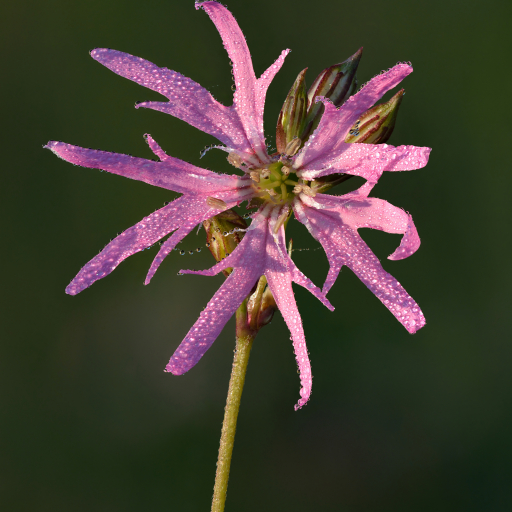
Known affectionately as the Ragged Robin, this whimsical wildflower looks as though its petals were delicately shredded by a tiny pair of scissors. Native to the damp meadows of Europe and Northern Asia, it is a hallmark of the traditional "cottage garden" and a sign that spring is in full swing. Its name is steeped in history, tied closely to the arrival of migratory birds and ancient folklore.
🔍 How to Identify
- 🌸 The Petals: Each flower has five vivid pink (occasionally white) petals, each deeply divided into four narrow, ribbon-like lobes that create its signature "ragged" appearance.
- 🌿 The Foliage: The plant features a basal rosette of spatulate leaves, while the leaves on the flowering stems are narrow, pointed, and grow in opposite pairs.
- 🎋 The Stems: The stalks are slender, upright, and often have a reddish or purplish tint, reaching heights of 1 to 3 feet.
🏡 In Your Garden
- 💧 The "Wet Feet" Rule: Ragged Robin is a moisture lover. While many plants rot in soggy soil, this species thrives in bog gardens, pond edges, and damp meadows where other flowers might struggle.
- 🦋 Pollinator Paradise: Because of its deep flower shape, it is a favorite haunt for butterflies and long-tongued bees. It provides a vital nectar source during the late spring and early summer months.
⚠️ Safety & Toxicity
- ✅ Status: Generally considered non-toxic and safe for home gardens.
- 🧼 Details: Like many members of the Pink family (Caryophyllaceae), it contains mild saponins—natural soap-like compounds. While not harmful to pets or children if touched, it shouldn't be ingested in large quantities as it may cause a mild stomach upset.
✨ Fun Fact
The scientific name flos-cuculi literally translates to "Flower of the Cuckoo." In medieval times, it was believed that the plant bloomed the very moment the first cuckoo bird was heard singing in the spring.

Detailed Care Instructions
To grow Lychnis Flos-cuculi, also known as Ragged Robin, follow these steps:
- Choose a suitable planting location: Lychnis Flos-cuculi prefers moist, well-draining soil in full sun or partial shade. It can tolerate a variety of soil types, but it thrives in slightly acidic to neutral soil.
- Prepare the soil: Before planting, remove any weeds or debris from the area. Amend the soil with organic matter, such as compost or well-rotted manure, to improve its fertility and drainage.
- Sow the seeds: Lychnis Flos-cuculi can be grown from seeds. Sow the seeds directly into the prepared soil in spring or early autumn. Lightly press the seeds into the soil, as they require light to germinate. Space the seeds about 12-18 inches apart, as the plant may spread.
- Provide water: Keep the soil consistently moist, but avoid overwatering. Water the plants regularly, especially during dry periods or hot weather.
- Mulch: Apply a layer of organic mulch, such as straw or bark chips, around the base of the plants. Mulching helps conserve moisture, suppresses weeds, and protects the roots during extreme temperatures.
- Thin or transplant: If the plants become overcrowded, thin them out by removing some seedlings, allowing the remaining ones to grow and thrive. Alternatively, if desired, you can carefully transplant the seedlings to another location.
- Fertilize: Fertilize the Lychnis Flos-cuculi plants once or twice during the growing season with a balanced, slow-release fertilizer. Follow the packaging instructions for the application rate.
- Prune: After flowering, deadhead the spent flowers to encourage further blooming and prevent self-seeding. Trim any dead or damaged foliage to maintain the plant's appearance.
- Winter care: Lychnis Flos-cuculi is hardy in USDA zones 3-9. In colder regions, apply a layer of mulch over the plants in late autumn to help protect them from harsh winter conditions.
By following these guidelines, you can successfully grow Lychnis Flos-cuculi and enjoy the vibrant blooms of the Ragged Robin plant.

Place in a window with dappled sun or a spot in the middle of a room. Or directly in a window facing west or east.

Lychnis Flos-cuculi plant requires a moderate amount of water, making sure not to overwater it. One should water the plant deeply once a week, allowing the soil to dry out slightly between waterings. The plant prefers well-draining soil, so it is best to avoid watering it too frequently if the soil still feels moist. It is also important to avoid getting water on the leaves as it can cause fungal problems. One should water the plant at the base rather than from above. It is always advisable to check the soil moisture level before watering the plant.
To fertilize the Lychnis Flos-cuculi plant, apply a balanced fertilizer with equal parts nitrogen, phosphorus, and potassium in the early spring. Repeat the application every six to eight weeks throughout the growing season. Be sure to water the plant before and after fertilizing to prevent root damage. Avoid over-fertilizing, as this can cause excessive growth and reduce flowering.
The ideal soil for the Lychnis Flos-cuculi plant is a well-draining, nutrient-rich soil with a slightly acidic to neutral pH level. It should also be moist but not waterlogged, as the plant does not tolerate standing water. The soil should be loose and airy, allowing for good root growth and oxygen circulation. It is recommended to mix organic matter such as compost or peat moss into the soil to improve its fertility and water retention. Additionally, the plant prefers full sun to partial shade and benefits from regular watering and fertilization during the growing season.
Lychnis Flos-cuculi is a flowering plant that belongs to the Caryophyllaceae family. The plant can be propagated through both seed and vegetative methods. To propagate Lychnis Flos-cuculi using seed method, you need to collect the seeds from matured plant and sow them in well-draining soil during the early spring. Cover the seeds with a thin layer of soil and keep the soil moist. You can also propagate the plant using vegetative method. To do this, you need to take stem cuttings from the plant during early summer. Dip the cuttings in a rooting hormone and plant them in a well-draining soil mixture. Place the pot in a warm, bright area and keep the soil moist until the cuttings develop roots. Once the roots have developed, you can transplant them to their desired location.








