Plant Overview
Known affectionately as the Desert Wolfberry, this resilient shrub is a quintessential survivor of the American Southwest. It creates a tangled, architectural masterpiece of silvery branches that seem to spring to life with vibrant green leaves only after a heavy rain. To the local wildlife, it is more than just a plant—it is a vital oasis of food and shelter in an otherwise harsh landscape.
🔍 How to Identify
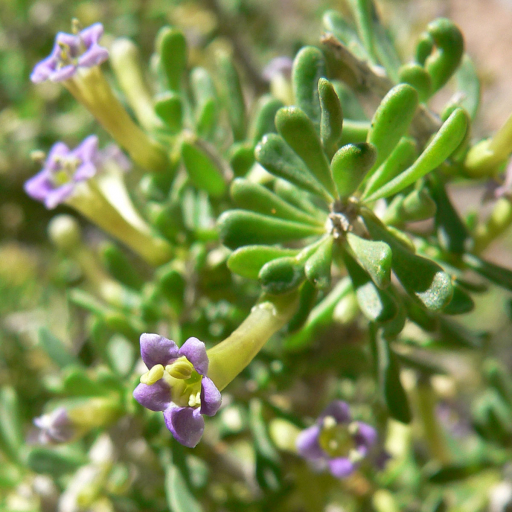
- 🌵 The Branches: Features a dense, intricate network of stiff, grey-white branches that end in sharp, spine-like tips.
- 🍃 The Foliage: Small, succulent-like leaves that are narrow and spatula-shaped; they are drought-deciduous, meaning they drop during dry spells to save water.
- 🌸 The Blooms: Delicate, funnel-shaped flowers that range from pale lavender to creamy white, usually appearing in late winter or early spring.
- 🍒 The Fruit: Translucent, bright red berries that look like miniature tomatoes or tiny garnets clustered along the thorny stems.
🏡 In Your Garden
- 🏜️ The Ultimate Xeriscape: This plant thrives in "impossible" conditions, preferring rocky, well-draining, and even salty or alkaline soils where other plants might wither.
- 🐦 A Living Fortress: It is a superstar for habitat gardening; hummingbirds love the nectar-rich flowers, while the dense, thorny interior provides the perfect "safe room" for small birds to nest away from predators.
- 💧 Drought Strategy: Don't panic if it loses its leaves in the heat of summer! This is a natural defense mechanism to survive drought; it will "green up" again as soon as it receives a deep drink.
⚠️ Safety & Toxicity
- ✅ The Berries: The ripe red berries are technically edible for humans and have a unique, slightly salty-sweet flavor, often compared to a savory tomato or a bland cranberry.
- 🐾 Pet Warning: While birds love the fruit, the foliage belongs to the Nightshade family. Keep an eye on curious dogs, as ingesting large amounts of the leaves can cause digestive upset.
- ⚔️ Physical Hazard: The primary danger is the thorns. Always wear heavy-duty gloves when pruning or planting near walkways to avoid painful punctures.
✨ Fun Fact
Anderson's Boxthorn is a close cousin of the famous "Goji Berry" (Lycium barbarum). While the desert version produces much smaller fruit, it was historically a staple food source for many Indigenous desert tribes, who ate them raw, dried like raisins, or boiled into a sweet soup.

Detailed Care Instructions

Place in a bright room that is sun drenched almost all day. Or directly in a south-facing window.

To water this particular plant, you should thoroughly soak the soil around its base, making sure that the water reaches its roots. It is important to ensure that the water penetrates deep into the soil to encourage the root system to grow strong and healthy. You can either water the plant manually with a watering can or hose or set up a drip irrigation system to water it automatically. It is recommended to water the plant once a week, but this may vary depending on factors such as climate, soil type, and amount of sunlight received. Always check the soil before watering to ensure that it is dry to the touch, as overwatering can cause damage or even kill the plant. Additionally, make sure to allow excess water to drain away from the plant to prevent waterlogging.
For optimal growth and health of this particular species of plant, a well-draining soil mix with a pH level between 6.0 and 8.0 is recommended. The soil should have good aeration and be rich in organic matter. A mix of sandy loam, perlite, and peat moss can work well for this plant. Additionally, it is important to ensure that the soil is not too compact, as this can inhibit root growth and lead to poor plant health. It is also recommended to periodically add organic fertilizers or compost to the soil to replenish nutrients.







